All about Tunisian mergoum carpets
What's the story
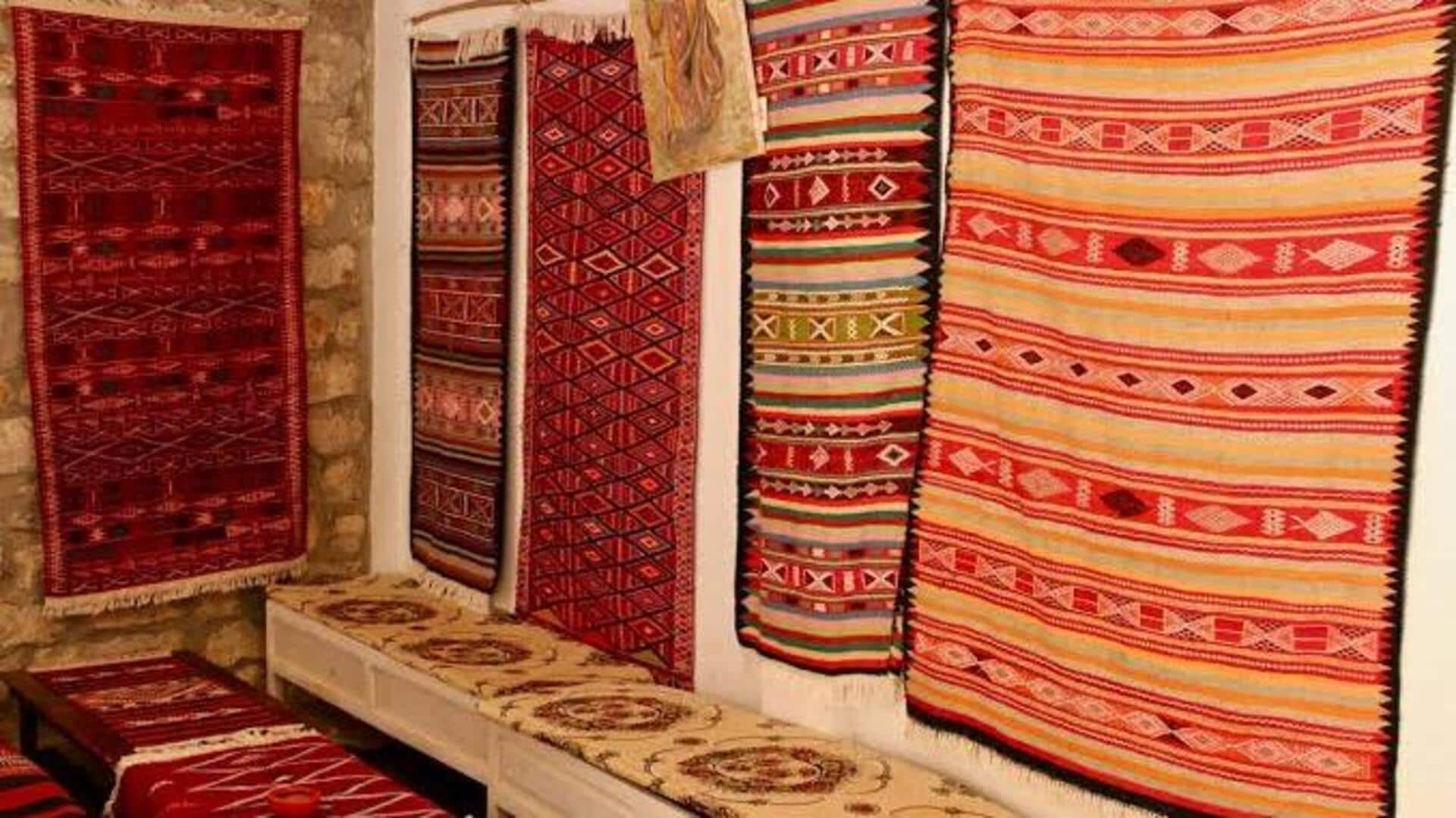
Tunisian mergoum carpets are a unique textile legacy that has been passed down through generations. These carpets, which are famous for their vibrant colors and intricate patterns, are made using traditional techniques that have stood the test of time. The art of making mergoum carpets is not just a craft, but a cultural expression that reflects the history and traditions of Tunisia. Here is a look at this timeless textile legacy.
Weaving techniques
The art of weaving
The art of weaving Tunisian mergoum carpets involves a unique technique that uses natural fibers such as wool and cotton.
The process starts with preparing the warp and weft threads, which are then interlaced to create intricate designs.
The weavers use simple tools to achieve detailed patterns, often inspired by nature or geometric shapes.
This method has been preserved over centuries, showcasing the skill and dedication of artisans.
Colorful designs
Vibrant colors and patterns
One of the most striking features of Tunisian mergoum carpets is their vibrant colors.
Natural dyes from plants and minerals are used to achieve a wide range of hues, adding depth to the patterns.
Each carpet tells its own story through its design choices, with motifs varying from floral to abstract.
These colorful designs not only enhance aesthetic appeal but also hold cultural significance.
Heritage value
Cultural significance
Tunisian mergoum carpets hold immense cultural value as they reflect Tunisia's rich heritage.
They are often used in traditional ceremonies and celebrations, signifying prosperity and good fortune.
The craftsmanship involved in making these carpets is passed down through families, preserving this cultural legacy for future generations.
Community benefits
Economic impact on communities
The production of Tunisian mergoum carpets also contributes significantly to local economies by providing employment opportunities for artisans in rural areas.
Many communities depend on carpet weaving as a source of income, allowing them to sustain their livelihoods while preserving traditional craftsmanship skills.
This economic activity not only supports families but also contributes to community development initiatives.