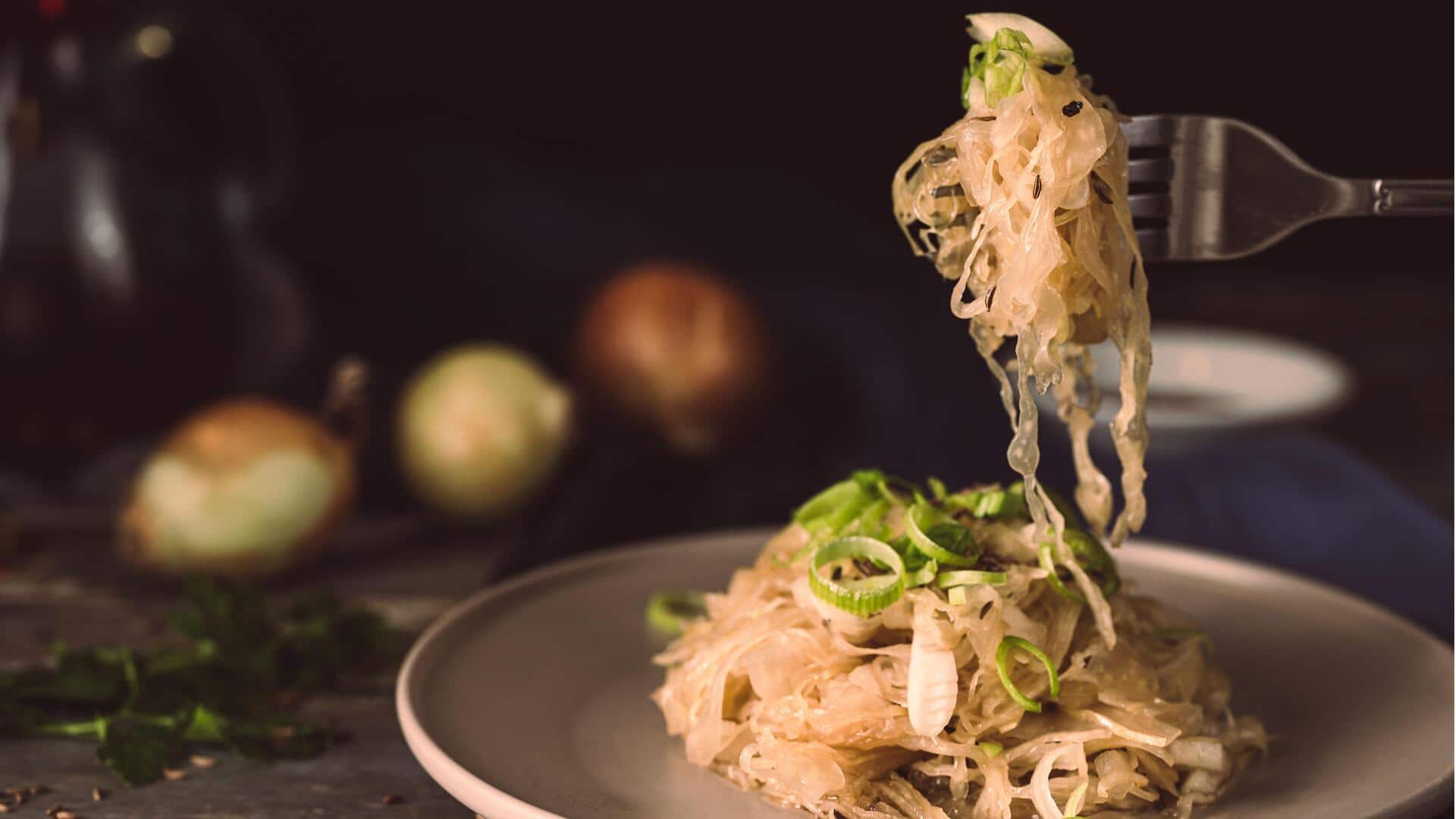
Turmeric sauerkraut: A tangy, gut-friendly condiment
What's the story
Turmeric sauerkraut is a tangy, gut-friendly condiment. It combines fermented sauerkraut with the anti-inflammatory properties of turmeric. This simple yet effective combination can be easily made at home, providing a probiotic-rich addition to your meals. The process involves fermenting cabbage with turmeric and other spices, resulting in a flavorful dish that supports digestive health. Here's how you can make this vibrant condiment at home.
#1
Choosing the right ingredients
Selecting fresh cabbage is essential for making sauerkraut.
Go for firm heads with no blemishes or wilted leaves.
Fresh turmeric root or high-quality turmeric powder is a must for flavor and health benefits.
You can also add spices like caraway seeds or mustard seeds for additional flavor.
Sea salt is essential as it helps in fermentation and enhances the taste.
#2
Preparing the cabbage
Start by shredding the cabbage finely using a sharp knife or food processor.
Add salt to the shredded cabbage at a ratio of one tablespoon per two pounds of cabbage.
Massage the salt into the cabbage until it releases its juices, creating a brine.
This step is important as it creates an environment conducive to fermentation by inhibiting harmful bacteria while allowing beneficial ones to thrive.
#3
Adding turmeric and spices
Once your cabbage is ready, add grated fresh turmeric or turmeric powder for color and health benefits.
If you want, you can also add spices like caraway seeds or mustard seeds for additional flavor.
Mix everything well so that every piece of cabbage gets coated with turmeric evenly.
#4
Fermentation process
Pack your mixture tightly into sterilized jars, leaving some space at the top for expansion during fermentation.
Seal jars loosely with lids or cover them with cheesecloth secured by rubber bands, allowing gases produced during fermentation to escape while keeping contaminants out.
Store jars in a cool, dark place for about one week, checking daily until desired sourness is achieved before refrigerating them.