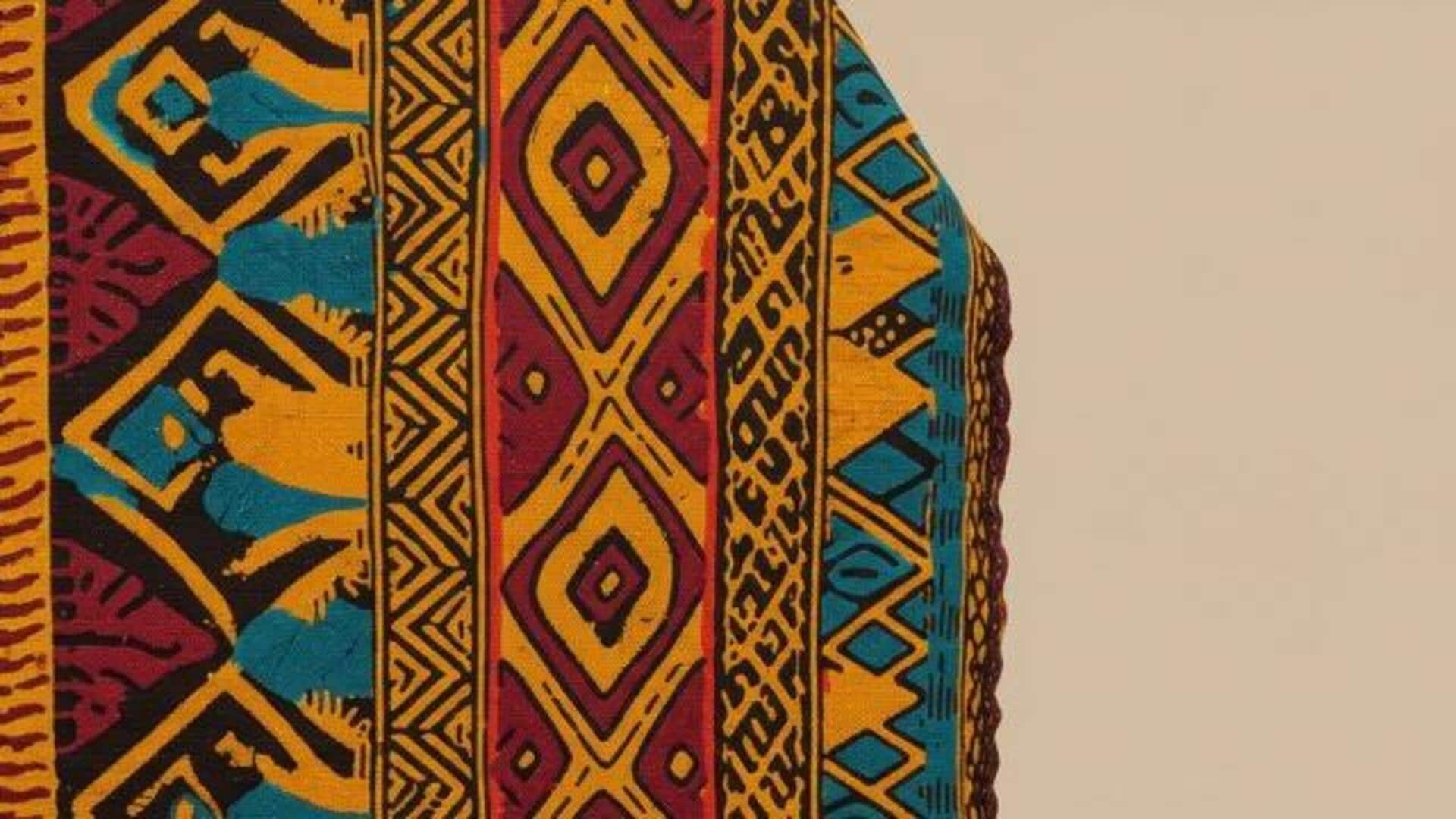
Ugandan bark cloth: 5 facts to know about
What's the story
Uganda's bark cloth art is a unique cultural heritage that has been practiced for centuries. This traditional craft involves the use of the inner bark of the fig tree, which is processed and dyed to create intricate designs. The art form not only showcases the creativity of Ugandan artisans but also serves as a means of preserving cultural identity. Here are five fascinating facts about this unique art.
#1
Ancient origins and history
Bark cloth has been an integral part of Ugandan culture for over 1,000 years.
The technique was first used by ancient communities for clothing, ceremonial purposes, and even as a form of currency.
Over the centuries, the craft has been passed down generations, keeping its traditional methods intact, while also adapting to modern influences.
#2
Unique production process
The production of bark cloth involves several steps.
First, the inner bark of a fig tree is harvested and soaked in water to soften it.
Once softened, it is beaten with mallets until it becomes pliable.
Artisans then dye and embellish the cloth with natural pigments to create beautiful patterns, which often depict social or spiritual themes.
#3
Economic significance
Bark cloth art plays a vital role in Uganda's economy by providing livelihoods to many artisans across the country.
The demand for this traditional craft has been rising both locally and internationally, as people appreciate its cultural value and uniqueness.
This has encouraged more artisans to take up this skill as a source of income.
#4
Cultural preservation efforts
In recent years, there have been efforts to preserve Uganda's bark cloth tradition amid globalization threats.
Organizations are working closely with local communities to ensure that this ancient craft continues to be practiced by providing training programs and promoting awareness about its cultural significance among younger generations.
#5
Modern adaptations
While keeping traditional techniques intact, modern-day Ugandan artists have also experimented with new designs and applications for bark cloth.
From incorporating contemporary motifs into their work to using it in fashion design, or home decor items like wall hangings or table runners, these adaptations have broadened the appeal of this unique art form beyond its traditional uses.