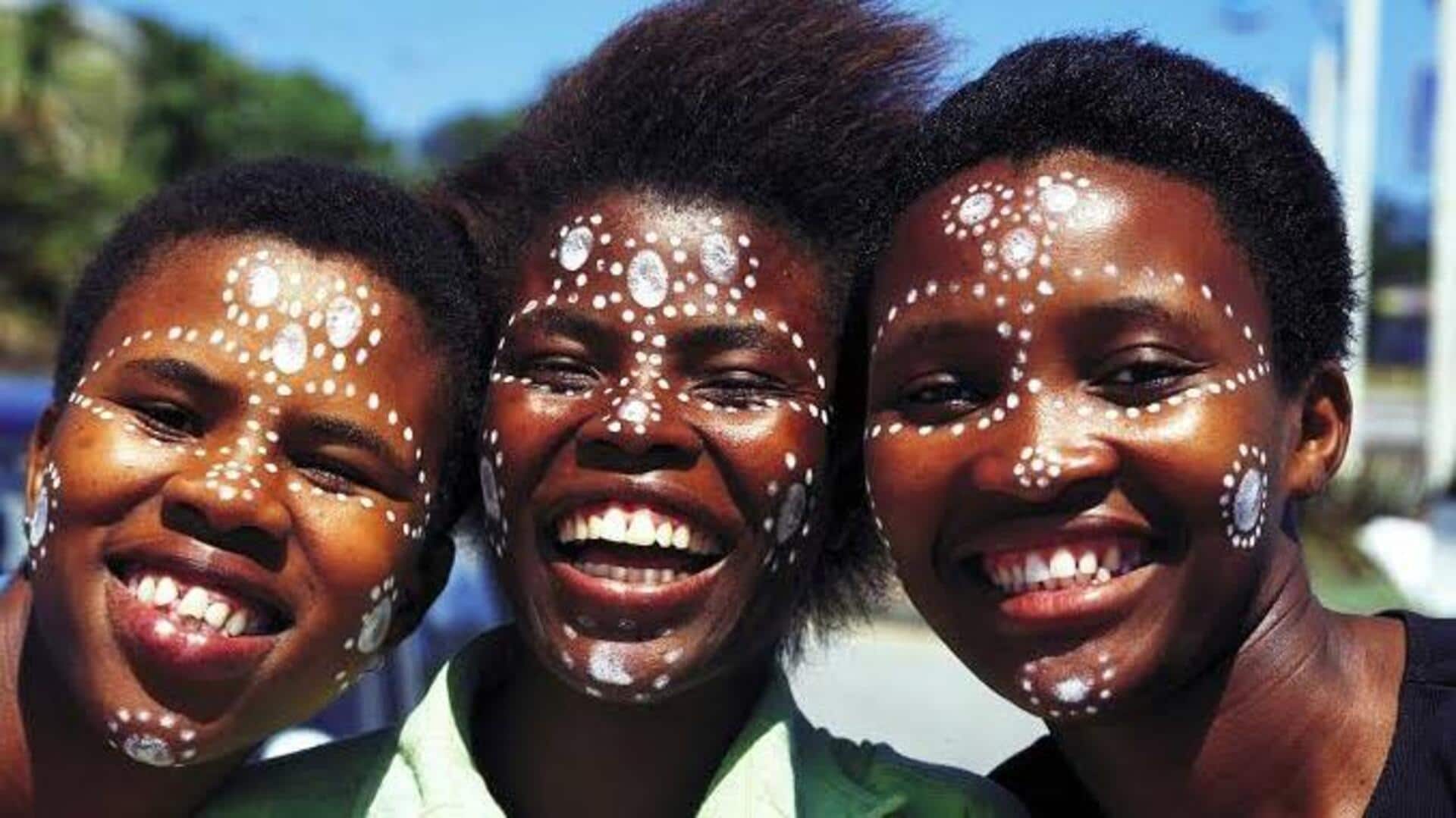
All about Xhosa facial paintings
What's the story
Xhosa facial painting is an integral part of the cultural heritage of the Xhosa people of South Africa. The practice, which is centuries old, is a form of identity, status, and ritualistic expression. The intricate designs painted on the face are not just for aesthetic purposes but also convey messages about the individual's social standing, life stage, and cultural significance. Understanding these traditions gives us a glimpse into the rich tapestry of Xhosa culture.
#1
Symbolism behind facial patterns
Each pattern in Xhosa facial painting has its own meaning.
For instance, certain designs may indicate that a person has reached adulthood or is ready for marriage.
Other patterns could denote mourning, or celebration of significant life events.
The symbolism is deeply rooted in history and serves as a way for individuals to communicate their personal stories without uttering a word.
#2
Materials used in traditional paintings
Traditionally, natural materials were used to create the paints for Xhosa facial designs.
Red ochre and white clay were among the most common substances used to create the paints. These materials were easily available and held cultural significance.
The process of preparing these paints involved mixing them with water or plant extracts to achieve the desired consistency and color.
#3
Rituals associated with facial painting
Facial painting rituals are often performed during important ceremonies, such as initiation rites or festivals.
These rituals bring together communities and reinforce cultural bonds.
During these events, elders or designated artists apply the paint according to established patterns that reflect communal values and individual roles within society.
#4
Modern influences on traditional practices
In recent years, modern influences have begun to affect traditional Xhosa facial painting practices.
While some artists continue to uphold age-old techniques, others experiment with contemporary styles that appeal to younger generations, tourists interested in experiencing authentic cultural expressions.