These unique Spanish wedding traditions are mind-blowing
What's the story
Spanish weddings are famous for their lively celebrations and unique traditions. These customs, which differ from region to region, give a peek into the rich cultural heritage of Spain. From colorful attire to traditional rituals, Spanish weddings are a feast for the senses and a deep-rooted connection to history and community. Here are some unique traditions that make Spanish weddings so special.
#1
The importance of 'la hora loca'
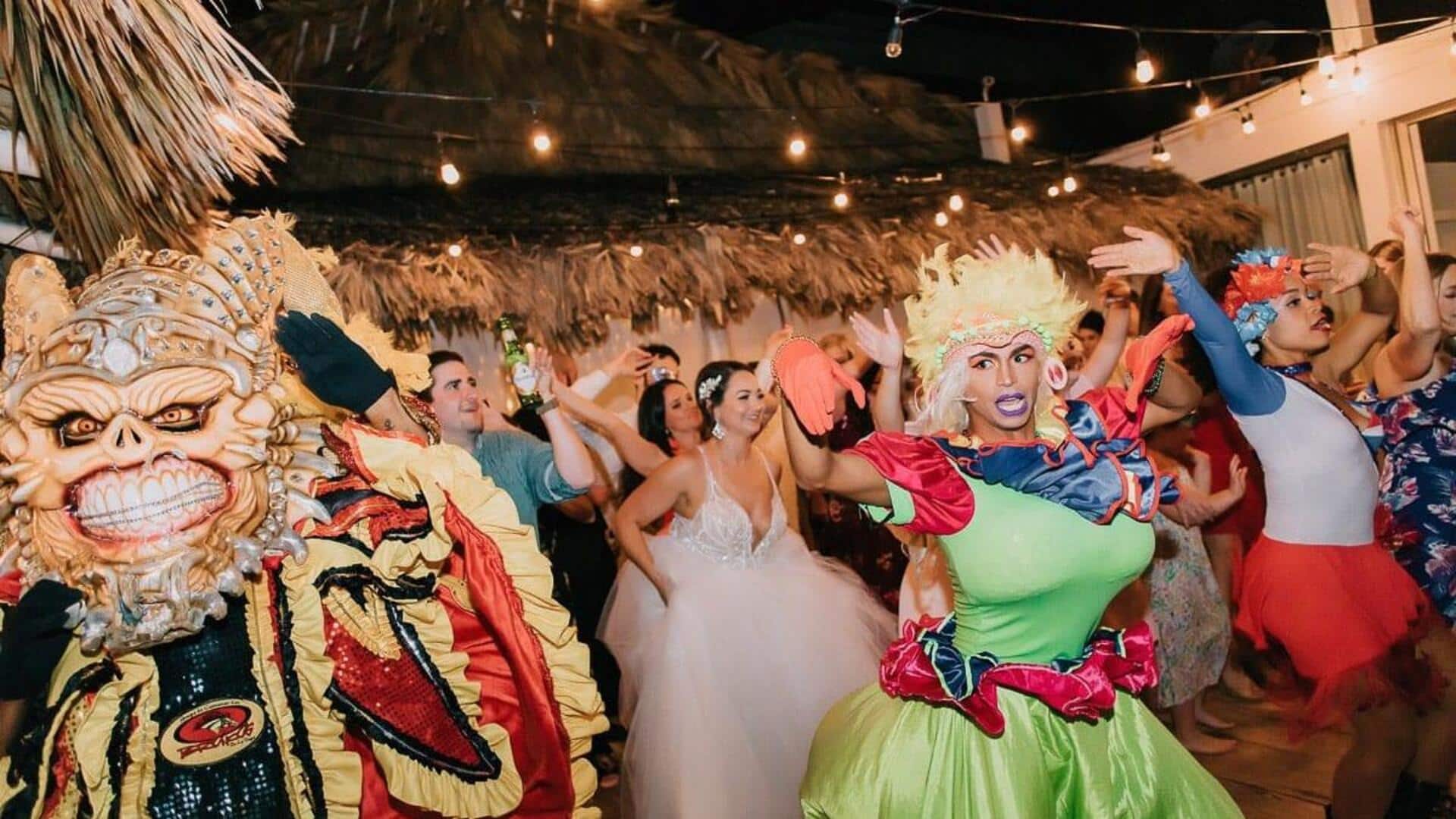
La hora loca, which translates to "the crazy hour," is a popular tradition at many Spanish weddings.
Usually held late in the reception, this lively segment features masks, hats, and other fun props for guests to wear.
The music turns upbeat, and everyone hits the dance floor with renewed energy.
This tradition symbolizes letting loose and celebrating joyfully with friends and family.
#2
'Arras' ceremony significance
The arras ceremony is an integral part of many Spanish wedding ceremonies.
The groom gives the bride 13 coins called arras as a symbol of prosperity and wealth in their future life together.
The couple also shares these coins among themselves as a sign of equality in their marriage. This tradition emphasizes mutual support and partnership.
#3
'Baile del Dinero' tradition
Baile del dinero, or "money dance," is a fun tradition in some regions of Spain.
Guests pin money onto the bride or groom as they dance with them during this segment of the reception.
This custom not only helps the couple financially but also brings everyone together in celebration. It is a fun way for guests to show their love and support for the newlyweds.
#4
'Lazo' ritual meaning
The lazo ritual involves tying a decorative cord or rope around the couple during the wedding ceremony or reception. This symbolizes their union as they are bound together in marriage.
The lazo can be made from flowers or beads, and is removed later as a sign of their growing independence within their relationship.
Tip 5
'Boda de Oro' celebration
Boda de oro refers to golden weddings celebrated after 50 years of marriage, but it also applies to some Spanish weddings where gold elements are included on special occasions.
These can be anniversaries or milestone events like birthdays within married life itself.
It celebrates enduring love over time, just like traditional golden anniversaries do elsewhere across cultures worldwide.