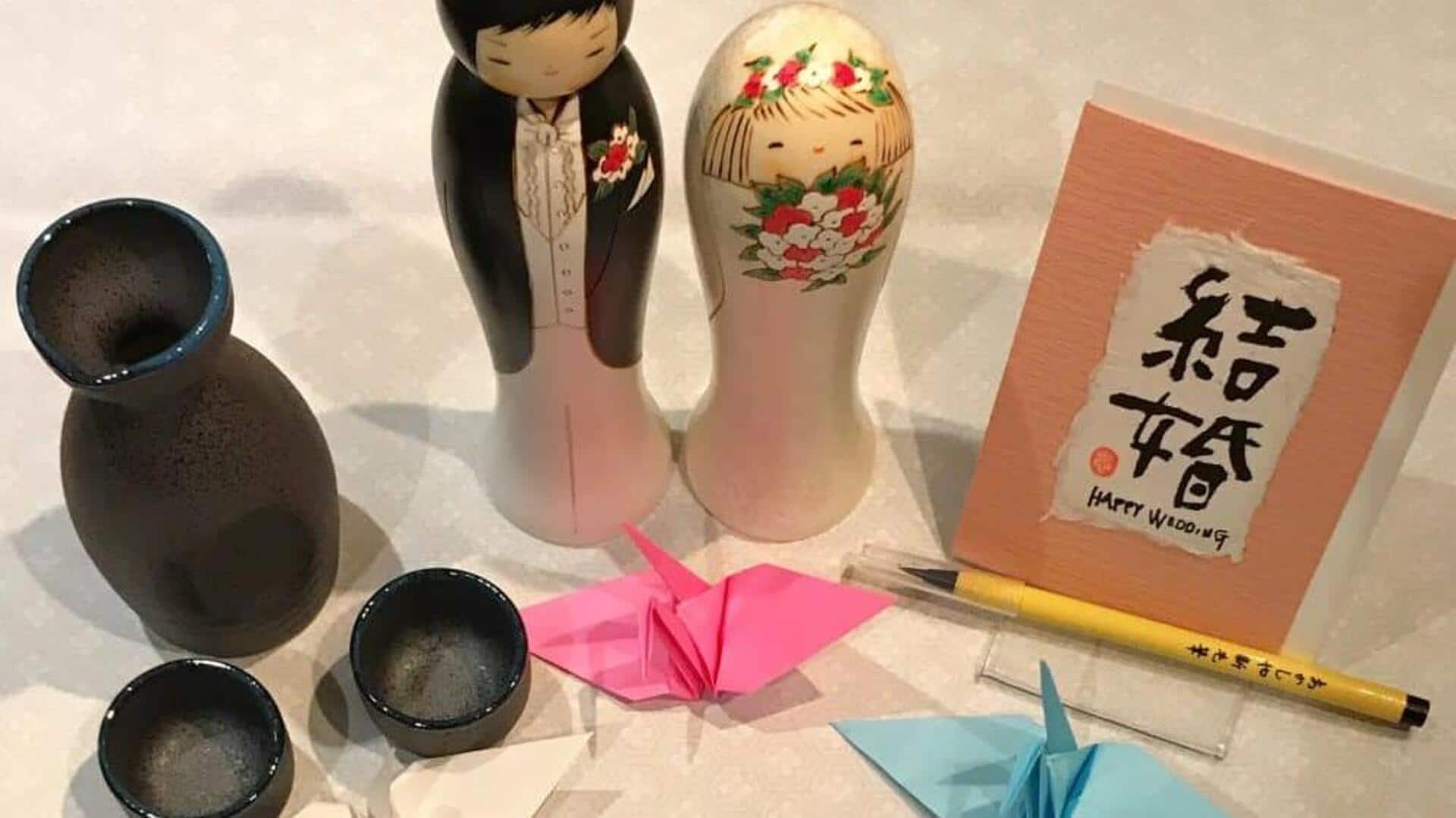
Gifts exchanged during Japanese weddings are very unique!
What's the story
Japanese weddings are steeped in tradition, and so are the gifts exchanged during the ceremonies. These gifts are not just tokens of appreciation but also hold cultural significance. From practical household items to symbolic gestures, Japanese wedding gifts vary widely in their meaning and value. Understanding these unique offerings can give you an insight into the rich tapestry of Japanese culture and its wedding customs.
#1
Money envelopes: A traditional gift
In Japan, giving money in a beautifully decorated envelope, called shugi-bukuro, is a common wedding gift.
The amount usually depends on the relationship with the couple, but it is typically between ¥10,000 and ¥30,000.
The envelopes are usually adorned with intricate designs and can even include a note wishing happiness to the newlyweds.
This practice is rooted in tradition and symbolizes support for the couple's future together.
#2
Practical household items
Practical household items also make for popular wedding gifts in Japan.
Things like kitchenware, towels, or bedding sets are commonly chosen as they help newlyweds set up their home.
These gifts are appreciated for their utility and thoughtfulness, as they contribute to building a shared life together.
The choice of item often reflects an understanding of the couple's needs and preferences.
#3
Symbolic gifts: Embracing tradition
Symbolic gifts also hold a special place in Japanese wedding traditions.
Items like sake sets or tea ceremonies are considered auspicious and represent harmony and unity in marriage.
These gifts are steeped in cultural significance and are often passed down through generations as cherished heirlooms.
#4
Personalized gifts: A modern touch
In recent years, personalized gifts have gained popularity among younger couples seeking something unique for their special day.
Engraved photo frames or custom-made artwork can add a personal touch while still honoring traditional values.
These modern adaptations allow for creativity without losing sight of cultural traditions that define Japanese weddings.
Tip 5
Group gifting: A communal approach
Group gifting is also a common practice at Japanese weddings, where friends or colleagues pool money together to give a larger gift or experience, like a honeymoon fund or vacation package.
This communal approach not only eases the financial burden on individual guests but also strengthens social bonds within communities by encouraging collective participation in celebrating life's milestones together.