How African symbols are reshaping urban murals
What's the story
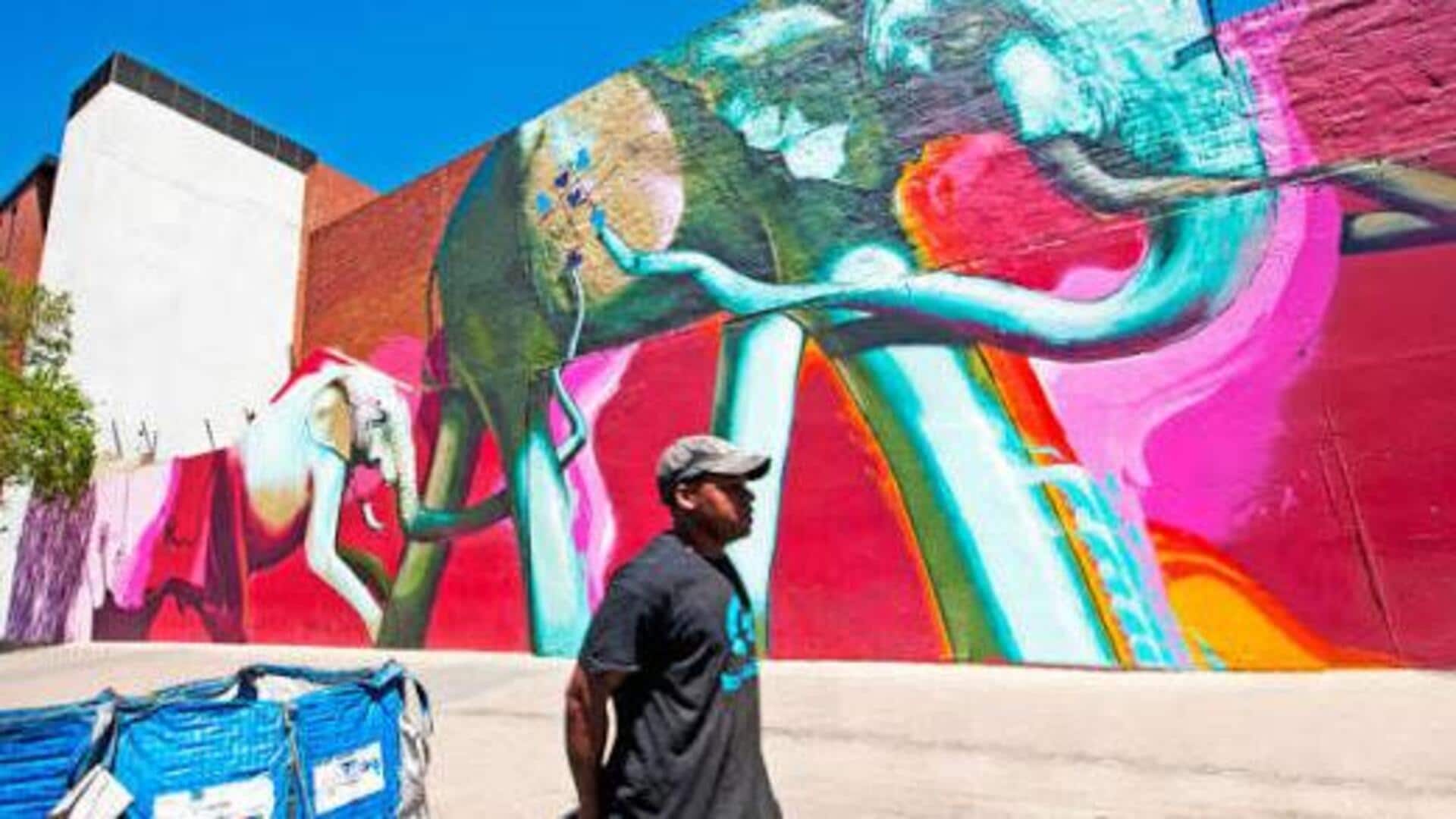
Urban street art has become a powerful medium for cultural expression, particularly in Africa. One of the most notable influences is the use of Adinkra symbols, which are traditional West African visual symbols representing concepts and aphorisms. These symbols are being reimagined by contemporary artists to create vibrant murals that resonate with urban audiences. This fusion of tradition and modernity allows for a unique dialogue between past and present.
Cultural heritage
The significance of Adinkra symbols
Adinkra symbols hold a deep cultural significance, each representing different philosophical concepts or messages.
They are widely used in textiles, pottery, logos, and advertising.
In street art, these symbols provide a connection to heritage while allowing artists to communicate complex ideas succinctly.
The use of these symbols in urban settings helps preserve cultural identity amidst rapid modernization.
Artistic innovation
Modern interpretations in urban art
Contemporary artists are reinterpreting Adinkra symbols to fit modern aesthetics and themes.
By incorporating bold colors and dynamic forms, they create visually striking pieces that capture attention in bustling cityscapes.
This modern interpretation not only preserves the essence of the symbols but also makes them accessible to younger generations, who may not be familiar with their traditional meanings.
Social connection
Impact on community engagement
Murals featuring Adinkra symbols often serve as focal points for community engagement and dialogue.
They encourage discussions about cultural identity, history, and social issues relevant to urban life.
These artworks can foster a sense of pride within communities by celebrating shared heritage while addressing contemporary challenges through artistic expression.
Navigating urban spaces
Challenges faced by artists
While creating street art with Adinkra symbols, artists also face challenges, such as securing permission from property owners or local authorities.
They also have to deal with the risk of vandalism or removal of their work from public spaces.
Despite these hurdles, many artists continue to find ways to showcase their work through legal avenues, like partnerships with local organizations or participating in organized mural projects.