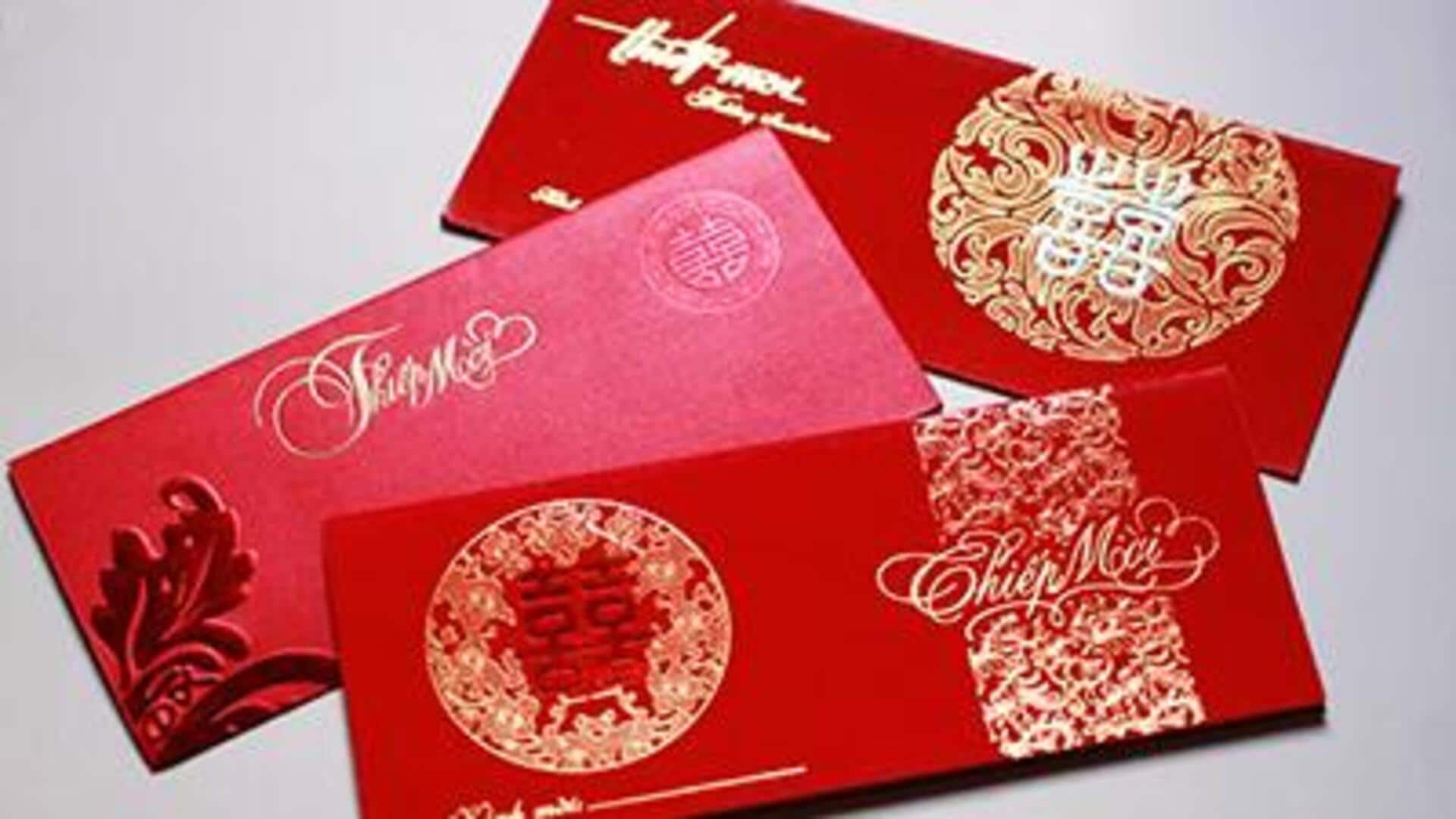
Why red envelopes are part of Vietnamese weddings
What's the story
Vietnamese weddings are steeped in tradition and cultural significance, with one of the most notable customs being the giving of red envelopes. These envelopes, known as li xi, are filled with money and given to the couple as a symbol of good luck and prosperity. The practice is deeply rooted in Vietnamese culture, representing blessings from family and friends. Understanding this tradition provides insight into the values of community and support that are central to Vietnamese weddings.
#1
Historical significance of red envelopes
The tradition of giving red envelopes dates back centuries in Vietnam.
Historically, they were used during festivals and special occasions to ward off evil spirits.
Over time, this practice evolved into a wedding custom where the red color symbolizes happiness and good fortune.
This historical context highlights how cultural practices adapt over time, while retaining their core meanings.
#2
Symbolism behind the color red
In Vietnamese culture, red is a powerful color associated with joy, luck, and prosperity. It is considered auspicious and is commonly used in celebrations like weddings.
By using "red envelopes" during these ceremonies, families hope to bestow positive energy upon the newlyweds.
The color's significance goes beyond aesthetics; it embodies wishes for a bright future together.
#3
Amounts typically given in red envelopes
The amount of money placed inside red envelopes can vary widely depending on personal circumstances and relationships between the giver and receiver.
However, it is common for amounts to range from modest sums to more generous gifts for close family members or friends.
Ultimately, it's not about how much, but rather the gesture itself that counts.
#4
Modern adaptations of this tradition
While traditional practices remain strong, modern adaptations have also emerged over time.
Some couples opt for digital transfers instead of physical cash due to convenience or distance issues with guests who may not attend in person.
Despite these changes, the underlying intent remains unchanged: sharing blessings with newlyweds through symbolic gestures rooted deeply within cultural heritage.