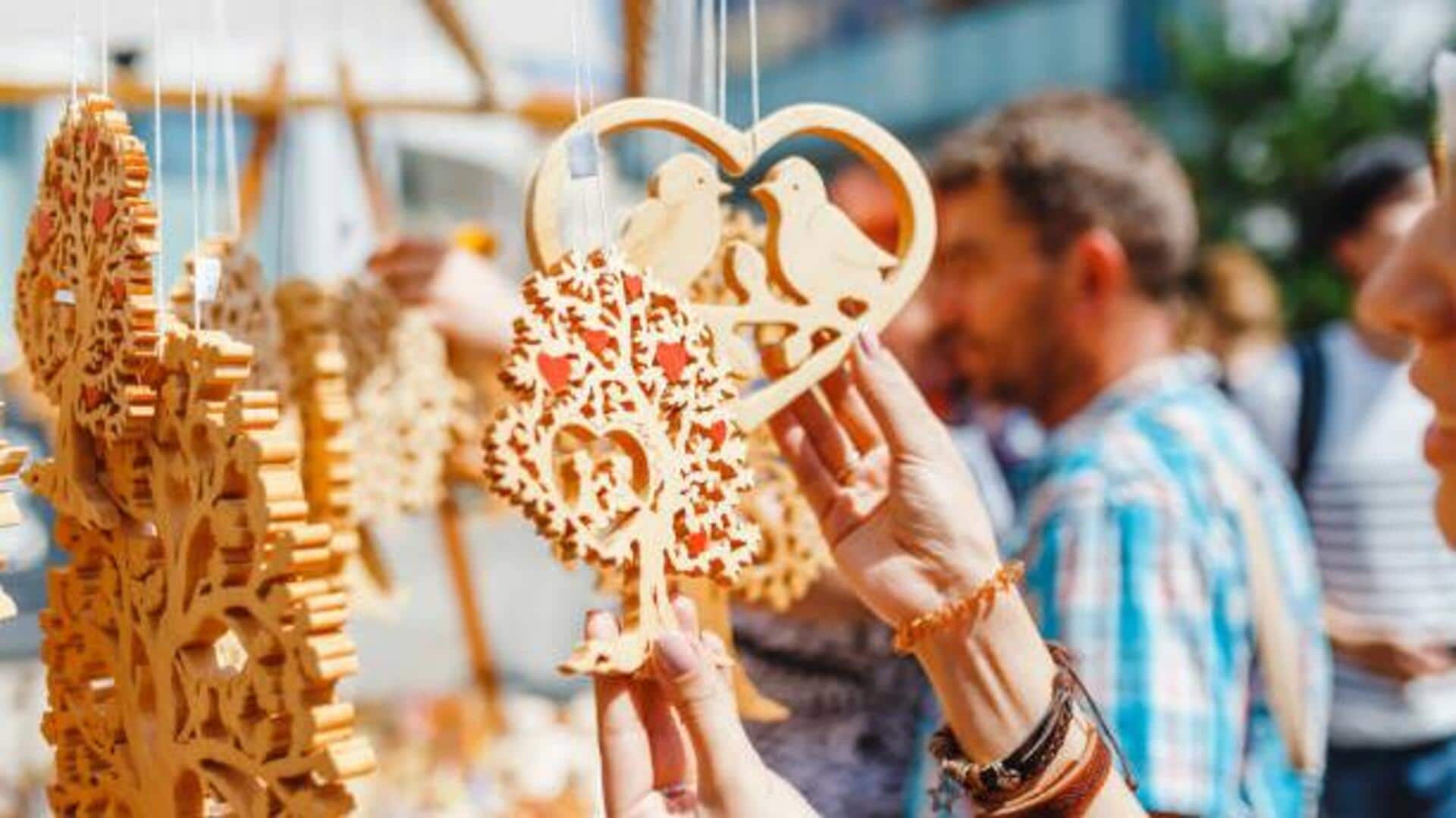
Visiting a craft fair? Read this
What's the story
African craft fairs are a treasure trove of unique, handmade items, showcasing the continent's rich cultural heritage. These events are not just about shopping, but also about experiencing the diverse artistic traditions of Africa. From intricate textiles to vibrant jewelry, each item tells a story of its origin. Attending these fairs can be an enriching experience for those looking to explore and appreciate African craftsmanship.
#1
Discover traditional textiles
African textiles are famous for their colorful patterns and intricate designs.
At craft fairs, you can find a range of fabrics like kente cloth from Ghana, or mud cloth from Mali.
These materials are often used in traditional clothing or home decor.
Buying these textiles not only supports local artisans but also gives you a glimpse into the cultural significance behind each pattern.
#2
Explore unique jewelry pieces
Jewelry at African craft fairs is often made from locally sourced materials, such as beads, metals, and stones.
Each piece reflects the unique styles of different regions across the continent.
From beaded necklaces to metalwork earrings, there is something for everyone.
Purchasing jewelry from these fairs helps sustain traditional crafting techniques and provides a direct connection to African artistry.
#3
Engage with local artisans
Interacting with local artisans at craft fairs gives you an insight into their creative processes and the cultural significance of their work.
Many artisans are happy to share stories about their techniques and the inspiration behind their creations.
This interaction not only enriches your understanding but also fosters a deeper appreciation for the craftsmanship involved in making each item.
#4
Support sustainable practices
Many African craft fairs emphasize sustainable practices by promoting eco-friendly materials and fair trade principles.
By choosing products made with sustainable methods, you contribute positively to environmental conservation efforts, while supporting ethical economic development in local communities.
This way, you ensure that artisans can continue producing high-quality crafts without compromising ecological balance.