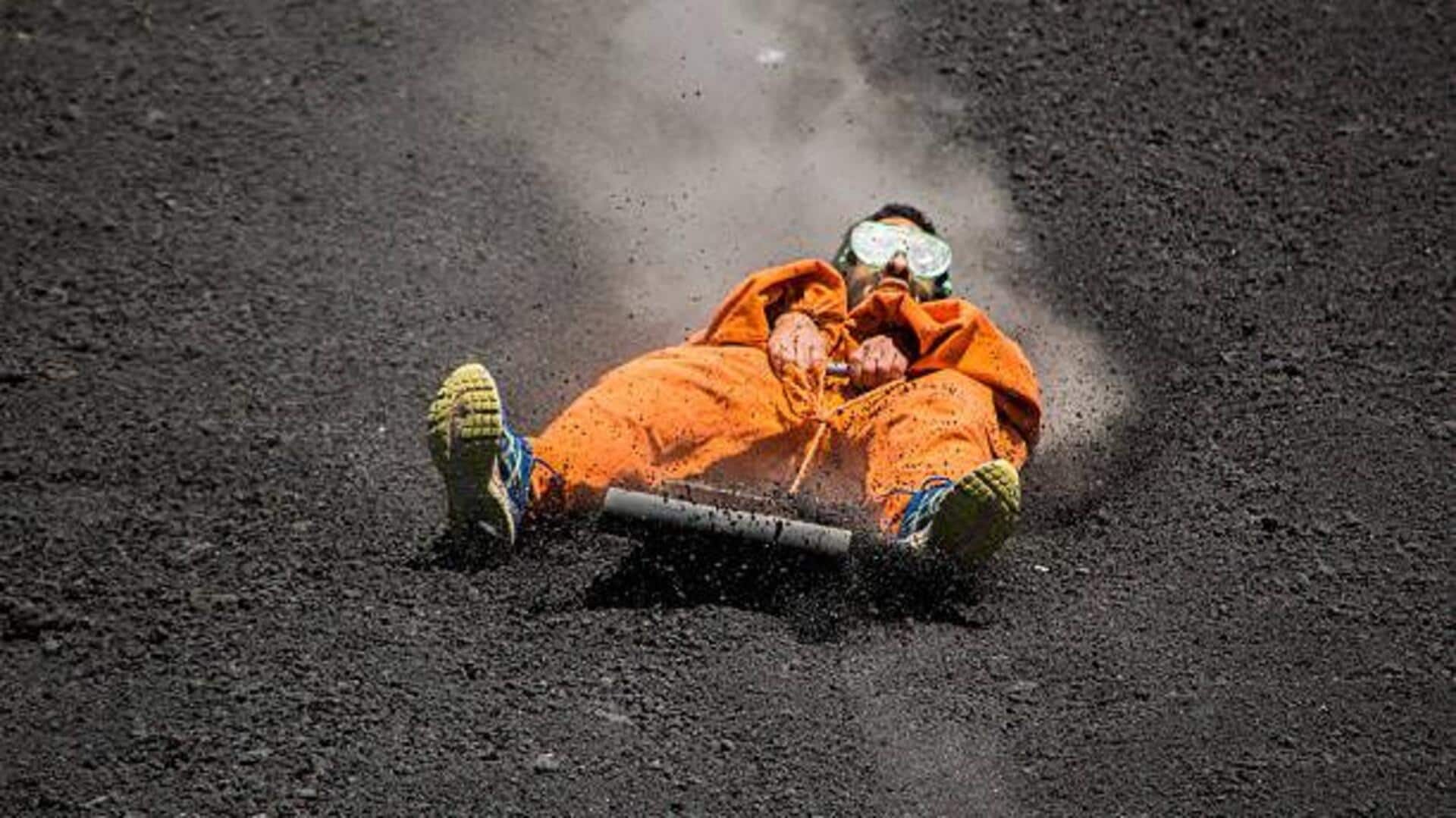
Danakil depression: A daring spot for volcano boarding
What's the story
Ethiopia's Danakil Depression is one of the hottest places on Earth and offers a unique adventure of volcano boarding. The region, known for its colorful sulfur springs and active volcanoes, provides an unusual landscape for thrill-seekers. The experience involves sliding down volcanic slopes on specially designed boards, giving an adrenaline rush like no other. Here's what you need to know about this extraordinary journey.
Preparation
Preparing for the journey
Before heading to the Danakil Depression, proper preparation is essential.
Travelers must ensure they have appropriate gear, including sturdy footwear and protective clothing, to withstand harsh conditions.
Hydration is key in this arid environment, so carrying ample water supplies is crucial.
Additionally, understanding the terrain and weather patterns can help in planning the best time for the adventure.
Terrain
Understanding volcanic terrain
The volcanic terrain of the Danakil Depression is unlike any other. It is dotted with active lava lakes and colorful mineral deposits, making for a surreal backdrop.
The slopes are steep, but not too steep, making them perfect for boarding.
Knowing the terrain well can help you choose the right spots for the best ride and safety.
Safety
Safety measures to consider
Safety should be the top priority while volcano boarding in Ethiopia.
It is important to follow all safety instructions given by local guides, who are familiar with the risks involved in this activity.
Wearing helmets and other protective gear can minimize injuries in case of falls or accidents on the volcanic slopes.
Guides
Choosing local guides wisely
Choosing local guides wisely can make your volcano boarding experience in Ethiopia's Danakil Depression a safe and memorable one.
Experienced guides not only provide valuable insights into the region's geology and culture, but also ensure your safety throughout the adventure.
They are familiar with the terrain, weather conditions, and potential hazards, which is why they can help you navigate these challenges effectively.