Wall sits or plank holds: Which improves endurance?
What's the story
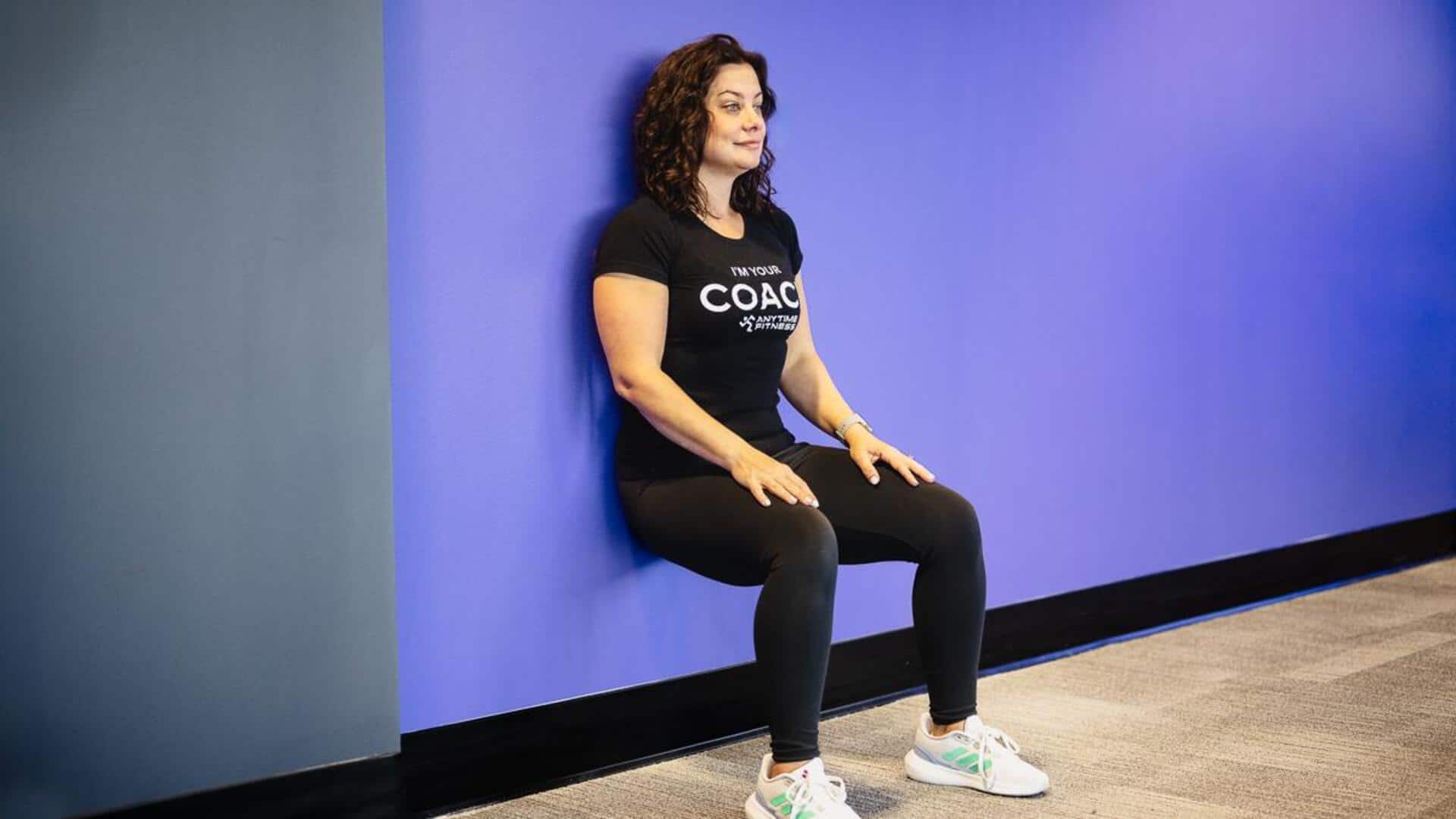
Wall sits and plank holds are two popular exercises that target different muscle groups and improve endurance. While both exercises are static holds, they work on different parts of the body. Wall sits mainly target the lower body, especially the quadriceps, hamstrings, and calves. Plank holds, on the other hand, work on the core muscles, shoulders, and back. Knowing how each exercise improves endurance can help you tailor your workout routine to meet your fitness goals.
#1
Targeting lower body endurance
Wall sits are excellent for building endurance in the lower body. By holding a seated position against a wall, you engage your quadriceps, hamstrings, and calves. This exercise helps increase muscular endurance by maintaining tension in these muscles for an extended period. Regular practice can lead to improved strength and stamina in the legs, making it easier to perform activities that require prolonged lower body exertion.
#2
Enhancing core stability with planks
Plank holds are ideal for enhancing core stability and endurance. By maintaining a plank position, you engage your abdominal muscles, obliques, and lower back. This exercise is great for building a strong core that supports overall body balance and posture. Improved core stability from regular plank practice can lead to better performance in various physical activities and reduced risk of injury.
#3
Comparing muscle engagement levels
While both wall sits and plank holds engage multiple muscle groups, their focus differs significantly. Wall sits primarily engage lower body muscles, while planks focus on core muscles, along with some upper body engagement through arms and shoulders. Understanding these differences helps you choose which exercise aligns better with your specific endurance training goals.
Tip 1
Incorporating both exercises into routines
Incorporating both wall sits and plank holds into your workout routine can provide comprehensive benefits by targeting different muscle groups effectively. Alternating between these exercises ensures balanced development of lower body strength as well as core stability over time without overworking any single group excessively during workouts.