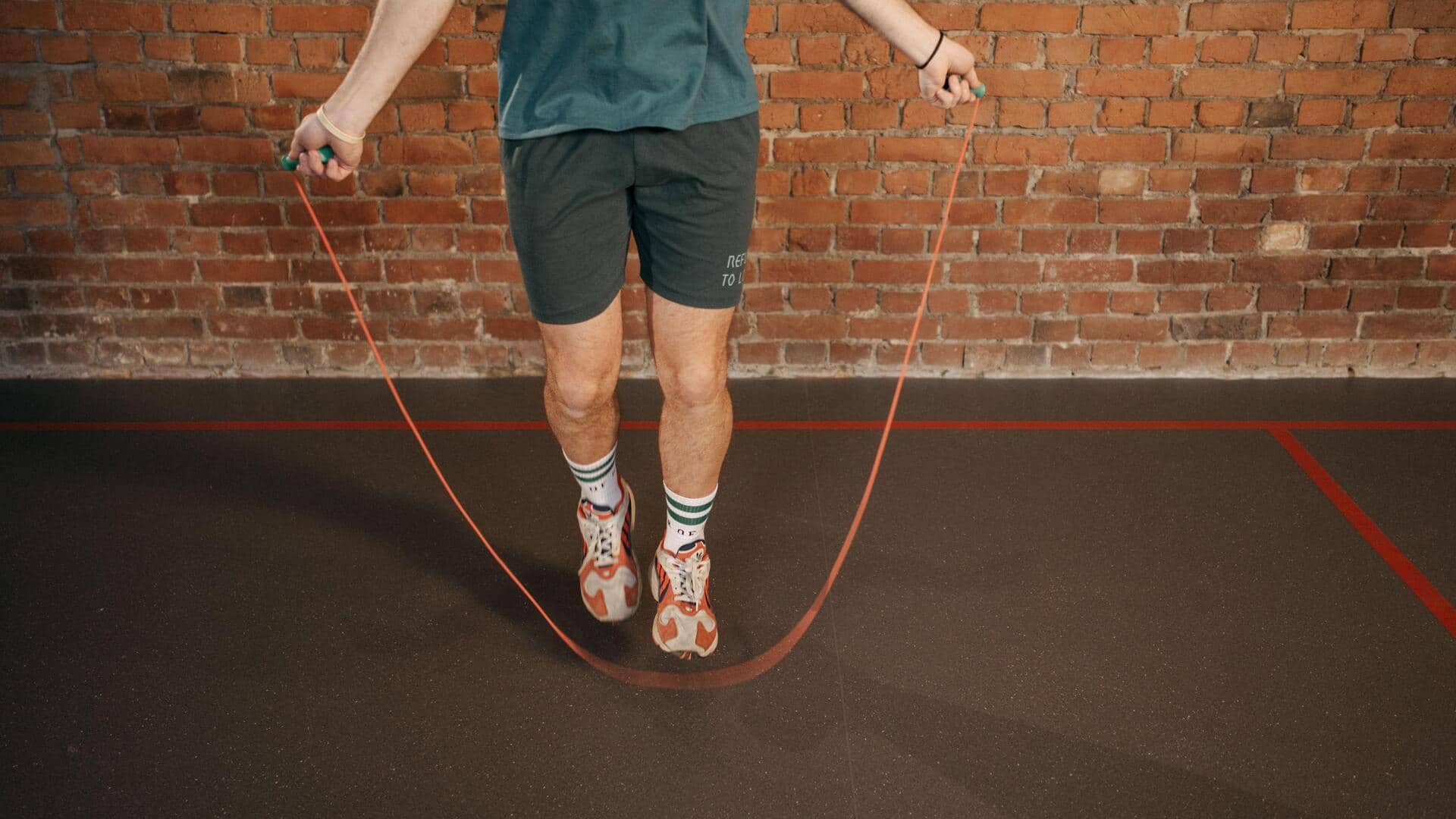
Walking v/s skipping: Which is better for your heart?
What's the story
Walking and skipping are two popular forms of cardiovascular exercise, both of which can help you improve your heart health. While walking is a low-impact activity that most people can do, skipping is a high-intensity workout that can give you a quick calorie burn. Knowing the benefits of both exercises can help you choose the right one for your fitness goals and lifestyle.
#1
Benefits of walking for heart health
Walking is often recommended for heart health, as it is easy to do and has a low risk of injury.
It improves circulation, lowers blood pressure, and strengthens the heart muscle.
Regular brisk walking can lower the risk of heart disease by up to 30% to 40%.
Plus, it's good for all age groups and fitness levels, making it an accessible option for most.
#2
Skipping: A high-intensity workout
Skipping is a high-intensity workout that can improve cardiovascular fitness in a short period of time.
It increases your heart rate quickly, resulting in improved circulation and oxygen delivery to the muscles.
Skipping also helps burn calories faster than walking, making it an ideal option for those looking to lose weight or improve their endurance levels.
#3
Calorie burning potential compared
When it comes to calorie burning, skipping usually beats walking by a long shot.
A 70 kg person would burn around 600 calories per hour of moderate skipping, as opposed to 200 calories per hour of brisk walking.
This makes skipping an efficient option for those short on time but looking for an effective workout.
#4
Choosing based on personal goals
Choosing between walking and skipping should depend on your personal fitness goals and preferences.
If you are looking for a low-impact exercise that you can do regularly without much equipment or space, walking is a great choice.
On the other hand, if you are looking for a quick, high-intensity workout that challenges your cardiovascular system more intensely, consider adding some skipping sessions into your routine.