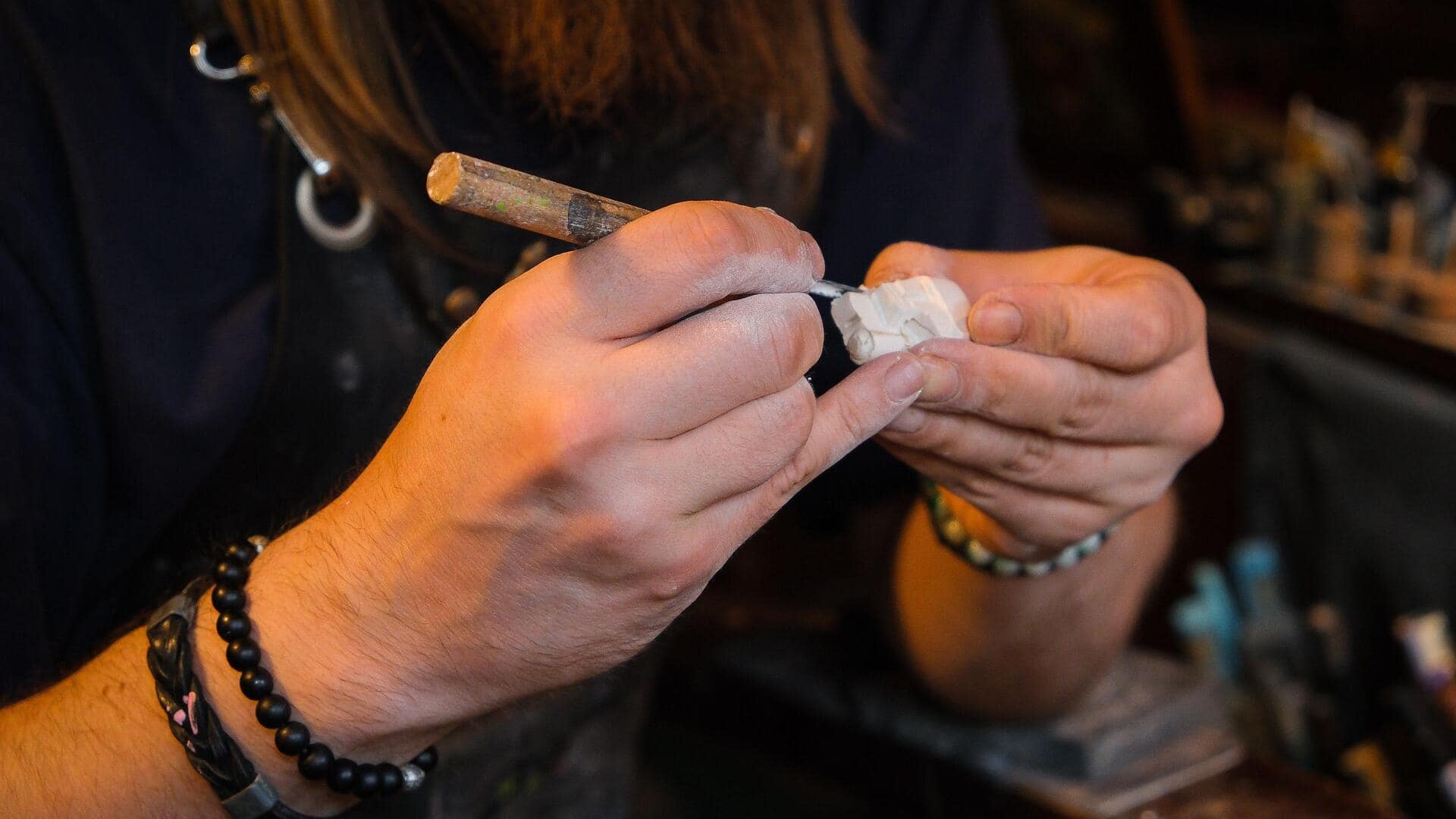
Want to try wax modeling? Start with these simple tips
What's the story
Wax modeling is a fascinating art form that lets you create intricate designs with the malleable medium of wax. The process involves heating wax to make it pliable, and then shaping it into desired forms. This ancient technique is widely used in sculpture, jewelry making, and even in creating prototypes for various industries. With just a few basic tools and techniques, anyone can delve into the world of wax modeling and explore their creative potential.
Tools
Essential tools for wax modeling
To start with wax modeling, you need some basic tools.
A heat source is essential to melt the wax, be it a heat gun or a candle flame.
Sculpting tools help in shaping and detailing the wax as it cools.
A cutting knife is important for precise edges and cuts.
These simple tools make it easy to start creating intricate designs.
Techniques
Basic techniques to master
Mastering some basic techniques is key to successful wax modeling.
Start by learning how to properly melt and pour the wax without air bubbles forming.
Practice smoothing surfaces with your fingers or tools while the material is still warm but not too hot to touch.
Experiment with different methods of adding texture or detail by pressing patterns into the softened wax.
Tips
Tips for creating intricate designs
Creating intricate designs in wax requires patience and precision.
Start with small projects to build confidence before tackling more complex pieces.
Use reference images or sketches as guides during the modeling process.
Pay attention to proportions and symmetry, ensuring that each part of your design complements the whole.
Mistakes
Common mistakes to avoid
Avoid common mistakes by ensuring proper temperature control when melting wax; too hot can ruin details, while too cool makes it hard to mold.
Don't rush through steps; let layers cool properly before adding more elements. This prevents distortion in finished pieces.