Why certain foods are avoided on Maha Shivratri
What's the story
Maha Shivratri is not just a festival, but an experience that calls for discipline and mindfulness. The food rules associated with this day are influenced by centuries of belief and bodily observation. Unlike other festivals that celebrate abundance, Maha Shivratri encourages devotees to slow down their bodies so their minds can remain alert. This is because what you eat directly impacts your thoughts, restlessness levels, and ability to sit in silence.
Fasting significance
Why is fasting important?
The goal of fasting on Maha Shivratri is not to punish the body, but to reduce digestive, mental, and emotional noise.
Heavy or stimulating foods distract from inner focus. Lighter and simpler foods help redirect attention inward.
This shift is key to understanding why certain foods are avoided during this festival.
Dietary restrictions
Foods that are avoided
On Maha Shivratri, grains and cereals like rice, wheat, dals, and pulses are avoided.
These foods are nutritious but heavy and grounding. Their digestion requires energy that is better conserved on a night dedicated to wakefulness and meditation.
Regular salt is replaced with sendha namak (rock salt) as it is less processed and gentler on the system during fasting.
Processed vrat snacks such as chips and sweets are avoided as they disturb digestion and mental calm.
Food exclusions
Foods that are universally avoided
Onions and garlic are avoided on Maha Shivratri as they are considered too stimulating for this context. They can heighten restlessness, appetite, and emotional volatility.
Non-vegetarian food and alcohol are also universally avoided as Shivratri is about restraint and non-violence toward oneself.
Intoxicants and heavy proteins can make one feel lethargic or drowsy which defeats the purpose of fasting on this day.
Permissible items
Foods that can be consumed
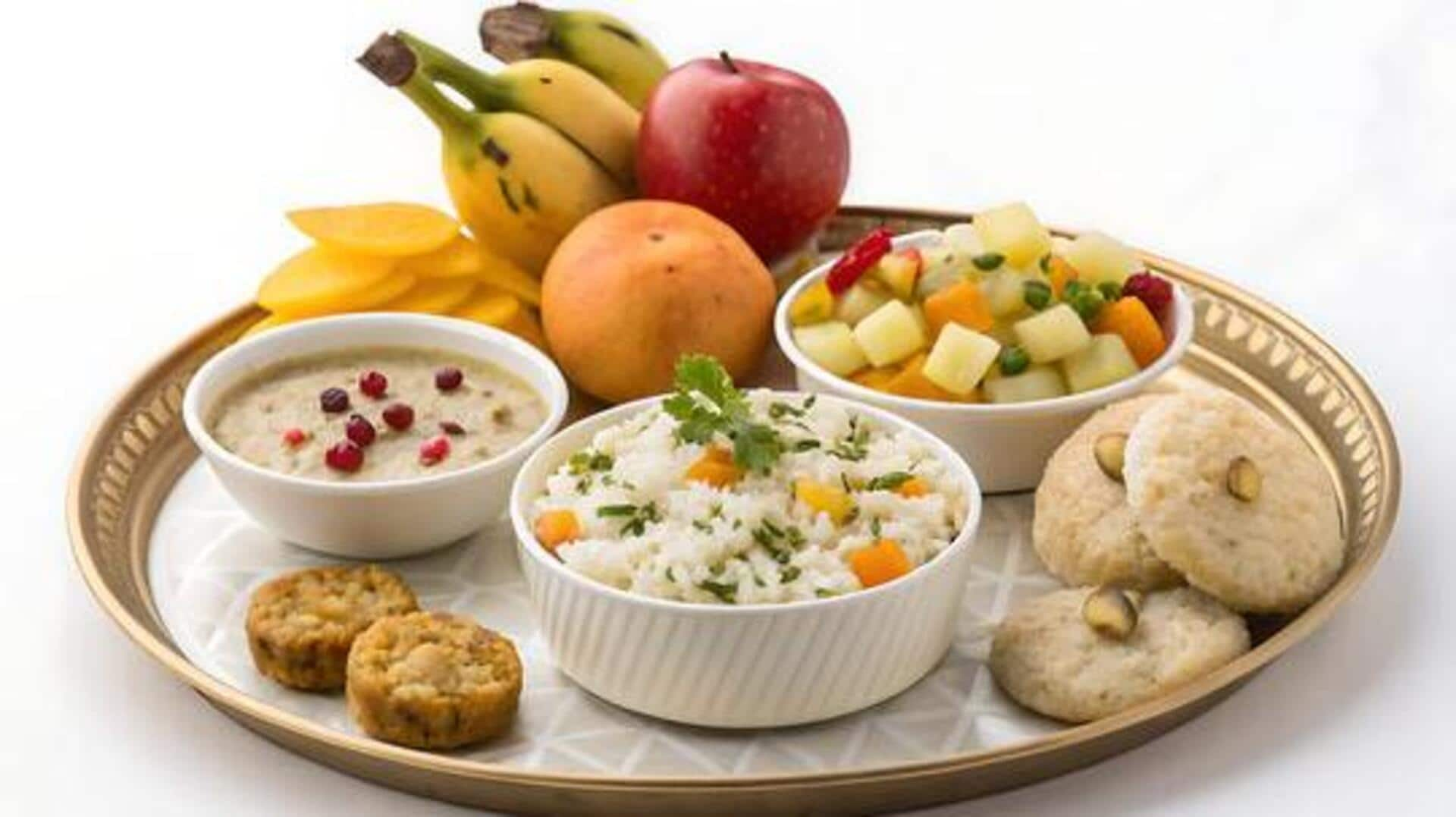
Despite the restrictions, Shivratri is not about deprivation. Fresh fruits are the mainstay of most fasts as they are hydrating and light.
Dairy products like milk, curd, paneer (cottage cheese), buttermilk, and ghee (clarified butter) play a key role in Shivratri fasting both ritually and nutritionally.
Singhara flour (water chestnut flour), kuttu flour (buckwheat flour), and rajgira flour (amaranth flour) are allowed during fasting as they provide warmth without returning to routine foods.