
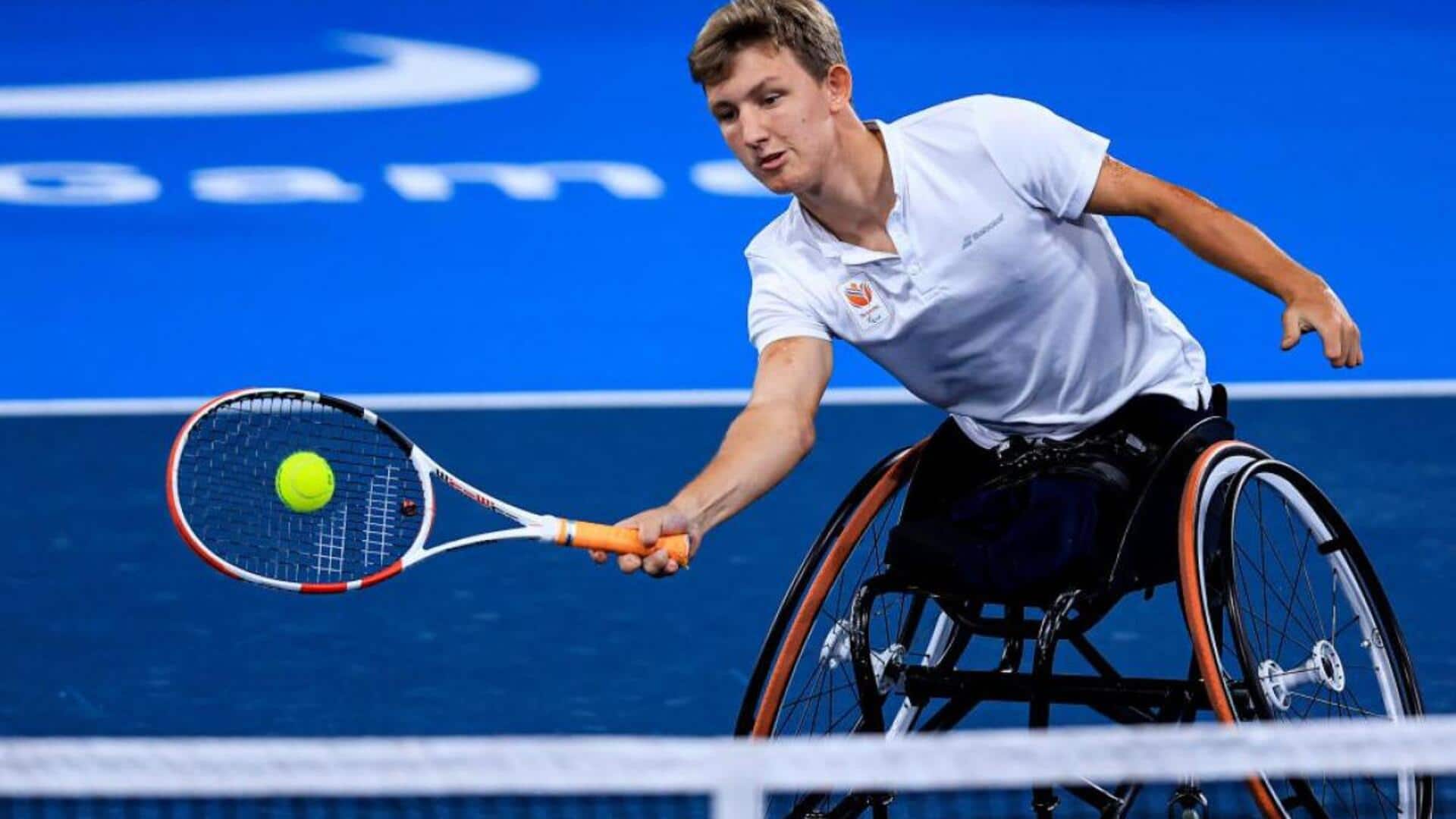
Wheelchair tennis v/s boccia: Which improves strategic thinking more?
What's the story
Wheelchair tennis and boccia are two popular adaptive sports that provide unique mental challenges. While both require strategic thinking, they do so in different ways. Understanding these differences can help players and coaches develop better strategies and improve their game. This article explores the mental aspects of each sport, highlighting how they differ in terms of strategy and decision-making processes.
Tennis insights
Understanding wheelchair tennis strategies
Wheelchair tennis is a fast-paced game that requires quick thinking and adaptability. Players must constantly assess their opponent's position, anticipate shots, and make split-second decisions. The court's dimensions and the game's pace add layers of complexity, demanding players to develop strategies on the go. Effective communication with coaches off-court can also enhance strategic planning during matches.
Boccia Focus
Analyzing boccia's mental challenges
Boccia is a precision sport that emphasizes accuracy and control over speed. Players must carefully plan their moves by considering the placement of balls on the court. This requires a deep understanding of angles, weight distribution, and timing. The slower pace allows for more contemplative decision-making processes compared to wheelchair tennis.
Mental contrasts
Comparing decision-making processes
In wheelchair tennis, decisions are often made in response to immediate stimuli from opponents or environmental factors like wind or court surface changes. In contrast, boccia players engage in more prolonged deliberation before executing each throw or shot adjustment. This difference highlights how each sport's structure influences cognitive engagement levels.
Improvement strategies
Tips for enhancing strategic thinking in both sports
To improve strategic thinking in either sport, players should focus on practice drills that emphasize situational awareness and adaptability under pressure for tennis or precision targeting techniques for boccia. Regular review sessions with coaches can also provide valuable insights into areas for improvement, while reinforcing successful strategies already employed during gameplay experiences.