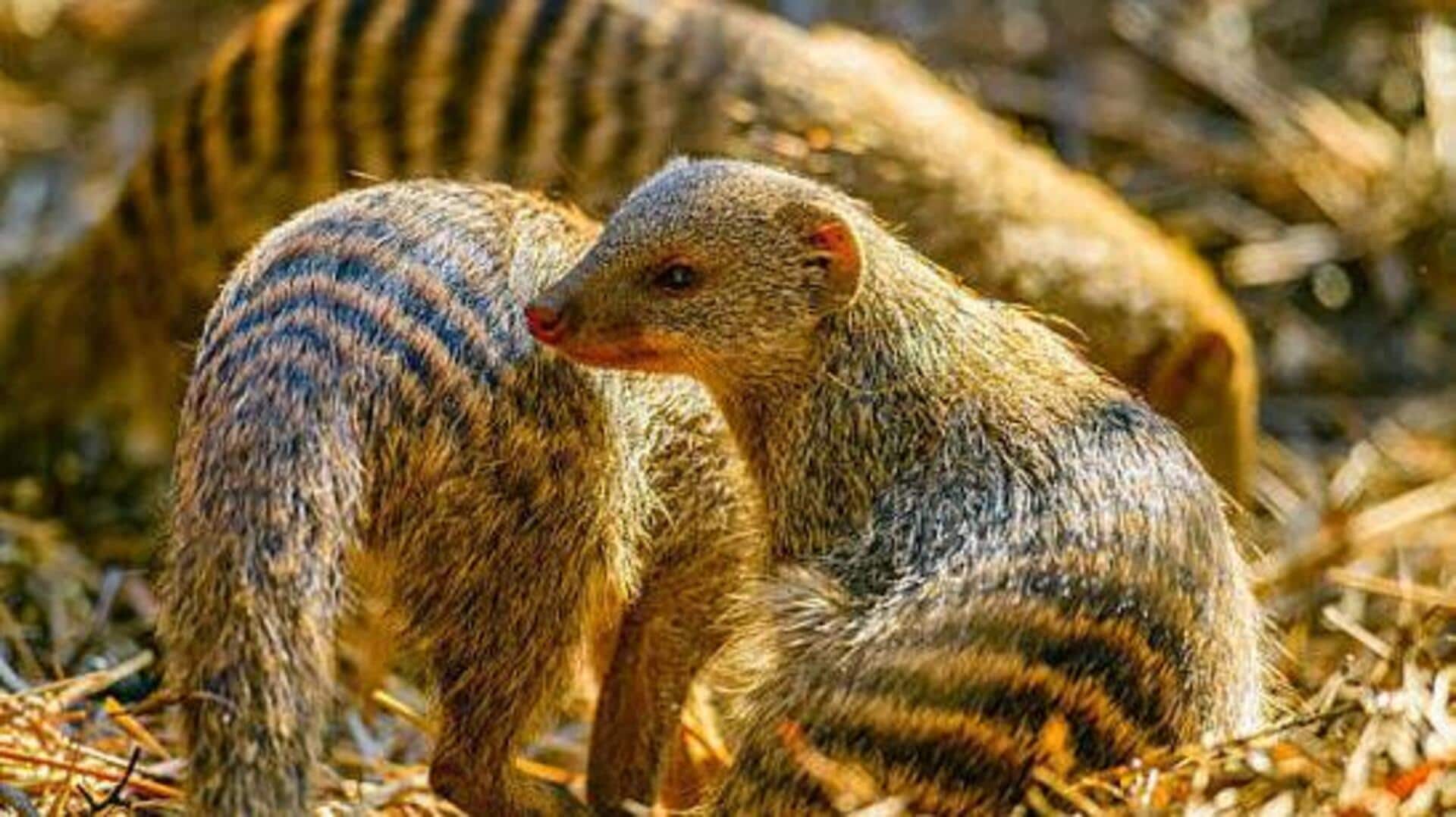
Wildlife lovers, here's where to spot banded mongooses
What's the story
Uganda's Kibale Forest is famous for its biodiversity, particularly its population of banded mongooses. These social creatures are a delight for wildlife enthusiasts, photographers, and nature lovers. The forest is home to a number of habitats, making it an ideal spot for spotting these mongooses. Here's how you can spot them and what makes Kibale Forest special.
Timing
Best time to visit Kibale Forest
The best time to visit Kibale Forest is during the dry seasons, which run from December to February, and June to September.
During these months, the trails are less muddy, and the visibility is better. Banded mongooses are more active during the day, making it easier to spot them during these periods.
However, if you do not mind the rain, visiting during the wet season can also be rewarding as it brings out different aspects of the forest's ecosystem.
Tours
Guided tours for mongoose spotting
Joining a guided tour is one of the best ways to spot banded mongooses in Kibale Forest.
Local guides are well-versed with the habits of these animals and can take you to places where they are commonly seen.
The tours usually include walks through different parts of the forest, giving you a chance to see other wildlife as well.
Hiring a guide also helps support local communities, conservation efforts, and preservation initiatives.
Behavior
Understanding banded mongoose behavior
Banded mongooses are social animals that live in groups called clans.
They are known for their cooperative behavior, such as grooming each other, and working together to find food.
Observing their interactions can give you insight into their complex social structure.
These mongooses primarily feed on insects and small invertebrates, which are abundant in Kibale Forest's rich ecosystem.
Photography
Photography tips for capturing mongooses
To capture stunning photos of banded mongooses, use a zoom lens so that you do not disturb them from a distance.
Early morning or late afternoon light is best for natural lighting conditions.
Patience is key, as these animals are constantly on the move.
Respect wildlife by not getting too close or trying to touch them, keeping your distance for their safety and yours.