These whole grains should be used in your everyday meals
What's the story
Whole grains are an essential part of a healthy diet, providing vital nutrients and fiber. They help in digestion and lower the risk of chronic diseases. For beginners, knowing which whole grains to include in their diet can be helpful. Here are five beginner-friendly whole grains that are easy to cook and versatile in different recipes. They can help you get started on a healthy eating journey.
#1
Brown rice: A versatile staple
Brown rice is a popular whole grain that retains its bran layer, making it more nutritious than white rice.
It is rich in fiber, vitamins B1 and B6, and minerals like magnesium.
Brown rice can be used in salads, stir-fries, or as a side dish with vegetables.
Its mild flavor makes it go well with different cuisines.
#2
Quinoa: The protein-packed grain
Quinoa is a protein-rich whole grain that has all nine essential amino acids.
It is gluten-free and packed with fiber, iron, and antioxidants.
Quinoa cooks quickly compared to other grains and can be used in soups or as a base for salads.
Its nutty flavor adds depth to meals while providing essential nutrients.
#3
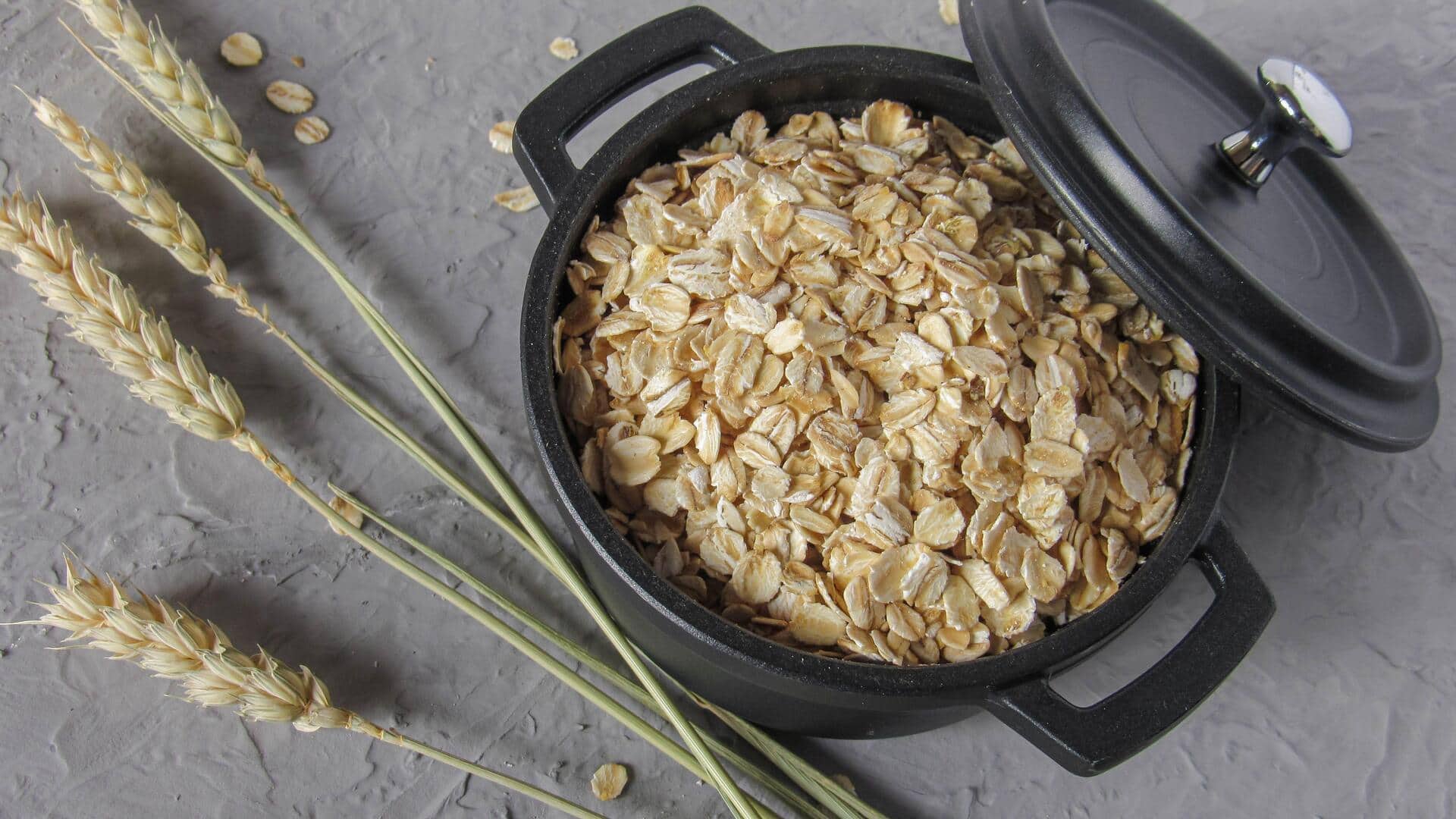
Oats: The breakfast champion
Oats are an ideal breakfast option as they are high in soluble fiber, which helps lower cholesterol levels.
They provide vitamins B1 and B5, iron, magnesium, zinc, copper, manganese, selenium, phosphorus, folate, and protein content per serving size.
Oats can be cooked into porridge or added to smoothies for an extra nutritional boost.
#4
Barley: The heart-healthy choice
Barley is another heart-healthy whole grain loaded with beta-glucans, a type of soluble fiber that helps lower cholesterol levels.
It is also rich in vitamins B1 and B3, manganese, selenium, copper, phosphorus, magnesium, iron, zinc, potassium, calcium, and protein content per serving size.
Barley can be added to soups or stews for added texture and nutrition.
#5
Millet: The ancient grain
Millet, an ancient grain, has been consumed for thousands of years in different cultures around the world.
It is gluten-free and packed with fiber, magnesium, phosphorus, manganese, copper, and protein content per serving size.
Millet can be cooked like rice or used as flour in baking recipes such as bread or pancakes.