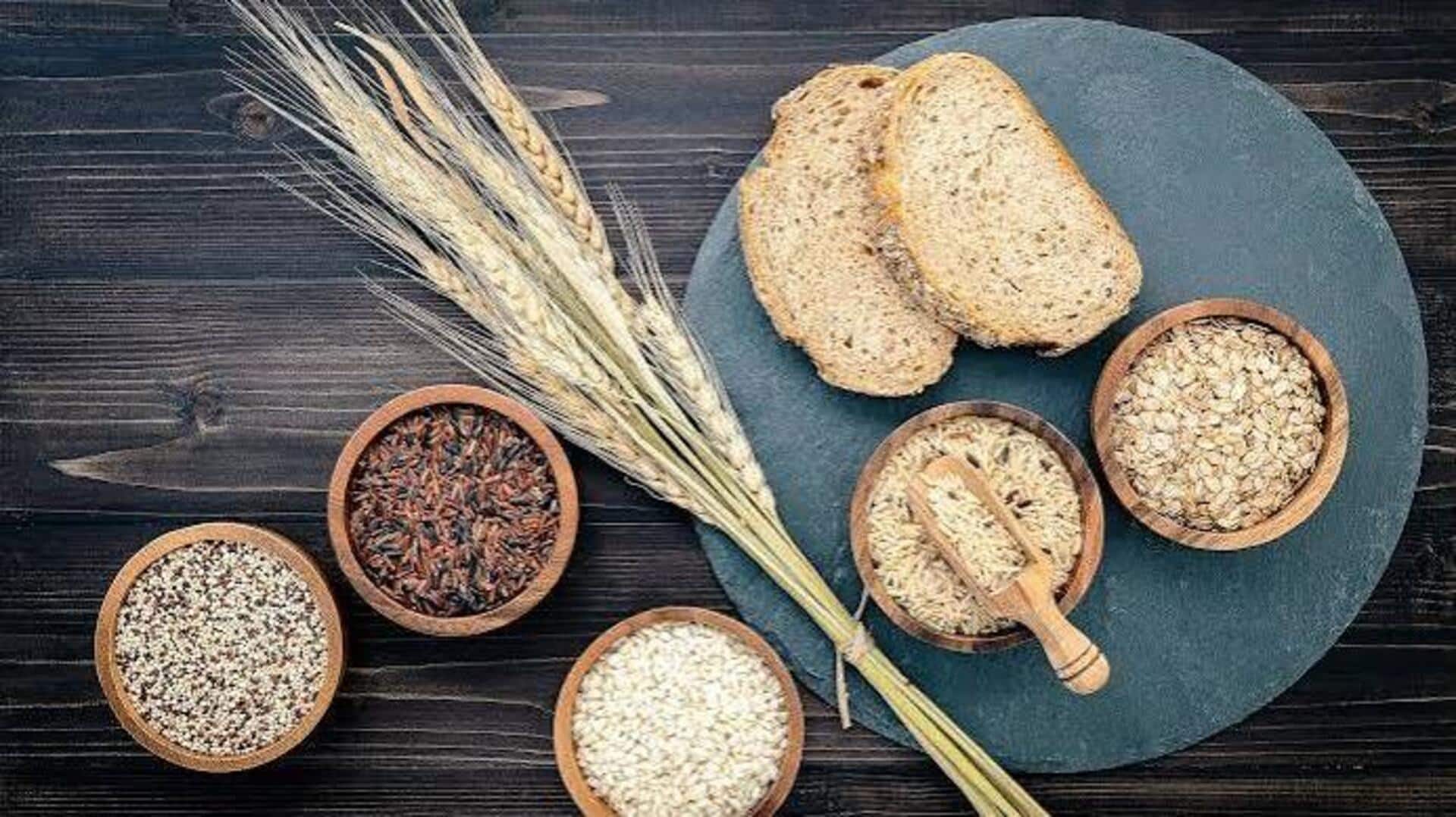
What everyone gets wrong about whole grains
What's the story
Whole grains are often touted as a superfood, but there are many misconceptions about their health benefits. While they are a good source of fiber and nutrients, not all whole grains are created equal. Knowing the truth behind these myths can help you make better dietary choices. Here, we debunk five myths about whole grains, and their actual impact on health.
#1
Myth: All whole grains are the same
Not all whole grains are created equal. Each type has its own nutritional profile and health benefits.
For instance, brown rice has more fiber than white rice, but may not be as nutrient-dense as quinoa or barley.
Knowing the differences can help you choose the right grain for your dietary needs and preferences.
#2
Myth: Whole grains cause weight gain
A common misconception is that eating whole grains leads to weight gain because of their carb content.
However, whole grains can actually help in weight management by keeping you full longer, thanks to their fiber content.
Eating them in moderation, as part of a balanced diet, could help with weight control instead of making you gain.
#3
Myth: Whole grains are gluten-free
Many think that all whole grains are gluten-free, but that is not true.
Wheat, barley, and rye are some of the most common whole grains that contain gluten.
For those with celiac disease or gluten sensitivity, it is important to choose certified gluten-free options, like brown rice or millet, to avoid adverse reactions.
#4
Myth: Whole grain products are always healthy
Just because a product says whole grain doesn't mean it's healthy.
Some processed foods with whole grains can still be high in sugar, salt, or unhealthy fats.
It's important to read labels carefully and consider the overall nutritional value of a product, rather than just its whole grain content.
#5
Myth: You can't eat whole grains on a low-carb diet
Some think low-carb diets do not allow whole grains at all, but that is not true.
You can include small portions of high-fiber whole grains like oats or quinoa, while keeping your carb intake low by balancing them with other low-carb foods, like vegetables and legumes.