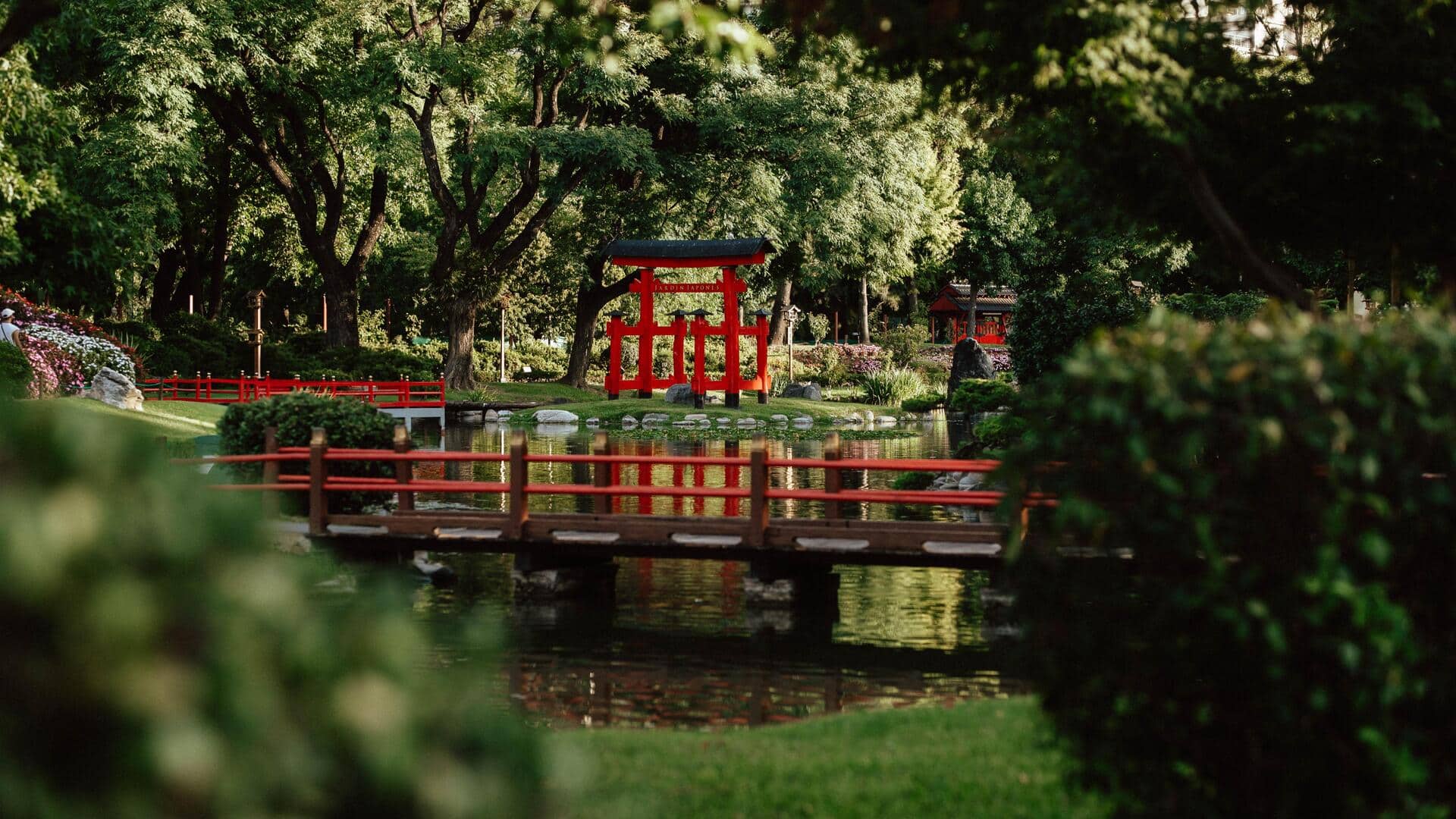
What makes Japanese zen gardens so special?
What's the story
Japanese zen gardens, also known as karesansui, are an integral part of Japanese culture. These minimalist gardens are designed to promote peace and meditation, using sand, rocks, and sometimes moss or gravel. The design is simple yet profound, inviting contemplation and mindfulness. They are a reflection of the Japanese philosophy of simplicity and harmony with nature.
#1
The art of simplicity
Zen gardens are all about simplicity. They use only a few elements, like sand or gravel, rocks, and sometimes plants.
The idea is to create a balanced landscape that encourages meditation.
The raked patterns in the sand are meant to symbolize water, while rocks can represent mountains or islands.
This minimalism is at the heart of Zen philosophy.
#2
Symbolism in design
Every element in a zen garden has a symbolic meaning.
Rocks can symbolize strength or permanence, while sand represents tranquility or the flow of time.
The arrangement of these elements is not random but carefully planned to convey specific messages or emotions.
This symbolism adds depth to the garden's aesthetic appeal.
#3
Maintenance as meditation
Maintaining a zen garden is an act of meditation in itself.
Regular raking of the sand patterns requires focus and mindfulness, allowing one to clear their mind while tending to the garden.
This practice reinforces the meditative purpose of the garden by encouraging individuals to be present in the moment.
#4
Historical significance
Zen gardens have been a part of Japanese culture since the 14th century, introduced by Zen monks as a means of meditation and reflection.
They gained popularity during the Muromachi period, when many famous gardens were created.
Their historical significance extends beyond aesthetics; they are a testament to Japan's rich cultural heritage and philosophical traditions.