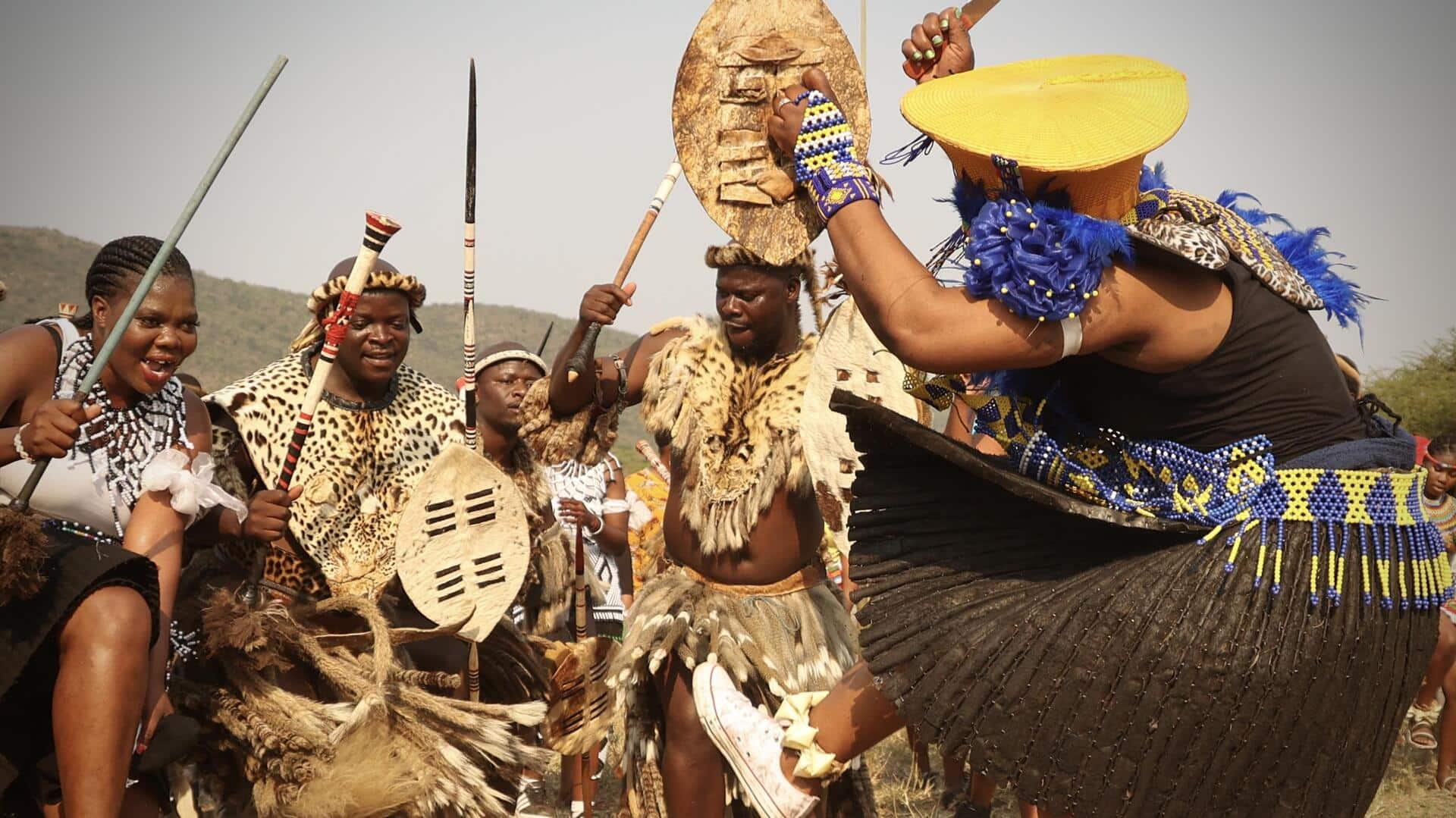
Zulu wedding traditions: Attire, rituals, and more
What's the story
Zulu weddings are a vibrant tapestry of traditions and customs, deeply rooted in the culture of the Zulu people. These ceremonies are not just about uniting two individuals, but also about bringing together families and communities. The events are filled with colorful attire, traditional rituals, and meaningful symbols that have been passed down through generations. Each element of a Zulu wedding holds cultural significance, making it a unique celebration of heritage and unity.
#1
Traditional attire in Zulu weddings
Traditional attire is an integral part of Zulu weddings, showcasing the rich cultural heritage of the community.
Women usually wear isidwaba (a traditional skirt) and umbhaco (a headband), while men wear ibheshu (a loincloth) and amacubo (a headband).
The colors and patterns used in these outfits often signify different things, such as family status or personal achievements.
Attire is not just about looking good, it represents identity and pride.
#2
Rituals that define Zulu weddings
Zulu weddings are characterized by a number of rituals that are performed to ensure the union is blessed by ancestors.
One of the most important rituals is known as ukuthwala, where the groom's family formally asks for the bride's hand by presenting gifts to her family.
Other rituals include exchanging of gifts between families, and ceremonial dances that involve everyone present.
#3
Significance of cow gifting
Gifting cows has always been an integral part of Zulu wedding ceremonies, symbolizing wealth and prosperity.
The number of cows gifted can differ based on family customs or negotiations between families.
Cows are also seen as a symbol of fertility and abundance, blessing the couple with a prosperous life together.
#4
Community involvement in celebrations
Zulu weddings are community affairs, with friends and relatives actively participating in every step of the ceremony.
From organizing pre-wedding events to performing traditional dances during the ceremony, community members play an important role.
This collective participation strengthens social bonds within communities and reinforces cultural identity through shared experiences.