33% women quota push exposes big gap in India's legislatures
What's the story
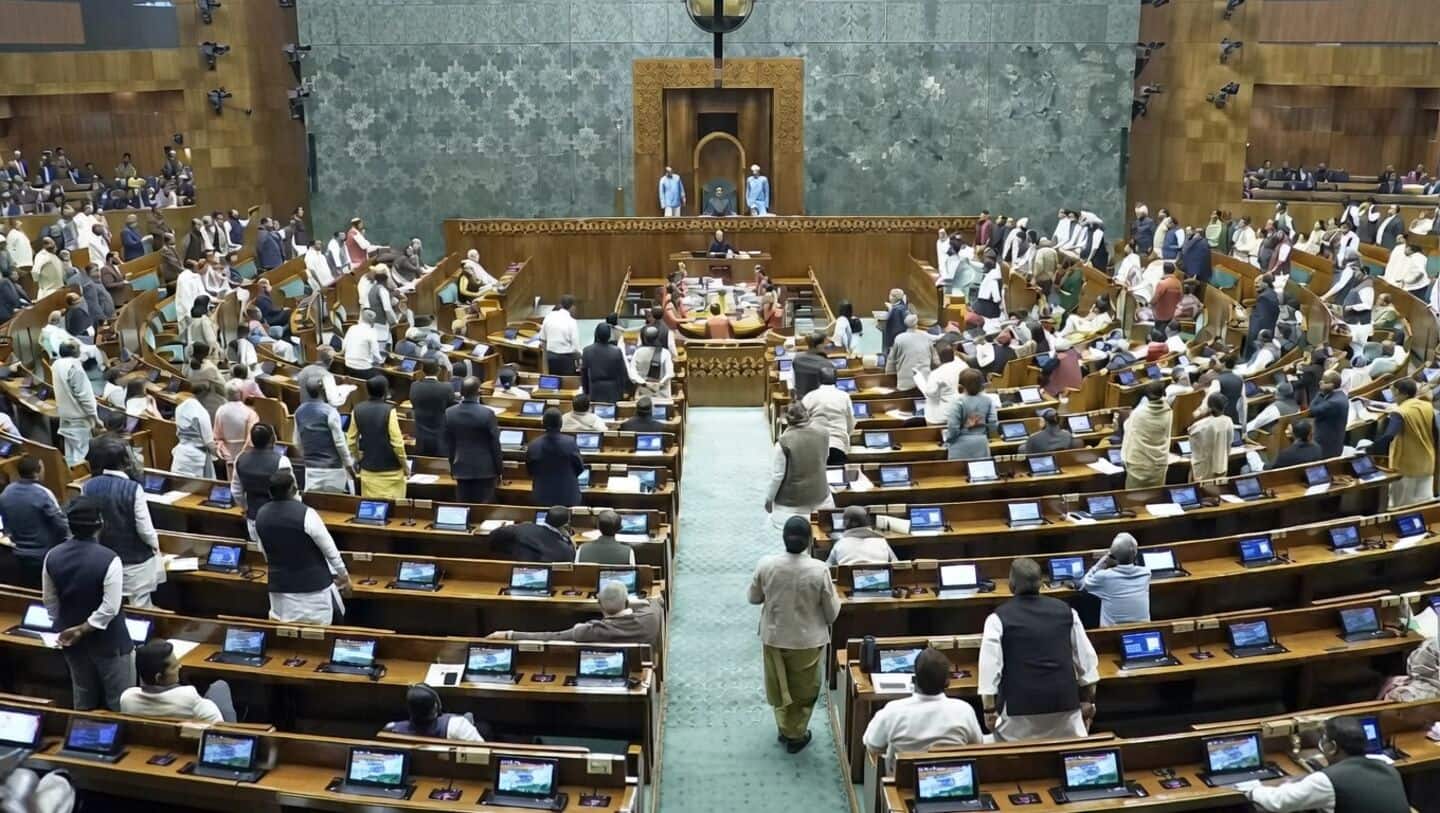
The Narendra Modi-led government has called a special session of Parliament from April 16-18 to discuss the Women's Reservation Bill. The bill seeks to reserve 33% of seats in the Lok Sabha and state assemblies for women by 2029. Prime Minister Modi called this decision one of the biggest of the 21st century, citing studies that show increased women's participation leads to greater sensitivity in decision-making processes.
Bill background
The Women's Reservation Bill was 1st introduced in 1996
The Women's Reservation Bill was first introduced in the Lok Sabha in September 1996 as the 81st Amendment Bill by then Prime Minister HD Deve Gowda's United Front government.
The bill seeks to amend the Constitution to reserve one-third of seats for women, including those reserved for Scheduled Castes and Scheduled Tribes.
It also proposes periodic rotation of reserved constituencies across different constituencies within each state or Union Territory.
Representation update
Women MPs now make up only 13.6% of the House
The 2024 Lok Sabha elections were the first to be held after the Women's Reservation Bill was introduced.
However, women MPs now make up only 13.6% of the House, a slight decline from 14.3% in 2019.
In total, only 74 women MPs were elected to the 18th Lok Sabha, down from 78 in the previous term.
State representation
Women MLAs in state assemblies
Women constitute only 9% of the total strength of state assemblies, with only 390 out of 4,123 MLAs being women.
Uttar Pradesh has the highest number of women MLAs at 47, followed by West Bengal (40), Bihar (29), and Madhya Pradesh (27).
The Bharatiya Janata Party has the most women legislators at 163, followed by Congress with 59 and Trinamool Congress with 34.
Opposition stance
Congress leaders accuse Centre of political gain
Congress chief Mallikarjun Kharge has accused the Centre of rushing the process for political gain, with four states heading to polls.
He pointed out that despite unanimous passage in 2023, the government has not implemented it yet.
Congress parliamentary party chairperson Sonia Gandhi also emphasized delimitation as a more pressing issue than reservation, questioning the Centre's priorities in calling a special session.