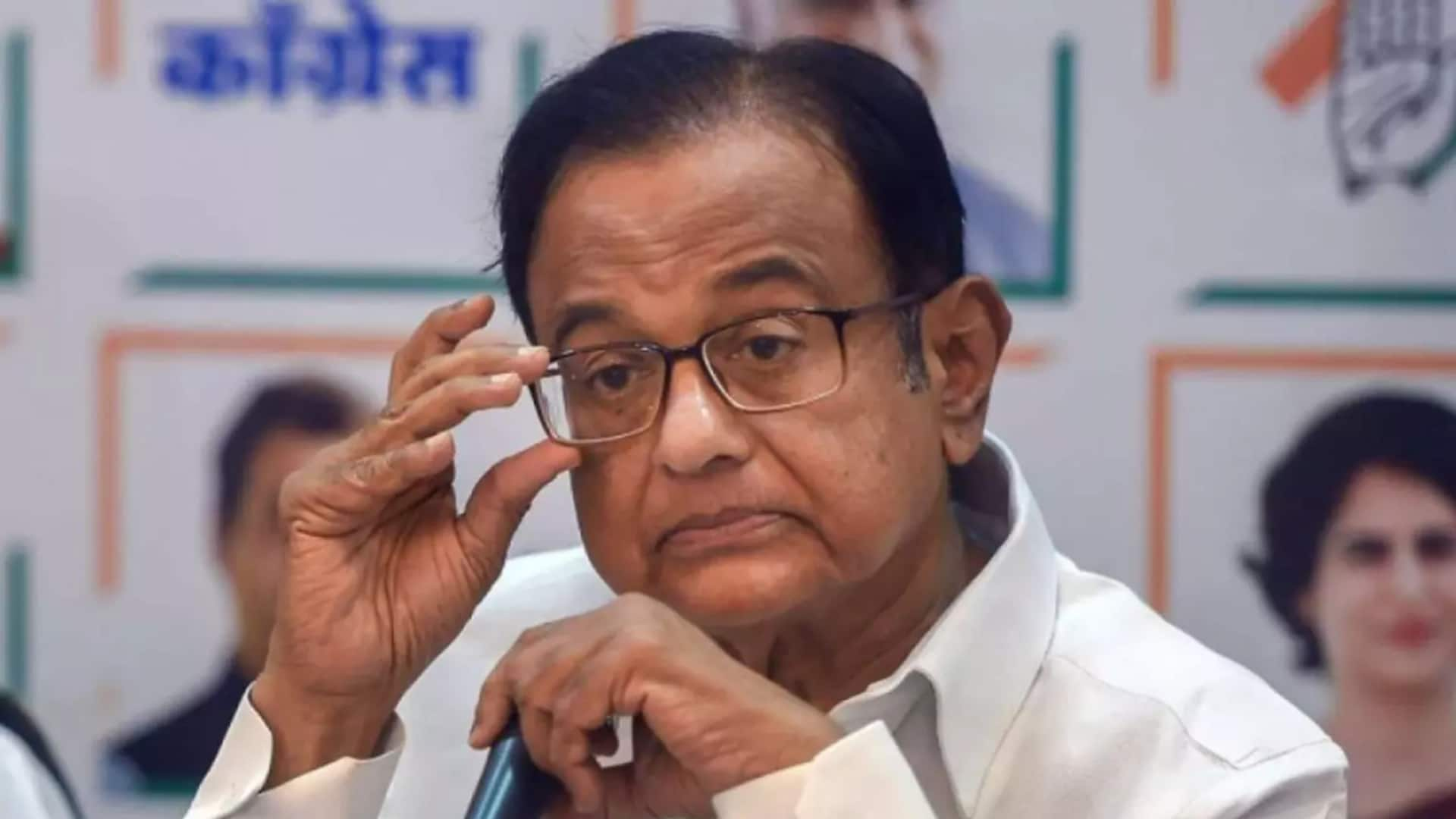
Chidambaram avoids comment on Trump's 'dead economy' remark
What's the story
Congress MP P Chidambaram on Sunday declined to comment on United States President Donald Trump's "India is a dead economy" statement. During an interaction, Chidambaram was asked by reporters to comment on Trump's statement. He responded by saying that he didn't have the context of the original remarks. The remark was made in July last year after Trump imposed a 25% "penalty" tariff on India for purchasing Russian oil.
Economic remarks
Trump said this about India
Trump had said, "I don't care what India does with Russia. They can take their dead economies down together, for all I care..." The next day, Leader of the Opposition Rahul Gandhi echoed Trump's sentiment. He had said, "He is right, everybody knows this except the Prime Minister and Finance Minister. I am glad President Trump stated a fact..." However, some of Gandhi's colleagues disagreed with the remark. Rajya Sabha MP Rajiv Shukla, for example, termed Trump's remark "completely wrong."
Budget criticism
Gandhi used 'dead economy' line again in budget attack
Last month, ahead of the budget announcement, Gandhi raised concerns about tariffs affecting small textile businesses. After a visit to a clothing factory in Haryana and said on X, "50% US tariffs are badly hurting textile exporters. Job losses, shutdowns... are reality of our 'dead economy.'" After Finance Minister Nirmala Sitharaman presented the budget without immediate relief for middle-class taxpayers and caused a market crash (Sensex fell 1,500 points), Chidambaram led Congress's critique.
Infrastructure critique
Chidambaram, Gandhi slam budget
Chidambaram criticized the budget for reducing capital expenditure as a percentage of GDP from 3.2% in FY25 to 3.1%. He pointed out discrepancies in revenue receipts and total expenditure: "Revenue receipts short by ₹78,086 crore...total expenditure short by ₹1,00,503 crore...revenue expenditure short by ₹75,168 crore..." Meanwhile, Gandhi slammed the budget for ignoring unemployment, farmers' distress, shrinking household savings, and a lack of investments. He called it "a budget that refuses course correction (and is) blind to India's real crises."