Claims of 27L Bengal voters put in 'doubtful' list rejected
What's the story
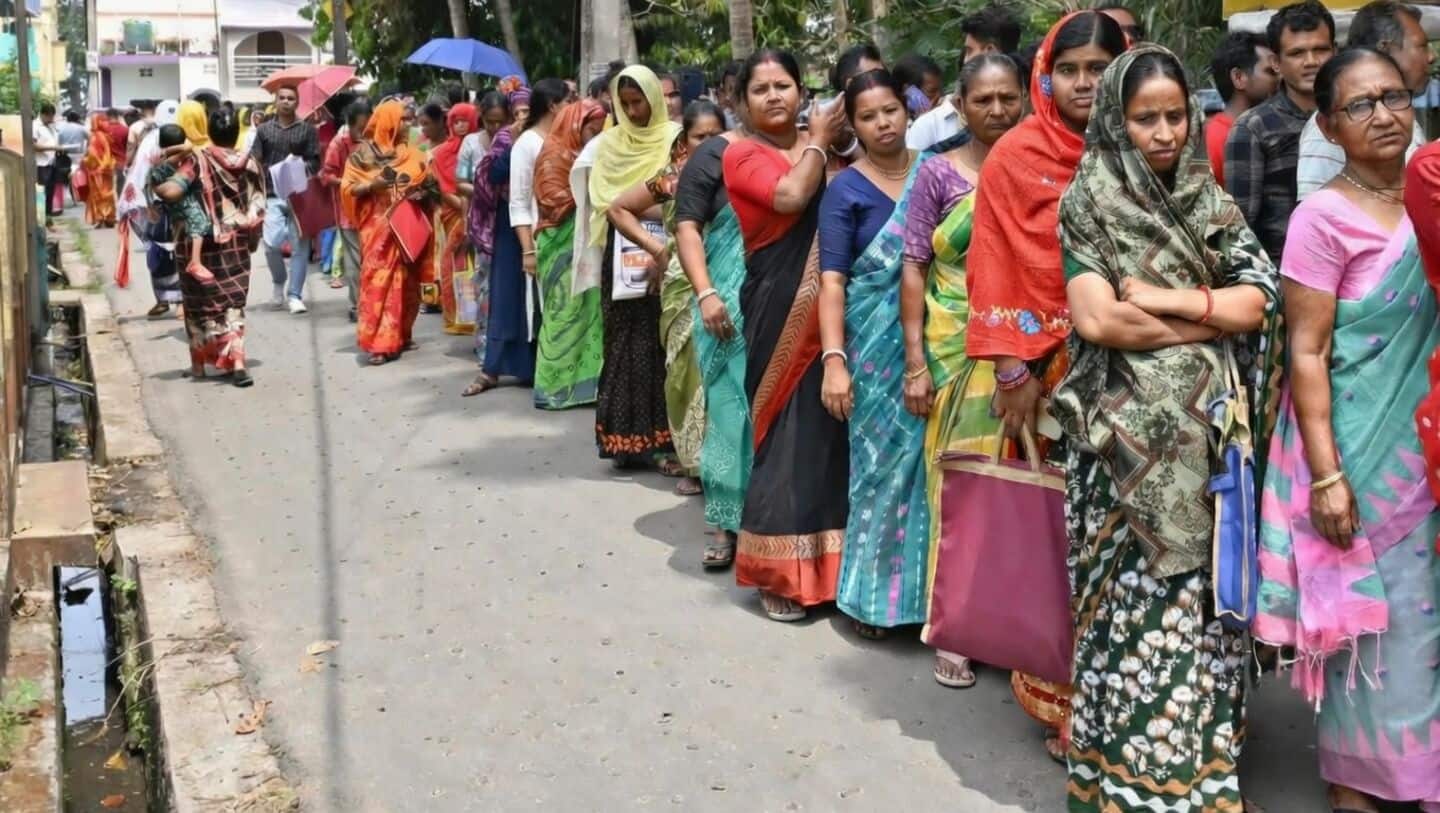
The Supreme Court has rejected appeals from the West Bengal government and supporters of the Trinamool Congress (TMC) seeking the inclusion of voters whose appeals against deletion are still pending before 19 special appellate tribunals. Claims of nearly 27 lakh voters were put on a "doubtful" list during the SIR exercise. With the SC decision, they may not be able to vote in the upcoming Assembly elections. The deadline for excluded voters from the 152 first-phase constituencies expired on Monday.
Court decision
Claims scrutinized by judicial officers: SC
A bench headed by Chief Justice of India Surya Kant refused to include names pending appeal before 19 special appellate tribunals headed by retired High Court chief justices and judges.
The court said, "The claims have been scrutinized by judicial officers performing the task of electoral registration officers."
"We allowed inclusion of names of those cleared by the judicial officers by providing for supplementary lists beyond the publication of the final voter list (on February 28)," said the top court.
Voter removal
61.7 lakh names removed for reasons other than 'doubtful'
Apart from the 60 lakh people marked as "doubtful," another 61.7 lakh names were removed from the rolls during SIR.
The removals were due to reasons such as death, change of residence, dual registration, or inability to trace the individual.
This brings total deletions to around 88.8 lakh voters, which is about 11.6% of the electorate at the start of SIR.
Appeal process
Appeals to burden tribunals, lead to chaos: Bench
The bench noted that if lakhs of appeals are to be adjudicated by April 15, it would create a burden on the tribunals and lead to chaos.
Senior advocate Shyam Divan, representing the Bengal government and TMC supporters, said nearly seven lakh appeals have been filed.
He urged these be decided by April 15 for inclusion in the final electoral roll.
Tribunal management
Appellate tribunals should be empowered to issue interim directions
Senior advocate Kapil Sibal argued that appellate tribunals should be empowered to issue interim directions for inclusion of voters who had voted earlier.
However, the SC refused to interfere.
"The appellate tribunals will formulate procedure and ensure that natural justice is followed and the final order will take a month or maybe even 60 days. We cannot on that apprehension alone allow some people to be included because they were earlier mapped," Justice Joymalya Bagchi said.