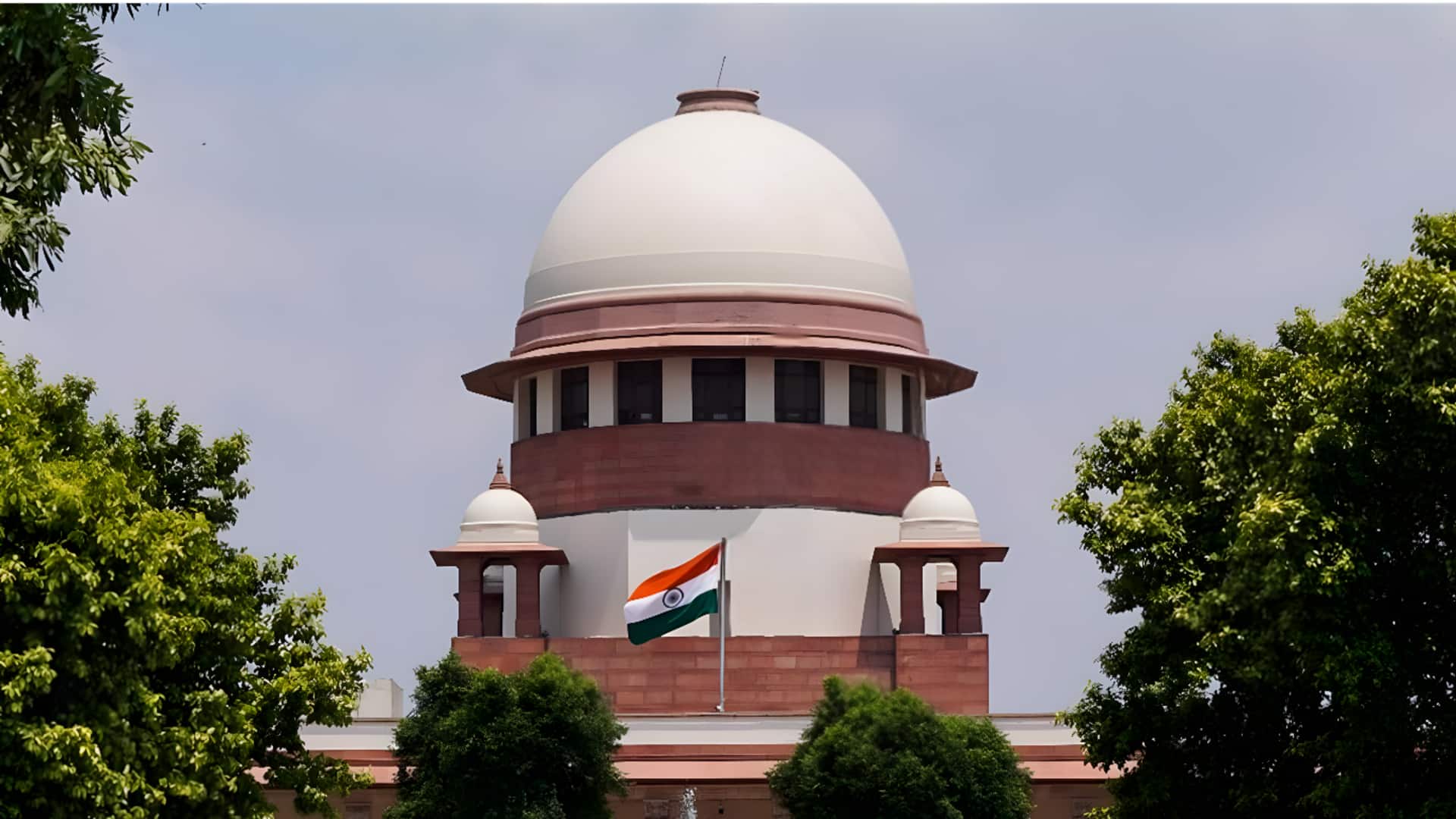
SC issues notice to ECI over West Bengal welfare benefits
What's the story
The Supreme Court has issued notice to the Election Commission of India (ECI) and the West Bengal government in a case concerning welfare benefits for those deleted from electoral rolls under Special Intensive Revision (SIR). The plea, filed by Prasenjit Bose, argues that deletion shouldn't automatically exclude individuals from government schemes like the Public Distribution System (PDS) and the Annapurna scheme. Chief Justice of India Surya Kant led a bench that included Justices Joymalya Bagchi and V Mohana.
Legal concerns
Senior advocate highlights pending appeals and consequences of deletion
Senior Advocate Gopal Sankaranarayanan, representing Bose, highlighted that nearly 34 lakh appeals are pending before Special Tribunals.
He also noted that only 19 tribunals are currently functioning, and two judges have resigned.
"The consequences of a deletion now... PDS, Annapurna, caste certificates, and verification," he submitted.
Past judgment
Justice Bagchi refers to past SC ruling on Bihar sir
Justice Bagchi referred to a past Supreme Court ruling on the Bihar SIR exercise, clarifying that "the ECI...cannot decide citizenship."
The court had directed the ECI to refer such matters to the Ministry under the Citizenship Act.
Despite this, Sankaranarayanan argued that affected individuals are facing immediate hardships due to exclusion from welfare schemes.
Transparency plea
Petitioner calls for more transparency from special tribunals
The petitioner also sought more transparency from Special Tribunals, asking for websites to upload standard operating procedures and adjudication orders.
Sankaranarayanan questioned the need for multiple documents to prove citizenship, suggesting passports should suffice.
He urged the court to invoke Article 142 to protect affected individuals from being denied welfare benefits while their citizenship issues are unresolved.