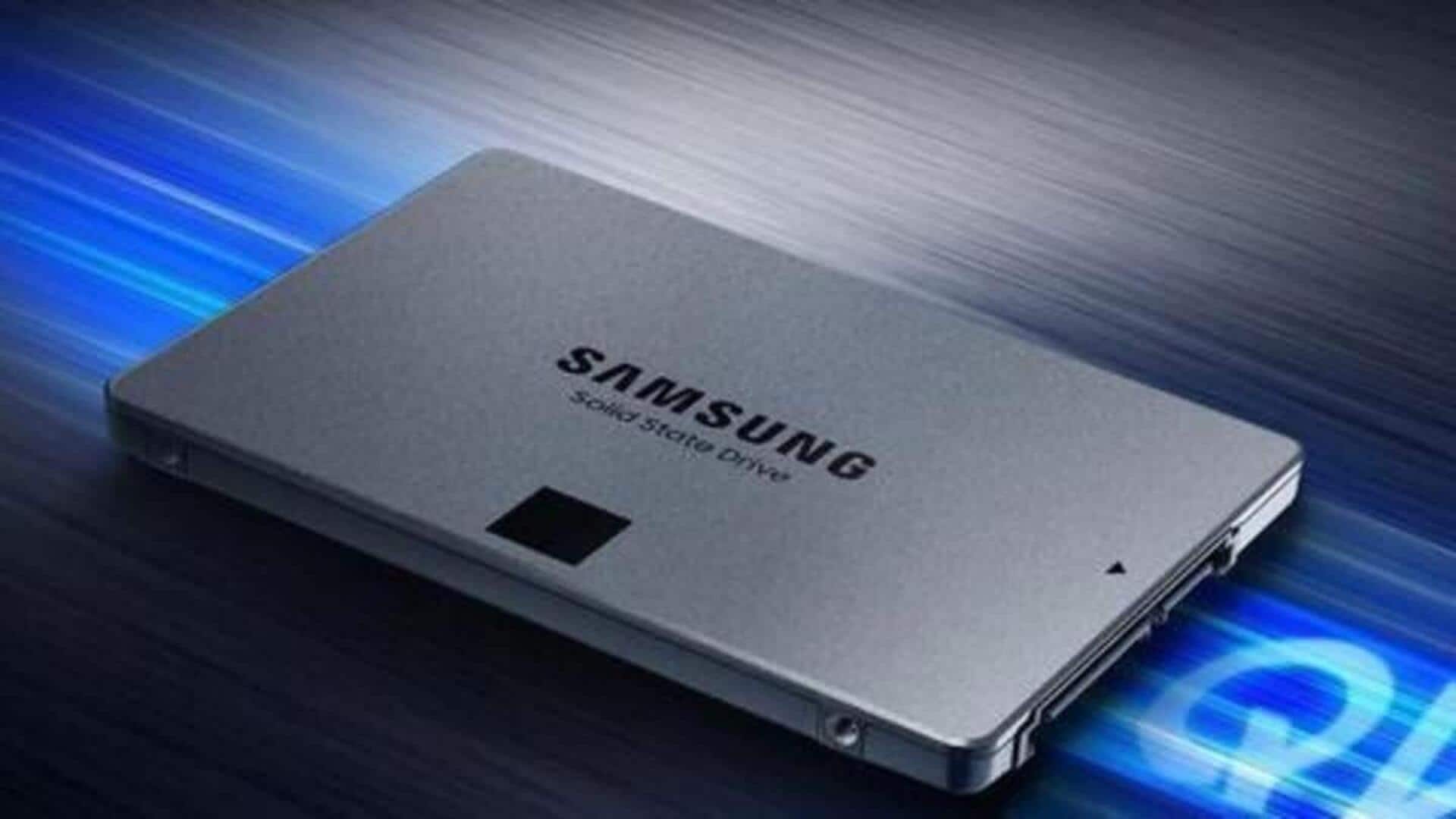
After RAM, AI boom sends SSD prices soaring
What's the story
The rapid rise of artificial intelligence (AI) is causing a major spike in the price of storage devices like Solid State Drives (SSDs) and Hard Disk Drives (HDDs). The demand for these components has skyrocketed due to their use in AI applications. This has led to a supply shortage, driving prices up significantly. For instance, the cost of the WD Black SN850X 2TB SSD has nearly quadrupled since November 2025.
Market impact
Price hikes across the board
The price hike isn't limited to one brand or model. For instance, the 4TB variant of the popular Samsung 990 Pro SSD has gone from $320 to nearly $1,000.
External SanDisk SSDs also witnessed a whopping 200% price increase at Apple's Store in March.
Even Sony has stopped accepting orders for its SD and CFexpress cards amid this market turmoil.
Consumer alert
Framework warns of more price hikes
Modular PC brand Framework has also warned its customers about more price hikes as it runs out of its existing storage inventory.
Even HDDs are feeling the pinch, with Western Digital and Seagate nearly running out of their entire 2026 inventory as of February.
According to PC Part Picker's price trends, NVMe SSD prices started rising in December 2025 and are now double or triple what they were just a few months ago.
Supply chain
Few manufacturers dominate the market
The AI industry's demand is outpacing supply from a handful of manufacturers, resulting in a major cut in the inventory available to consumers.
According to Counterpoint Research, the same few brands that dominate the RAM market also dominate the global NAND market - Samsung, SK Hynix, and Micron.
NAND flash memory is used for SSDs, USB drives, and SD cards due to its speed and energy efficiency compared to mechanical HDDs.
Cost efficiency
HDD prices are also increasing
Despite being less efficient than SSDs, HDDs are more cost-effective for storing large amounts of data.
This is especially true for the massive datasets required for AI, which could explain why HDD prices are also on the rise.
For example, a 2TB Seagate Barracuda 3.5-inch HDD that cost $47 a few years ago now costs $90.
Market dominance
Massive profits for NAND brands
All three leading NAND brands have been raking in huge profits from the AI boom, profits that the consumer market can't compete with.
Micron even exited the consumer RAM and SSD market last year.
As of March, Micron said it's "seeing NAND demand significantly in excess of our available supply for the foreseeable future," as its NAND revenue has grown 169% year-over-year.