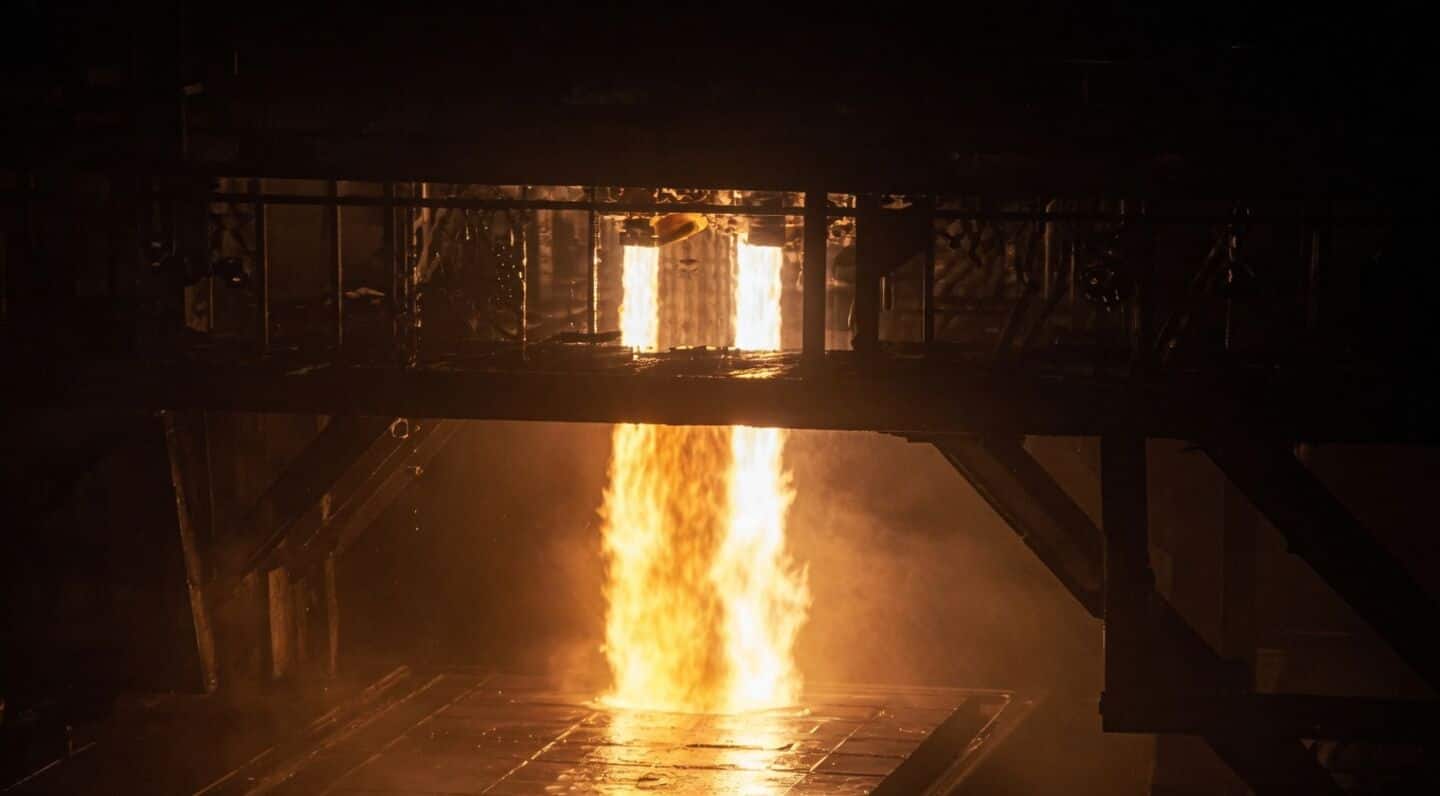
Watch: Agnikul Cosmos test-fires its first 4-engine rocket cluster
What's the story
Chennai-based space start-up Agnikul Cosmos has achieved a major milestone by successfully test-firing four semi-cryogenic rocket engines together for the first time. The successful test is a major step toward launching their own rockets into orbit. The engines were 3D printed as single pieces at their facility and use a special fuel that's easier to handle than traditional propellants.
Twitter Post
Take a look at the test
Humbled to share that we successfully test fired 4 semi-cryogenic rocket engines simultaneously, as a cluster.
— AgniKul Cosmos (@AgnikulCosmos) May 19, 2026
All the 4 engines are 3d printed as single pieces of hardware - designed and manufactured in-house at AgniKul Cosmos Rocket Factory - 1. As with all our propulsion… pic.twitter.com/3wtpdGS4lK
Technological advancement
Synchronizing the engines
The rocket engines from Agnikul are powered by electric motors that drive pumps. The team worked hard to synchronize all eight pumps and motors so they started, ran smoothly, and stopped together without issues. This successful test is a major achievement for the company as it shows their engines can work together reliably in real flight conditions, where even a small mismatch in power or timing could lead to failure.
Historic achievement
Building on previous tests
The successful test of this four-engine cluster is a first in India and builds on their previous three-engine trials. Each step helps the team collect data, solve problems, and improve their designs. These engines will power Agnikul's Agnibaan rocket, a small launch vehicle designed to carry small satellites into space quickly and affordably.
Sector growth
Support from government and ISRO
India's global reputation has been built on ISRO's successes, including the Mars mission and multiple recorded satellite launches. In recent years, the Indian government has encouraged private firms to enter the space sector. This has led to a wave of innovative start-ups like Agnikul, which is backed by IIT Madras, ISRO, and INSPACe.
Future prospects
Progress for India's private space industry
Agnikul's advanced 3D printing technology allows them to build complex engine parts faster, cheaper, and more reliably by reducing the weak joints. As demand for satellite launches grows for communication, weather monitoring, as well as research, flexible and low-cost rockets like Agnibaan will become important.