AI could generate enough e-waste to circle Earth 6 times
What's the story
The rapid growth of artificial intelligence (AI) technology has led to a major increase in electronic waste (e-waste). A new report by the Basel Action Network (BAN) warns that this surge is being largely underestimated. The study predicts that by 2050, the e-waste generated from AI could be enough to fill up 23 million shipping containers, or enough to circle the globe six times if lined up in a row.
Infrastructure impact
'AI waste contagion'
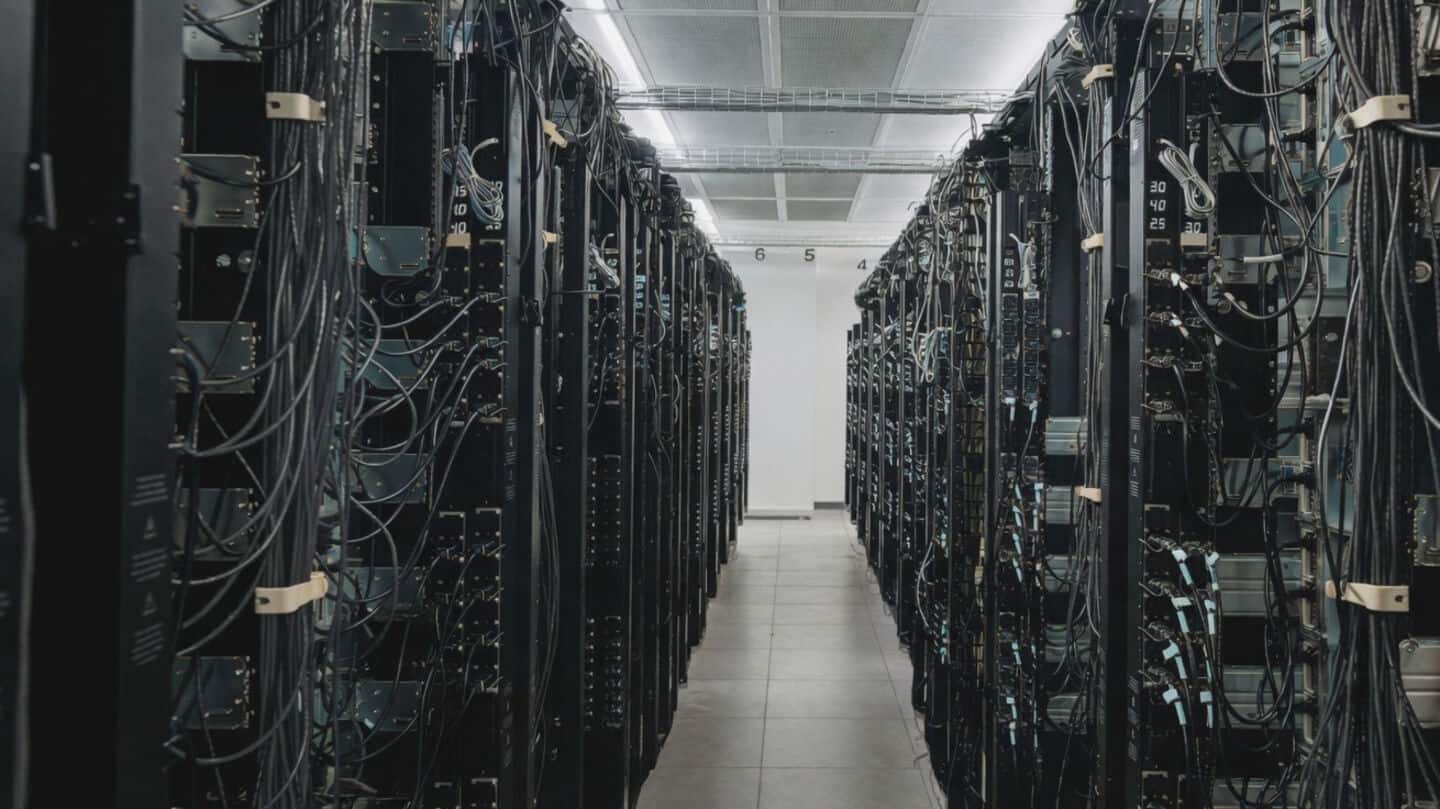
The BAN report takes a wider view of e-waste generation by considering all the infrastructure needed to support servers in data centers.
This includes power supply and distribution, cooling systems, backup power, and networking equipment.
The study also includes "AI Waste Contagion," a broad category that covers everything from telecommunications infrastructure to personal devices that could become obsolete sooner due to AI advancements.
E-waste projection
E-waste expected to triple by 2050
The BAN report estimates that globally, e-waste will triple to as much as 211 million metric tons a year by 2050. Of this, AI is expected to contribute around 15-20%.
The study predicts that for every gigawatt of data center capacity, there will be an estimated 70,000 metric tons of e-waste generated.
This number is based on a McKinsey prediction estimating total data center capacity could reach up to 219GW by 2030.
Future impact
Past estimates were conservative
Considering AI-related electronic equipment retired between 2025 and 2050, the BAN report estimates this will contribute to between 395 million metric tons and 617 million metric tons of e-waste by mid-century.
This translates to an annual retirement of between 8.6 million metric tons and 13.1 million metric tons of equipment due to AI.
Past estimates have been more conservative, as they only focused on servers and accelerators, missing about 87% of a data center's electro-mechanical infrastructure.
Health risks
Major toxic waste crisis
Jim Puckett, the founder of BAN, warned that the hardware required for AI models could lead to a major toxic waste crisis if not managed properly.
He said, "If companies and governments do not begin planning for this new waste tsunami, today's AI buildout could become an even more cataclysmic toxic waste crisis than we are already experiencing."