Create a dreamy indoor garden with these AI tools
What's the story
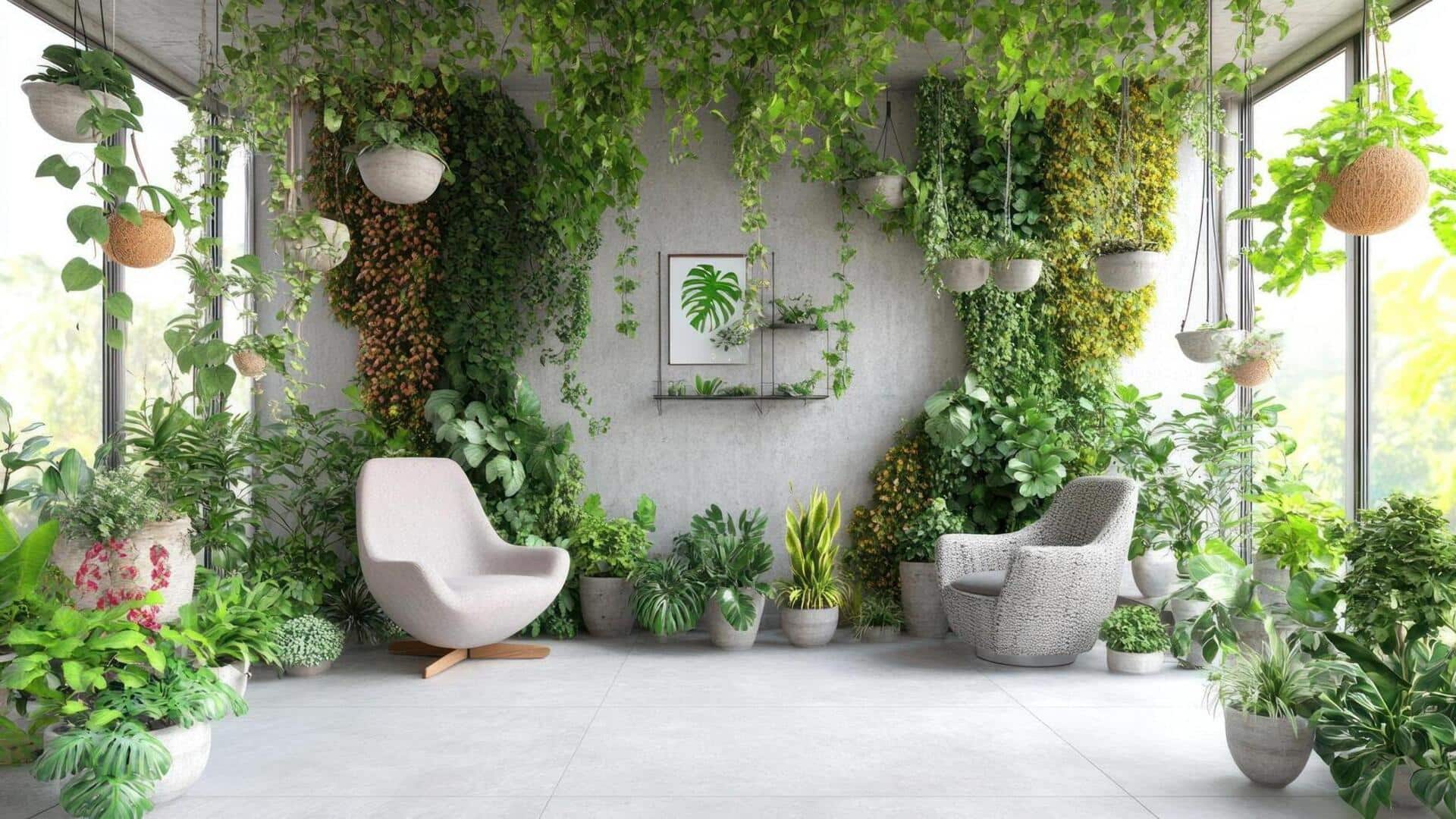
AI-driven design tools are changing the way we place indoor plants, making it easier than ever to create aesthetically pleasing, low-maintenance plant displays. By integrating visual planning with smart plant-care automation, these tools allow users to place greenery beautifully inside a room, preview various layouts, and keep them healthy with minimum effort. This is especially useful for small apartments, home offices, and living rooms, where space and style have to go hand in hand.
Tip 1
Visual planning with AI tools
AI tools such as Easy-Peasy.AI can redesign a plant room from a photo or sketch in seconds. They generate photorealistic layout ideas, letting users visualize different arrangements before making any changes.
Meanwhile, Ideal House lets users add virtual plants to an existing room photo, testing placement, size, and rotation, without moving anything physically.
This digital preview reduces guesswork and helps achieve a balanced aesthetic.
Tip 2
Matching styles with Decor8 AI
Decor8 AI provides another level of customization by assisting users with visualizing plant arrangements that perfectly match particular interior styles like Japandi or Scandinavian.
By creating interior styles based on user preferences, the tool ensures that the selected plant arrangement fits with the overall appearance of the space.
It enables experimenting with different styles until the perfect match is made.
Tip 3
Automated plant care systems
AI-powered indoor garden systems utilize sensors and machine learning to take care of watering, lighting, temperature, and humidity automatically.
This way, plants stay healthy without you having to get involved repeatedly.
For example, Gardyn combines hydroponics with automated growing support to keep a polished plant corner without any effort on your part.
Healthy plants make a great deal of difference to an aesthetic display.
Tip 4
Practical workflow for plant styling
A practical workflow would be to first test room composition with an interior design generator.
Next comes refining where each pot or shelf should go using a plant placement visualizer.
Finally, using a smart garden system maintains the plants over time.
This method works in spaces where light availability and style have to match perfectly, while reducing maintenance efforts through automation.