AI influencers are taking over social media
What's the story
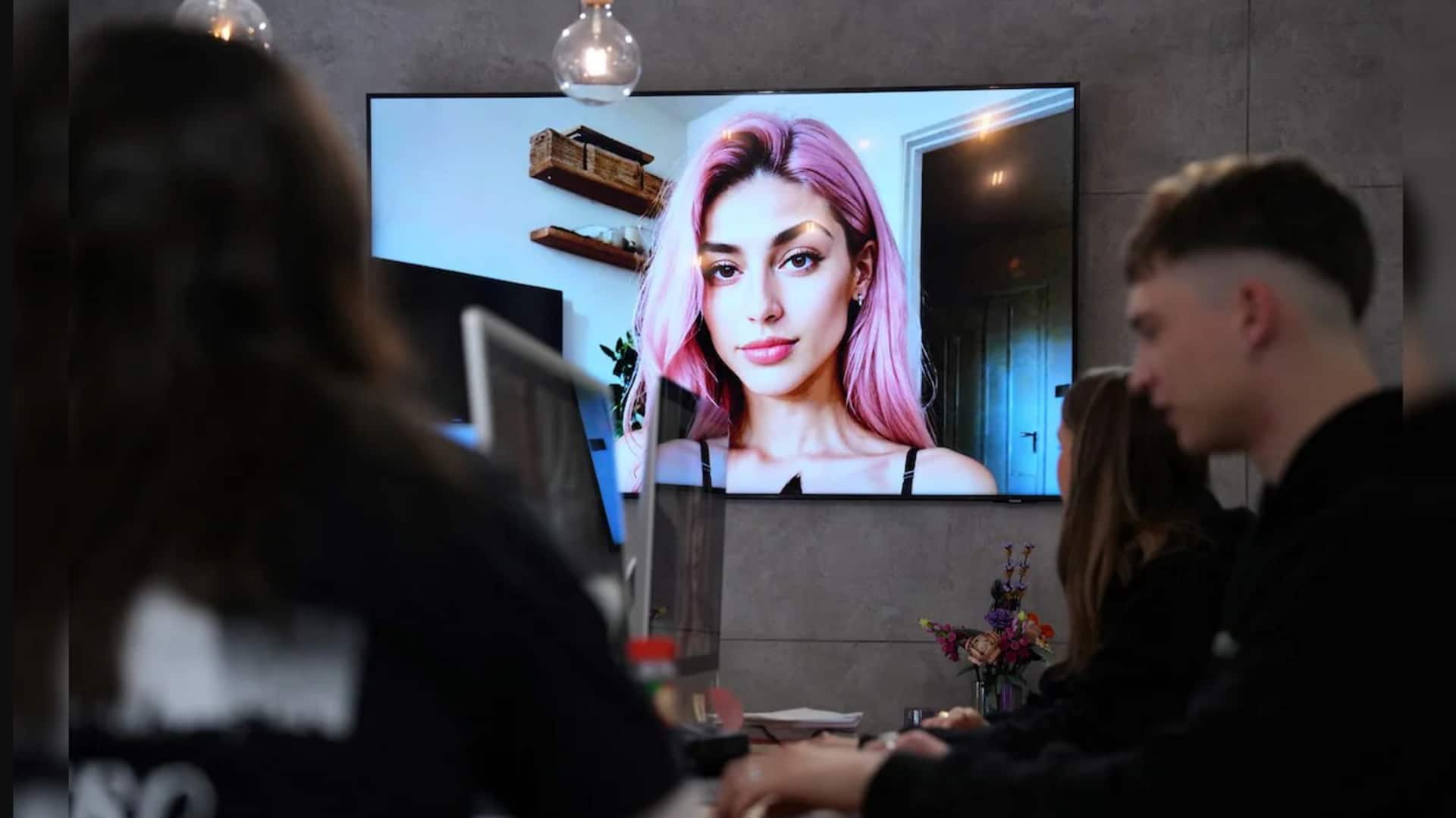
Artificial Intelligence (AI) is no longer just a tool for influencers to edit content or draft captions. It is now replacing them in certain cases, especially in the creator economy. According to Qoruz, a platform that tracks creators and collaborations, India currently has around 200 active AI influencer profiles with a minimum of 50,000 followers each. Nearly 90% of these accounts were created after 2023. The remaining 10% were launched between 2020 and 2022.
Market expansion
Most AI influencers belong to fashion and beauty sector
AI influencers are mostly found in the fashion and beauty sector (52%), followed by lifestyle and travel (25%) as well as arts and entertainment (12%).
Although they still remain a niche category, they are growing steadily with a monthly audience growth of about 6%.
Qoruz's data also shows that 15-25% of these accounts have at least one paid collaboration under their belt.
Brand appeal
Brands can create multiple AI accounts, gain followers over time
The allure of AI influencers for brands lies in their scalability, speed, and control.
"Make hundreds of such accounts on social media. Gain followers over time by dancing to every next trend," said Aditya Gurwara, Co-Founder - Brand Alliances at Qoruz.
He added that these accounts may be AI but their audience is real. This shows how brands can leverage these virtual personas for viral marketing campaigns.
Industry impact
Concerns over authenticity and audience fatigue
The rise of AI influencers has sparked concerns over authenticity, sustainability, and livelihoods.
While they can produce at scale and lower costs, an oversaturated market with indistinguishable content could lead to audience fatigue.
Currently, the engagement rate for AI influencers is 1.5%, much lower than the 4% average for human creators.
This data highlights their fragility in maintaining long-term loyalty among audiences.
Competitive advantage
Human creators still have an edge
Despite the rise of AI influencers, experts believe human creators still have a competitive advantage.
"What we're noticing is that trend-driving requires genuine cultural resonance, and that's still an area where human creators have a clear advantage," said Raj Mishra, CEO of Chtrbox.
This suggests that while AI can produce content at scale, it may not be able to replicate the emotional endorsement and credibility of human tech creators.