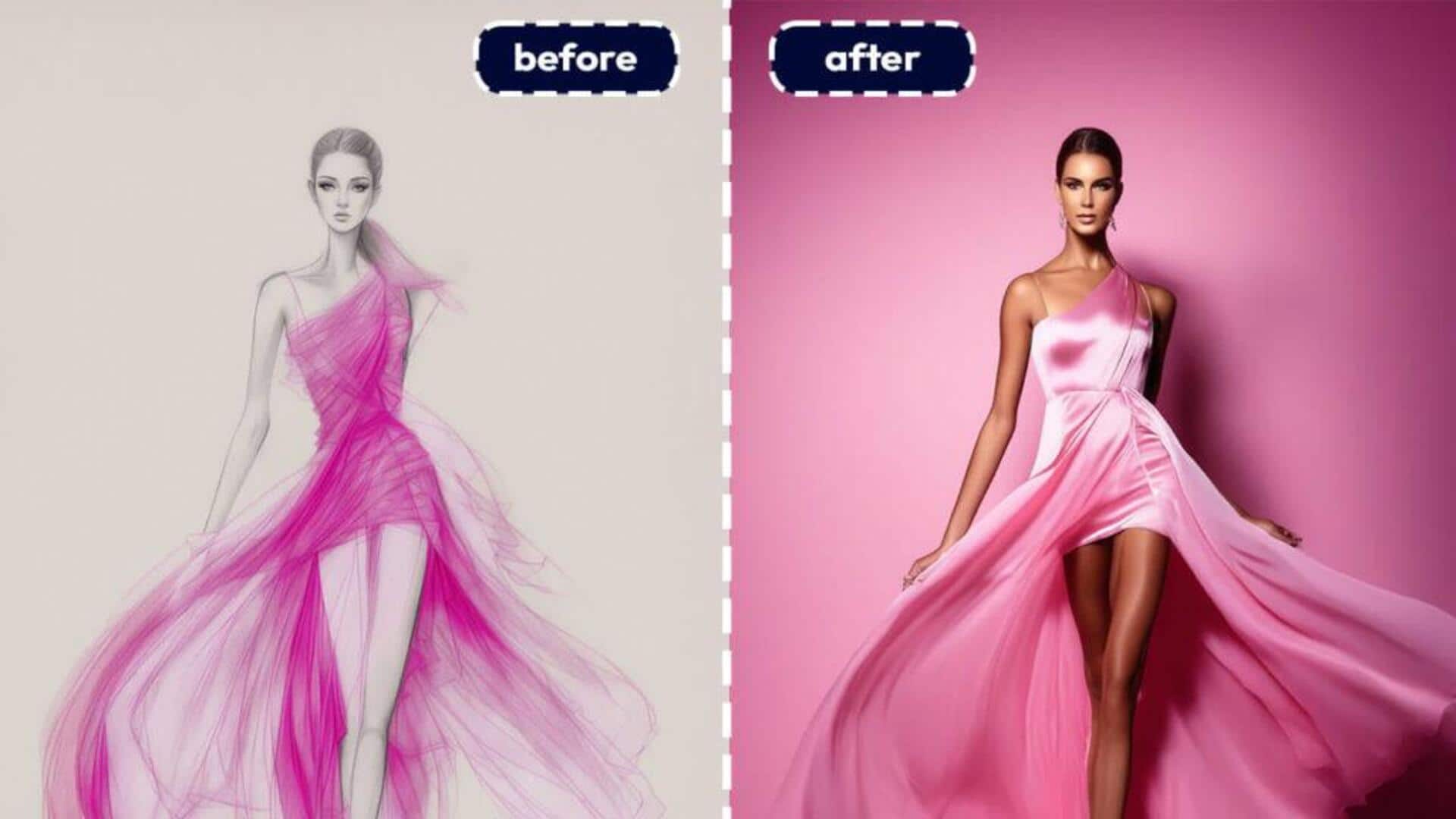
Aspiring fashion designer? These AI tools are a must-have
What's the story
In 2026, fashion designers are progressively adopting AI tools into their workflows to make them more efficient and creative. These tools help at all levels, be it generating concepts, or producing ready-to-go prototypes, trimming down time and cost considerably. By automating trend forecasting, pattern making, virtual fitting, and so on, designers can focus on innovation. Here are some must-have AI tools designers should embrace.
Tool #1
Style3D AI for garment simulation
Style3D AI is what you would call the Holy Grail of 3D garment simulation and virtual swatches. It provides end-to-end workflows to prototype and market visuals without physical samples.
The tool excels in offering superior fabric physics and fit reviews, which can bring down the sampling cost by as much as 40%.
Designers can use this tech to quickly and efficiently create realistic prototypes.
Tool #2
Refabric for patternmaking
Refabric is an innovative tool focusing on AI-driven patternmaking and sustainability optimization.
It converts sketches or descriptions into digital patterns and 3D mockups in minutes.
By recommending on-trend elements like silhouettes or prints, Refabric allows fast iteration for custom orders or collections.
This tool allows designers to streamline their creative process while sticking to the sustainable factor.
Tool #3
Designovel & Heuritech for trend forecasting
Designovel and Heuritech are indispensable tools for trend forecasting in the fashion industry.
They sift through global social media, runways, and e-commerce data to predict what trends in colors, prints, and consumer preferences are on the horizon.
By aligning collections with market demands as early as possible, these tools keep independent designers from overproducing while staying ahead of trends.
Tool #4
FashionInsta's no-code workflow builder
FashionINSTA offers a no-code, drag-and-drop AI workflow builder with CAD integration capabilities, enabling designers to convert sketches into production patterns in no time.
Pattern makers looking for seamless collaboration between design teams when handing off designs to production would find this tool ideal.
It boosts efficiency by allowing quick adjustments and iterations, making sure that designs are accurately translated into production-ready formats without delays.