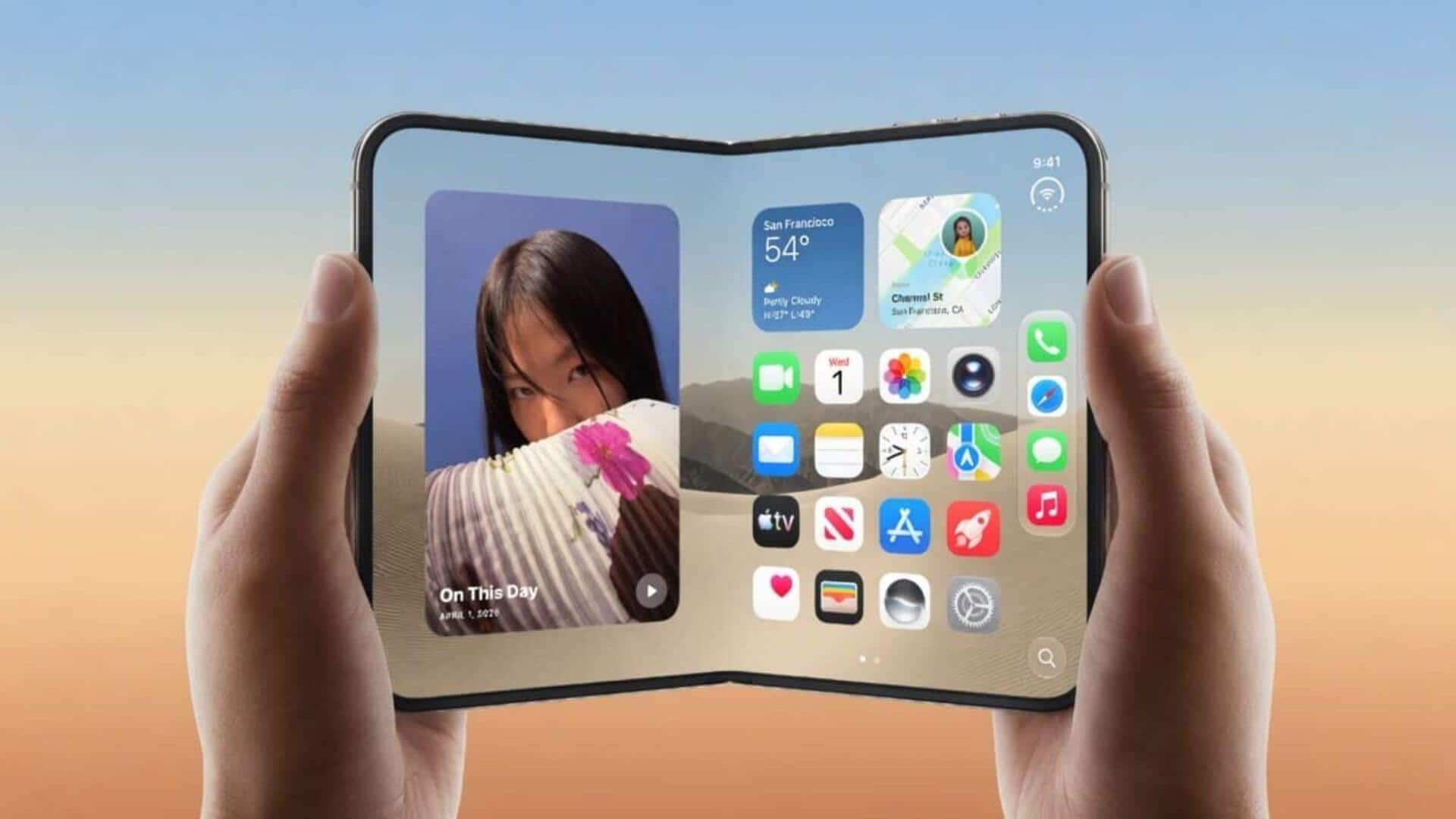
Apple reveals how iPhone Duo's hinge, display was engineered
What's the story
Apple's first-ever foldable smartphone, the iPhone Duo, will be available for purchase starting October 23. In the run up to the launch, Tom Marieb, Apple's Vice President of Hardware Engineering, has revealed some fascinating insights about the device's hinge design and durability. In a recent interview with TechRadar, Marieb highlighted the extensive engineering efforts that went into creating a robust and premium-feeling hinge for the iPhone Duo.
Engineering details
Marieb explains how Apple achieved premium feel of hinge
Marieb explained that Apple worked extensively on the torque profile of the hinge, changing several mechanical properties to give it a premium feel.
He compared the feeling when shutting the Duo's hinge to that of shutting a high-end automobile's door.
"That was design intent, so people would have a feeling like, 'Oh, it's okay. This is well crafted, and it's safe for me to use and not worry about it,'" he said.
Component complexity
iPhone Duo hinge consists of over 100 components
The iPhone Duo comes with a 7.6-inch inner display and a 5.4-inch outer screen.
Apple has also focused on the precision engineering of the hinge, which consists of more than 100 components.
As per the tech giant, the "hinge mechanism is designed to open and close with smooth, balanced resistance for long-lasting reliability."
The iPhone Duo is also IP68 water and dust resistant. It has Ceramic Shield on the front and back and a "scratch-resistant coating on the inner display."
Display innovation
Matte nano-texture coating reduces glare
Apple has also paid special attention to the foldable display of the iPhone Duo, especially when it comes to the visibility of creases over time.
The device comes with a matte nano-texture coating to reduce glare and reflections.
A high-strength glass surrounds the folding screen on both sides to protect it from damage. Inside, special glue lets the layers slide past each other like pages of a book to reduce bending stress, while a titanium baseplate keeps the structure sturdy.
Testing approach
Apple tests devices for 5 years of real-world use
Marieb also explained Apple's broader durability testing philosophy, saying the company tests its devices against conditions that would represent about five years of real-world use.
He said this method goes beyond just relying on older military specs or traditional testing methods.