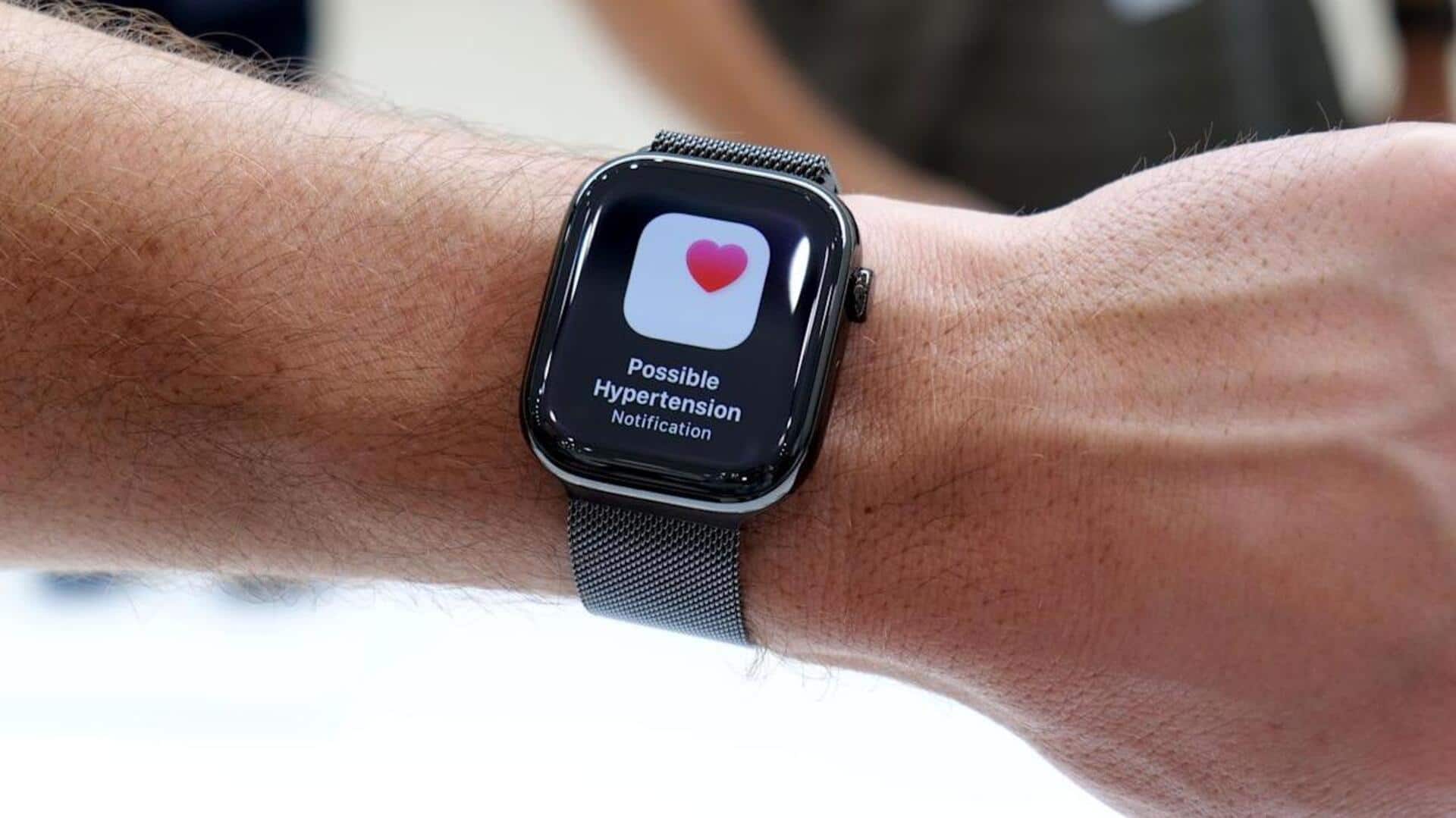
Apple Watch gets hypertension notifications in India: How to use
What's the story
Apple has introduced its hypertension notifications feature for Apple Watch users in India. The update is a major health improvement, aimed at detecting early signs of chronic high blood pressure. The feature works silently in the background, using data from the optical heart sensor to analyze how a user's blood vessels respond to each heartbeat. If consistent patterns indicating possible hypertension are detected, the watch sends a notification encouraging timely action.
Health impact
Hypertension: A silent global health crisis
Hypertension, or chronic high blood pressure, is a major cause of heart attacks, strokes, and kidney disease.
It affects some 1.3 billion adults worldwide but often goes unnoticed due to lack of obvious symptoms.
Apple hopes its new feature will help close this gap by providing passive, long-term monitoring on a device users already wear every day.
The system was developed using machine learning with data from over 100,000 participants across multiple studies.
Accuracy assessment
Feature's performance and validation
The feature's performance was validated in a separate clinical study with over 2,000 participants.
While it won't catch every case of hypertension, Apple expects it to flag more than one million undiagnosed users in the first year due to the sheer reach of the Apple Watch.
Professor Dorairaj Prabhakaran from the Centre for Chronic Disease Control welcomed Apple's move, saying this form of detection could improve early diagnosis and better conversations between users and their doctors.
Sure! Please provide the instructions you'd like me to follow.
Guidelines for users receiving hypertension notifications
For those getting a hypertension notification, guidelines suggest monitoring blood pressure for seven days with a validated third-party cuff and sharing those readings with a healthcare provider.
This is in line with the latest guidance from the American Heart Association and reinforces the Watch's role as an early-warning tool rather than a diagnostic device.
The feature is available on Apple Watch Series 9 or later and Apple Watch Ultra 2 or later models.