Artemis II crew to rely on eyes for lunar observations
What's the story
In a historic development, NASA sent its Artemis II crew on a journey around the Moon. The mission, which is the first human lunar flyby in over half a century, will see the astronauts use their most basic tool for observation: their own eyes. Kelsey Young, Artemis II's lead scientist, emphasized that the human eye is basically the best camera that could ever or will ever exist.
Vision advantages
Young explains why human vision is better than cameras
Young further explained that while modern cameras may surpass human eyesight in some ways, "the human eye is really good at color, and it's really good at context, and it's also really good at photometric observations."
This means humans can see how light affects surface features such as texture and color.
Artemis II astronaut Victor Glover also praised the power of human vision before liftoff this week, calling eyes a "magical instrument."
Preparation
NASA turned Artemis astronauts into 'field scientists'
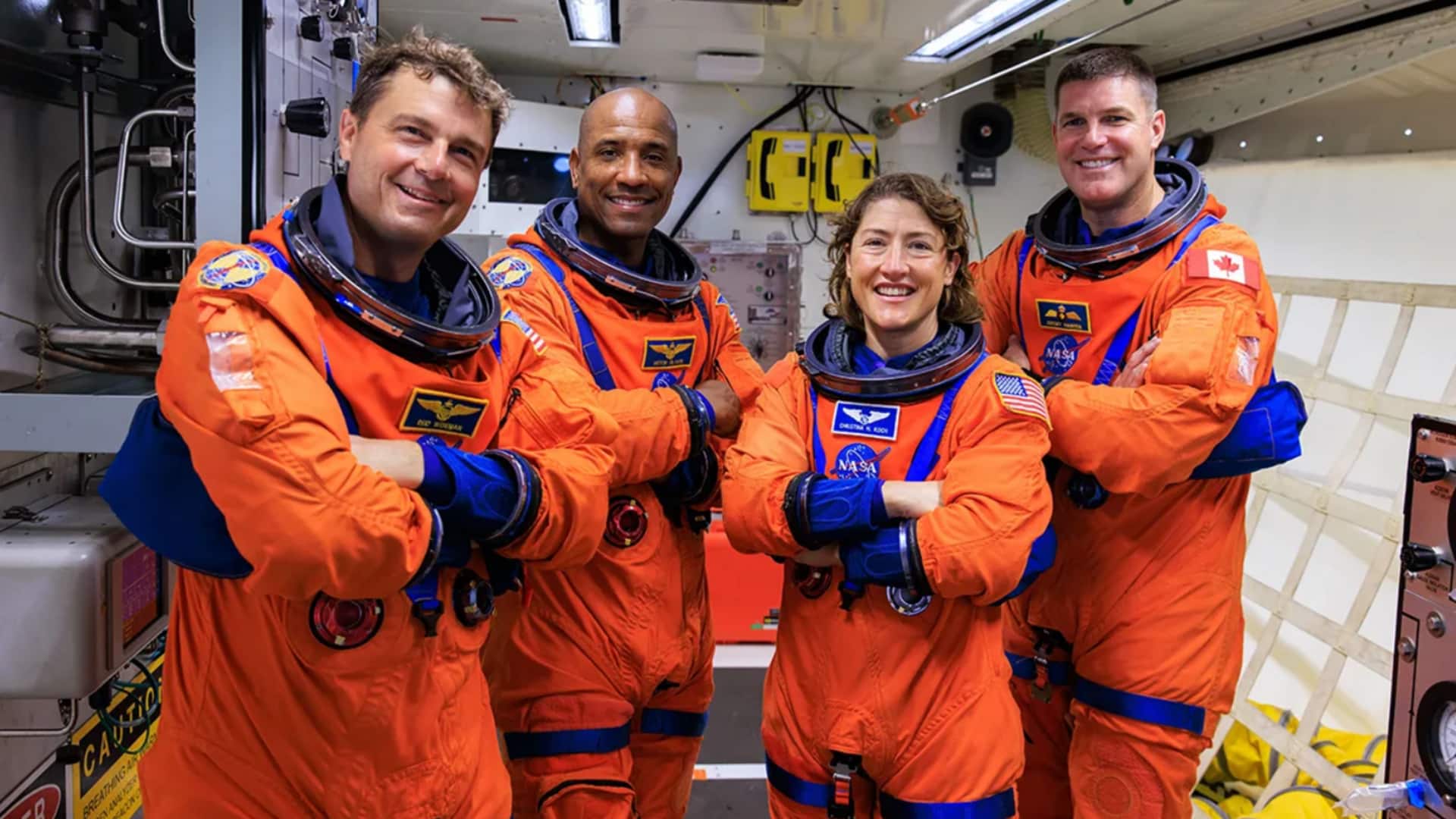
The four Artemis II crew members trained for over two years to make the most of their Moon encounter.
Young said they aimed to turn the astronauts into "field scientists" through classroom education, geological expeditions in Iceland and Canada, and several simulated Moon flybys.
The team memorized the Moon's "Big 15," or 15 features that would help them orient themselves during the mission.
Mission goals
How the crew will observe the Moon
The Artemis astronauts will study specific lunar locations and phenomena as part of 10 objectives chosen by NASA.
During the several-hour-long Moon flyby, the crew will have to observe with their eyes, along with onboard cameras.
Noah Petro, head of NASA's planetary geology lab, said that from their vantage point about the size of a basketball held at arm's length.
Color significance
Will we see color on the Moon?
Petro expressed interest in whether the astronauts would be able to see color on the lunar surface, saying it could provide clues about its composition and history.
David Kring of the Lunar and Planetary Institute isn't expecting groundbreaking discoveries due to previous lunar probes and high-res images taken since Apollo missions.
However, he emphasized that having astronauts describing what they're seeing... That is an occurrence that at least two generations of people on Earth have never heard before.