NASA's Artemis missions might help make Moon a 'gas station'
What's the story
NASA's Artemis II mission, which will take humans further into space than ever before, is just the beginning of a larger plan to turn the Moon into a hub for deep space exploration. This was revealed by Rep. Mike Haridopolos, Chair of the House Subcommittee on Space and Aeronautics. He said that policymakers see the Moon as a potential key refueling stop for human journeys beyond Earth.
Cost reduction
Why is a Moon mission necessary?
Haridopolos emphasized that the Moon's diverse mineral resources could help lower the cost of creating higher energy sources. He even suggested that it could serve as a gas station to space.
The lawmaker also explained how breaking free from Earth's atmosphere is difficult, requiring strong engines, but once out, propelling into deep space becomes easier.
Mission details
Artemis II mission will last for 10 days
The Artemis II mission is a 10-day journey that will take humans farther into space than ever before.
It will include a flyby around the Moon, marking the first time astronauts have gone beyond Earth's low orbit since 1972.
The primary objective of this mission is to test the Orion spacecraft's life support systems.
Plans
NASA plans to land humans on the Moon in 2028
In 2028, NASA plans to attempt a crewed Moon landing, marking humanity's return to the lunar surface since 1972.
This is a delay from earlier plans of achieving that feat by next year.
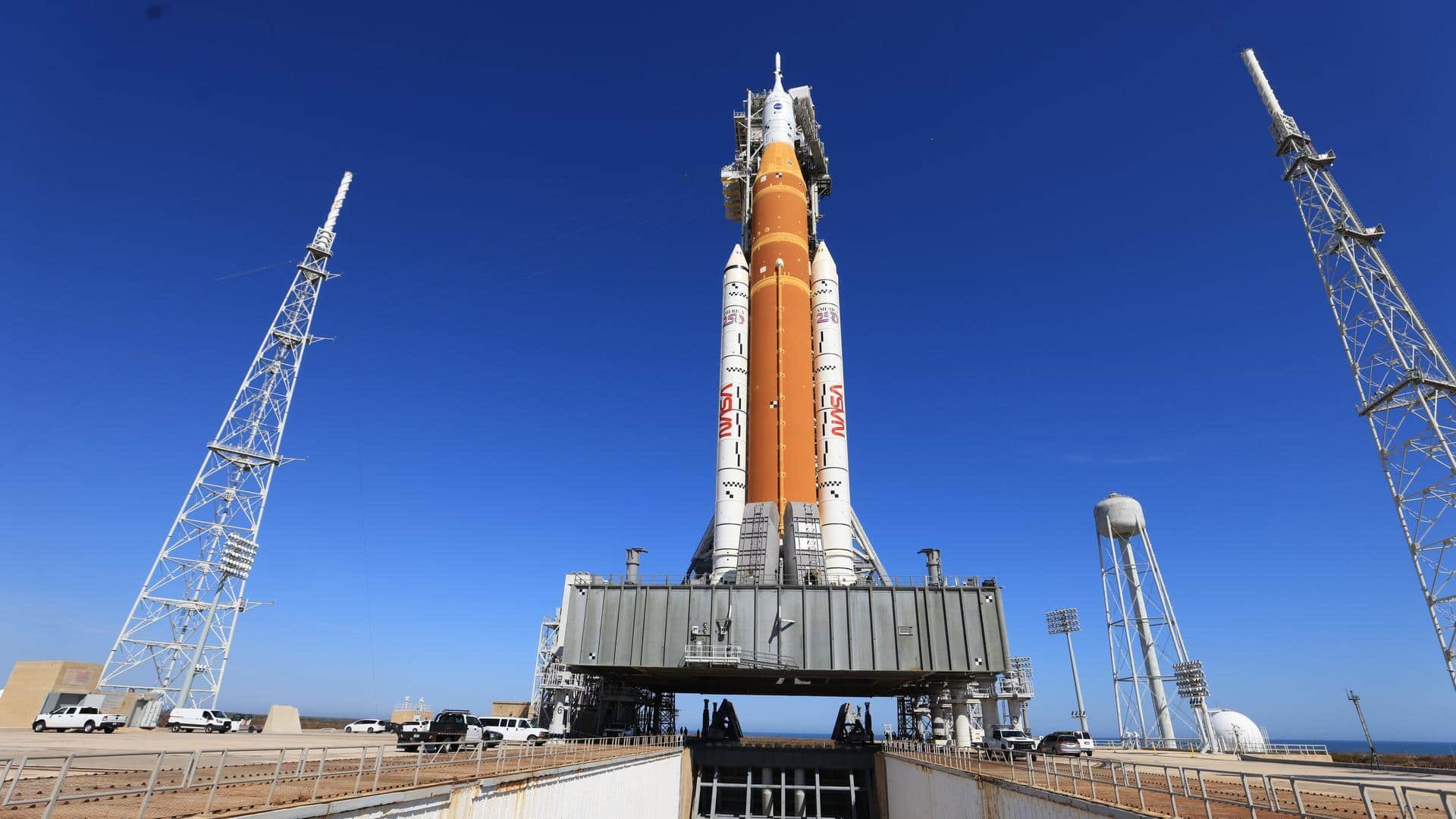
Haridopolos said Congress will stick with the Space Launch System (SLS) until a replacement is ready for future lunar missions and other potential worlds.
Future
Artemis program aims to build a Moon base
The Artemis program, launched during the first Donald Trump administration, aims to build a Moon base as a stepping stone for a Mars trip in the 2030s.
Haridopolos predicted that in a few years, astronauts would be back on the Moon establishing this base and investigating helium-3, an expensive product for nuclear fusion.
He emphasized that there's plenty of this resource on the lunar surface.