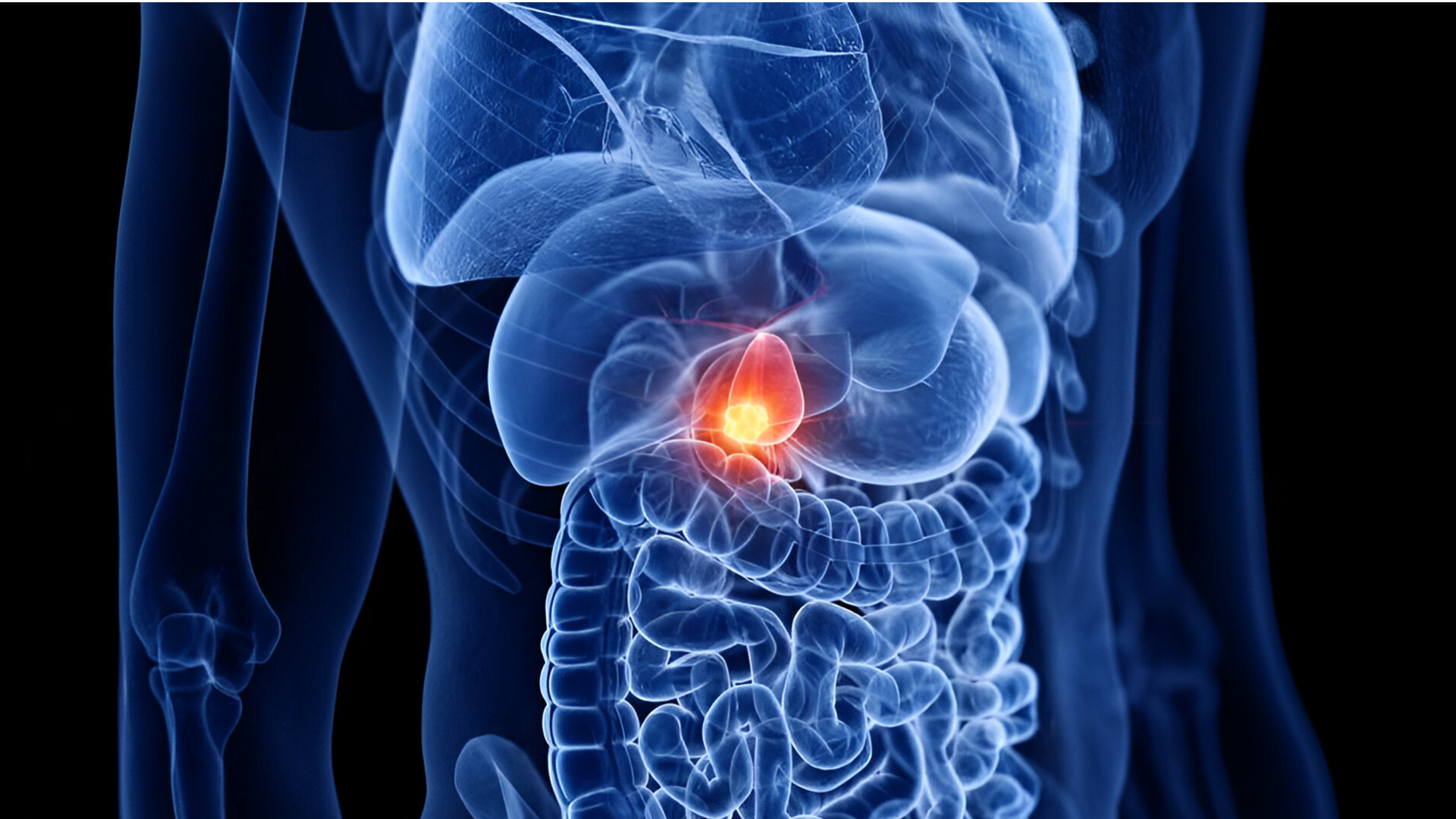
Early detection of gallbladder cancer might soon become easier
What's the story
In a major breakthrough, scientists from Assam's Tezpur University have discovered unique chemical signatures in blood that could help in the early detection of gallbladder cancer. The study highlights the identification of specific 'metabolic signatures' in blood samples as potential biomarkers for this aggressive and often undetected form of cancer. The research was led by Assistant Professor Pankaj Barah and research scholar Cinmoyee Baruah from the Department of Molecular Biology and Biotechnology at Tezpur University.
Cancer profile
Gallbladder cancer: A silent killer
Gallbladder cancer is known for its silent progression, with most patients presenting at advanced stages when treatment options are limited.
Although gallstones are a recognized risk factor, not all individuals with gallstones develop cancer. A big proportion of patients are diagnosed without any history of gallstones.
The incidents of such cancer in Assam is projected to rise, underscoring the urgent need for early detection strategies.
Research findings
Study reveals distinct blood-based metabolic signatures
The study, published in the Journal of Proteome Research, found that changes in creatinine chemical blood (metabolites) can clearly distinguish the gallbladder cancer cases with and without gallstones.
"This raises the possibility of developing simple blood-based tests that could help in earlier detection," Barah said.
The team analyzed blood samples from three groups: patients with gallbladder cancer without gallstones, those with both conditions, and individuals with just gallstones.
Metabolomics analysis
Advanced metabolomics techniques reveal altered metabolites
Using the advanced metabolomics techniques, the researchers detected hundreds of altered metabolites, 180 in gallstone-free cancer cases and 225 in gallstone-associated cases.
Distinct biomarker panels with a high diagnostic accuracy were identified for each variant, many of them involving bile acids and amino acid derivatives linked to tumor progression.
The research was carried out via an interdisciplinary collaboration involving surgeons, pathologists, pharmaceutical scientists, molecular biologists and computational scientists.
Collaborative effort
Clinical inputs and support for the research
The clinical inputs for this study came from Assam Medical College and Hospital, Dibrugarh; Dr B Borooah Cancer Institute in Guwahati, and Swagat Super Speciality Hospital.
The analytical and computational support was provided by the University of Illinois, Urbana-Champaign (USA) and the CSIR-Indian Institute of Toxicology Research, Lucknow.
This collaborative effort highlights the importance of interdisciplinary work in advancing medical research.