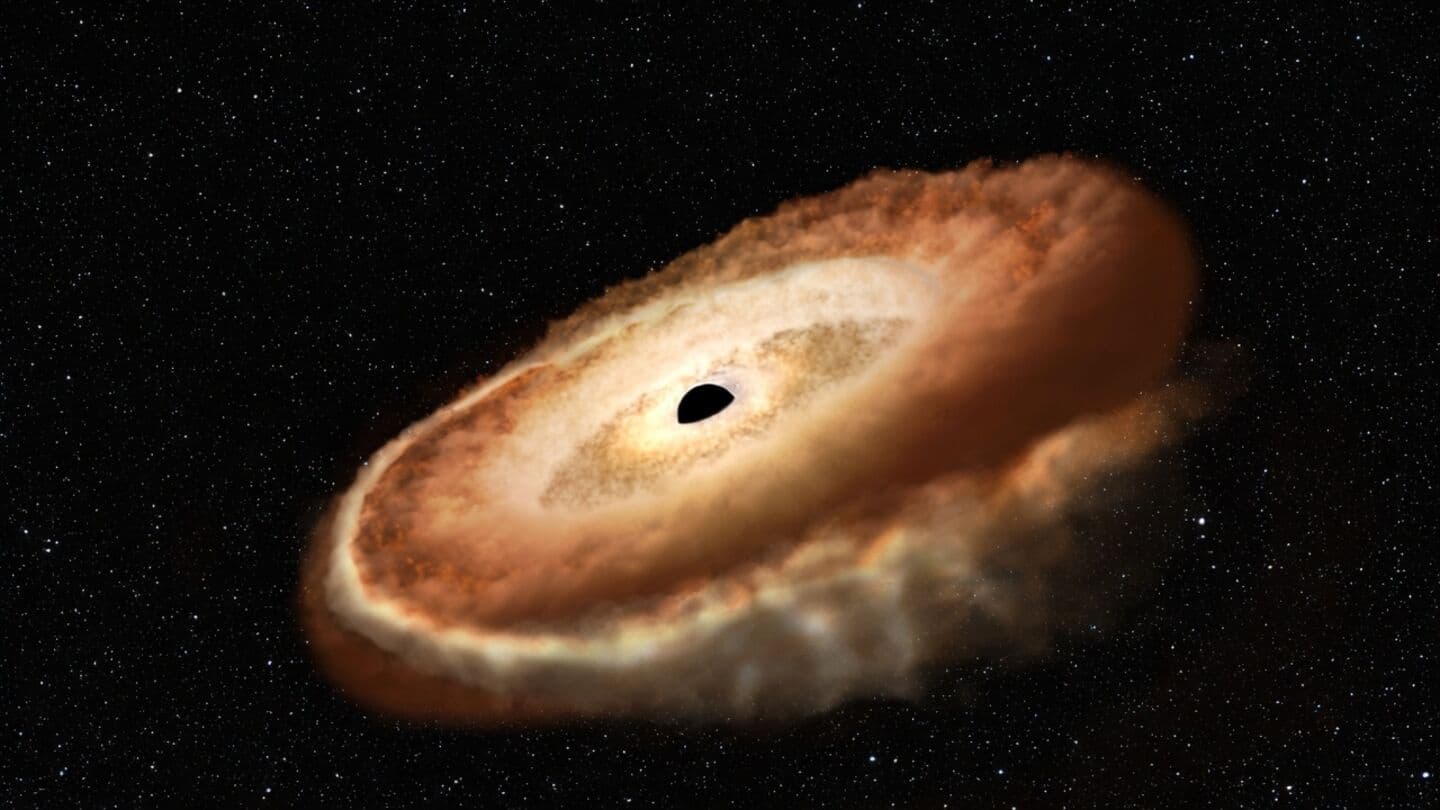
Astronomers identify cause of delayed supermassive black hole 'burps'
Astronomers have cracked why supermassive black holes send out radio waves long after swallowing stars.
Turns out, these delayed signals (nicknamed "burps") happen when a black hole is eating too fast or too slowly.
The leftover gas gets ejected and hits nearby space, creating those detectable radio waves.
Study finds 40% late TDE flares
A recent study found that about 40% of tidal disruption events (TDEs), when stars get torn apart by black holes, show these late flares months to years after the initial disruption.
Early signs like helium emission lines can help predict which black holes will "burp" again.
The best window to spot these flares is two to six years post-discovery, letting astronomers focus their telescopes where the action's likely to happen.
This research was just shared at the American Astronomical Society meeting on June 15, 2026.