Astronomers might have discovered a superkilonova: Why it matters
What's the story
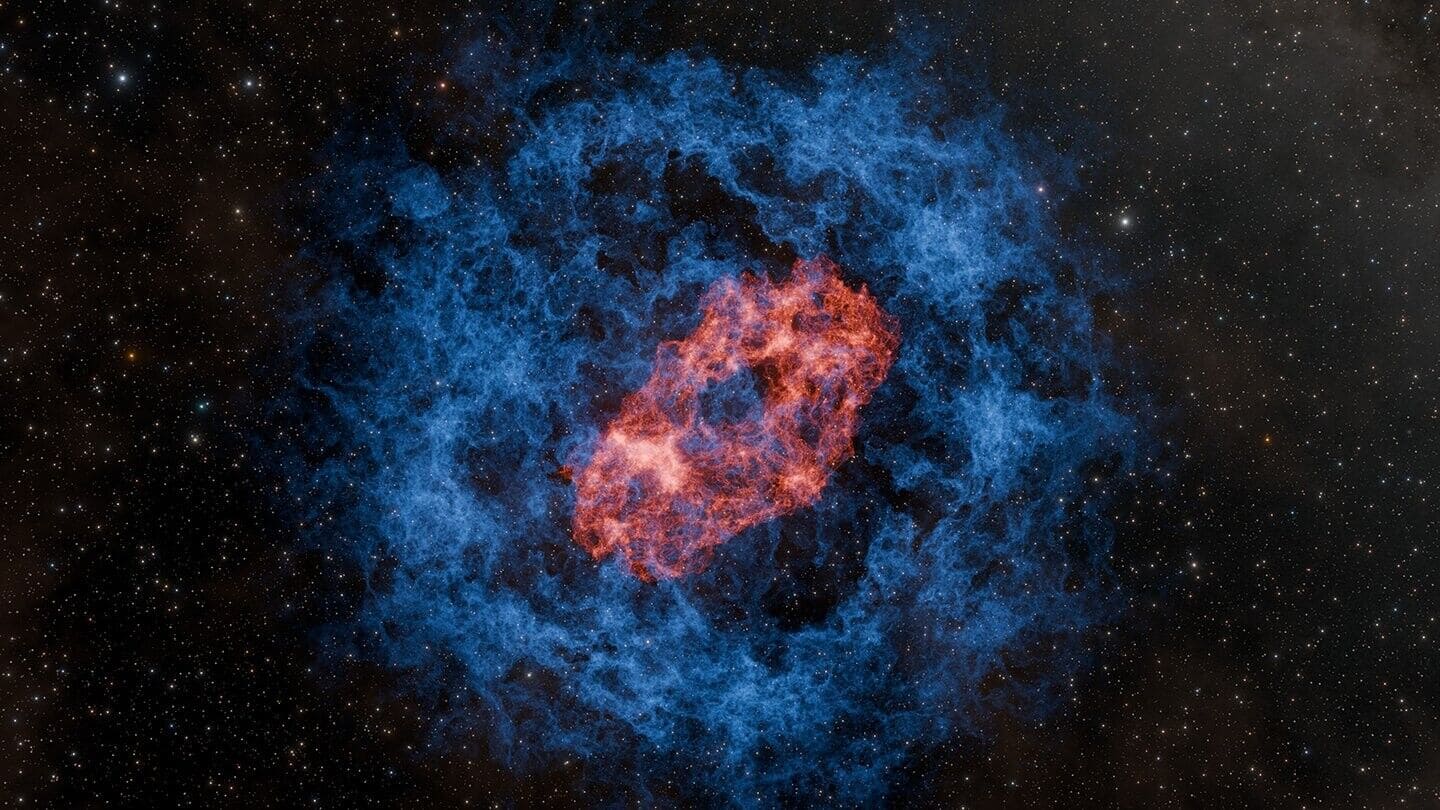
Astronomers may have detected the first-ever 'superkilonova,' an explosive cosmic event. The discovery was made through a gravitational wave signal on August 18, 2025. A kilonova occurs when two neutron stars collide, creating the only known environment in the universe capable of producing elements heavier than iron, such as gold and silver. Superkilonovas are different because they start with a supernova explosion that leads to the formation of two neutron stars instead of one.
Event details
Superkilonova: A new class of cosmic events
Superkilonovas are a new class of cosmic events that begin with a supernova explosion marking the death of a star and the birth of two neutron stars.
These extreme dead stars then spiral together and merge, creating gravitational waves and electromagnetic radiation.
So far, astronomers have only confirmed one kilonova detection in 2017 when the Laser Interferometer Gravitational-wave Observatory (LIGO), and its European partner Virgo detected the gravitational wave signal known as GW170817.
Discovery process
AT2025ulz: A potential superkilonova
The discovery of a second neutron star merger, dubbed AT2025ulz, came from LIGO and Virgo.
The Zwicky Transient Facility (ZTF) at the Palomar Observatory in California was the first to spot a rapidly fading red object 1.3 billion light-years away.
Initially, this eruption looked like the first kilonova in 2017 but later appeared more like a supernova. However, further investigation suggested that it might be a kilonova stemming from an obscured supernova explosion.
Light patterns
AT2025ulz's light and gravitational wave signals
After the gravitational wave detection, several other telescopes observed that the burst of light associated with AT2025ulz faded quickly, leaving a red glow.
This is because heavy elements like gold around the kilonova block blue light but allow red light through.
Days after the explosion, AT2025ulz began to brighten and turn blue with evidence of hydrogen emissions appearing, characteristics of supernovas rather than kilonovas.
Event analysis
Neutron star mass hints at unique event
The gravitational wave signal suggested that one of the neutron stars involved in the merger was less massive than the Sun, hinting that one or two small neutron stars might have merged to make a kilonova.
This discovery has led scientists to theorize two ways in which some neutron stars could be created that are smaller than 1.2 solar masses.
Next steps
Future observations may confirm superkilonova existence
The team behind this research hopes to confirm the existence of a superkilonova through future observations.
They suggest that upcoming projects such as NASA's Nancy Roman Space Telescope, UVEX, Caltech's Deep Synoptic Array-2000, and Caltech's Cryoscope in Antarctica could provide more data.
"Future kilonovae events may not look like GW170817 and may be mistaken for supernovae," study lead author Mansi Kasliwal said.