China just made a major breakthrough in quantum computing
What's the story
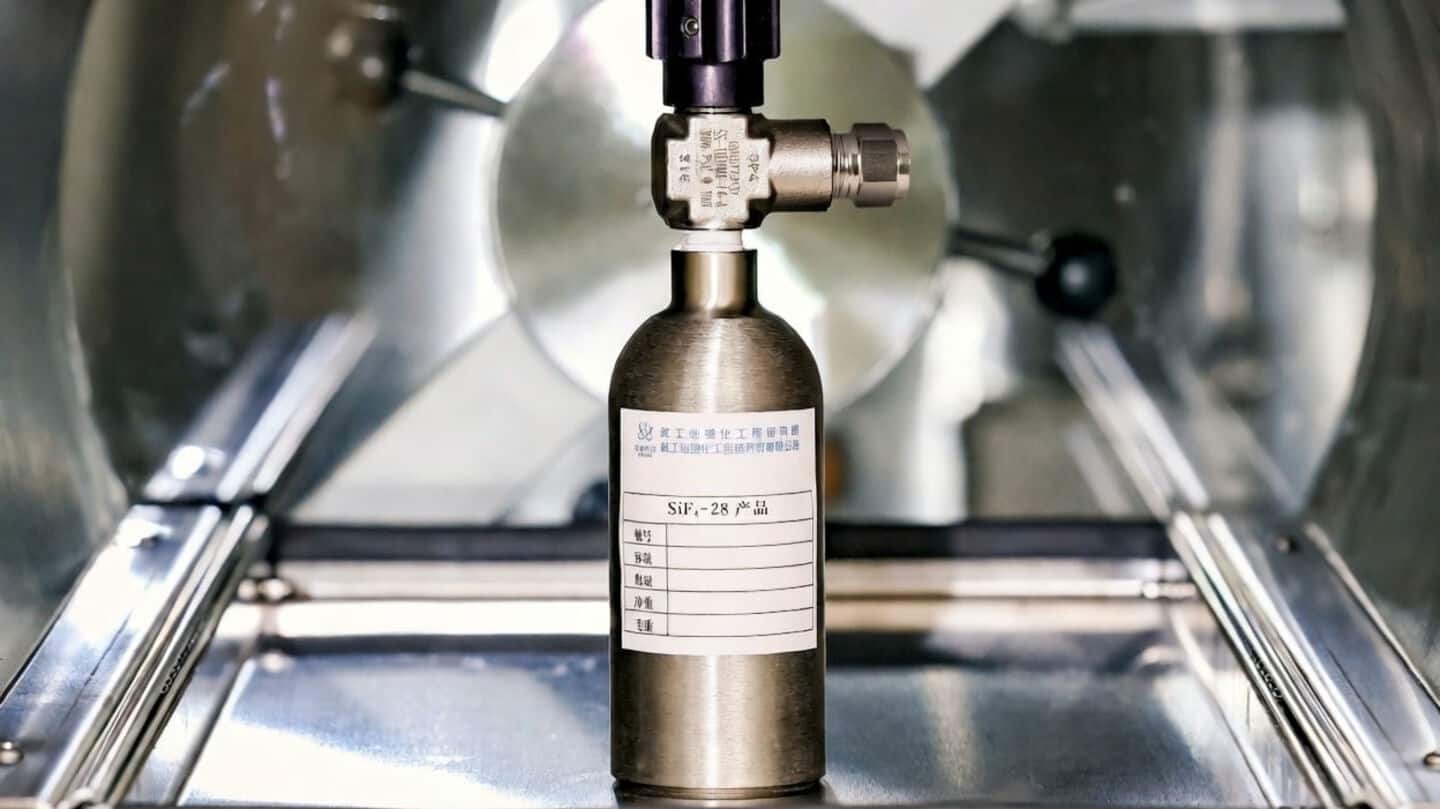
China has made a major advancement in the field of quantum computing by successfully mass-producing an ultra-pure form of silicon. The achievement was announced by the China National Nuclear Corporation (CNNC), a state-owned nuclear giant. Their research institute has produced a high-purity silicon-28 isotope with an isotopic abundance above 99.99%. This is China's first independent and large-scale production of this critical material needed for building silicon-based quantum computers.
Supply chain impact
Filling gaps in quantum technology supply chain
The successful mass production of silicon-28 isotope also fills a long-standing gap in China's quantum technology supply chain.
Until now, the production capabilities for this critical material were limited to a handful of foreign players in Russia, Europe, and US-linked supply chains.
This development is a major step toward reducing China's dependence on foreign technology in strategic areas like quantum computing.
Tech evolution
Quantum computers far exceed traditional ones
Quantum computers are a major leap from traditional ones, which use standard bits (0s and 1s) to process information.
Quantum computers, on the other hand, employ qubits that can exist as both zero and one simultaneously.
This unique property allows them to perform complex calculations at speeds far exceeding supercomputers.
However, maintaining the stability of qubits is a major challenge due to their fragility in natural silicon.
Stability advantage
Silicon-28 isotope can help stabilize qubits
Silicon-28, a stable isotope, offers a solution to the fragility of qubits. By purifying this variant, scientists can create an "ultra-quiet" environment where qubits remain stable for longer periods. This is crucial for building functioning quantum computers.