China launches commercial satellite network to monitor space traffic, debris
What's the story
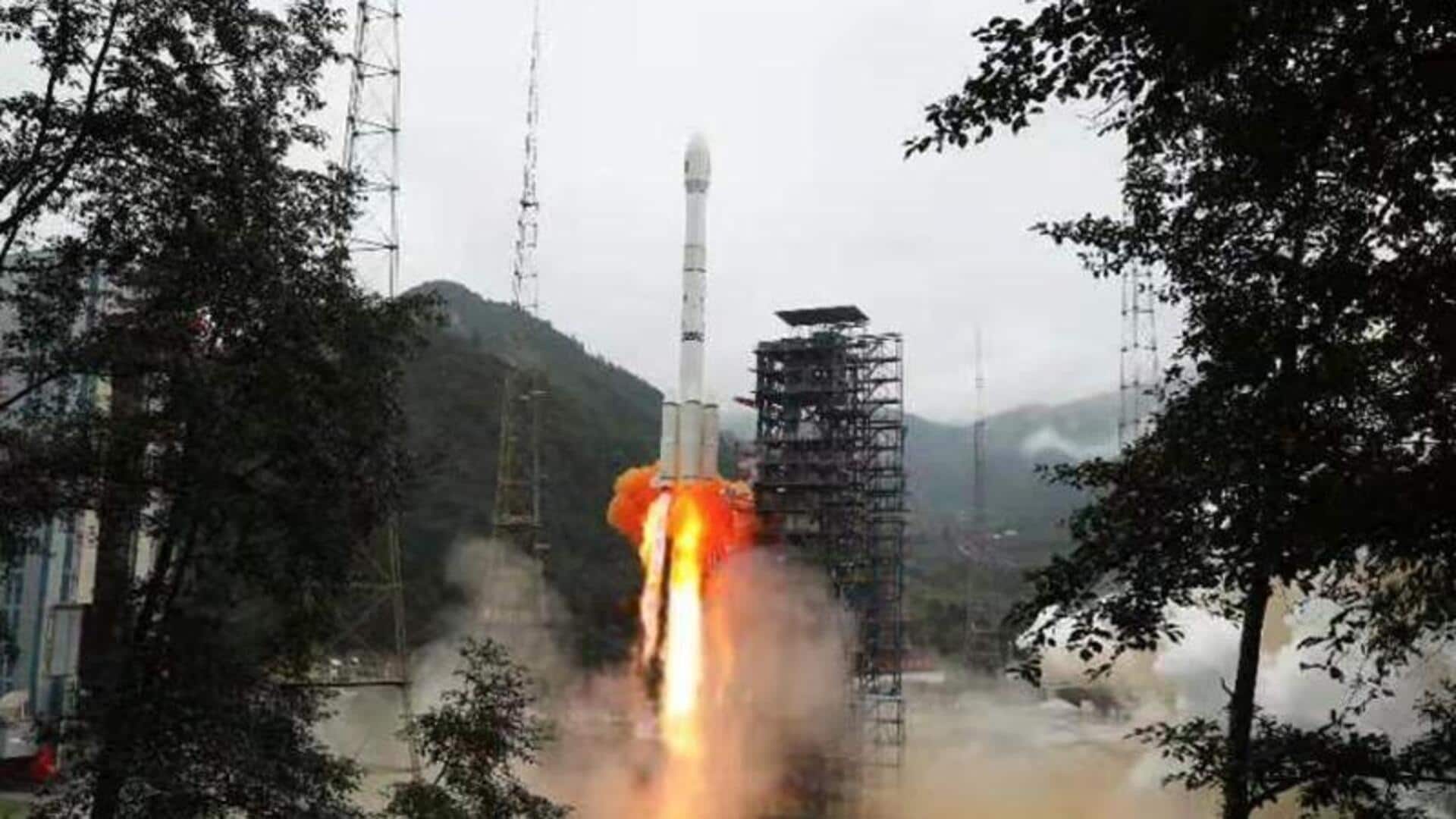
China has launched its first commercial satellite network, the Gande Constellation, to monitor space debris and detect targets in all orbits. The first of the 120 satellites was launched from northwest China aboard a Lijian-1 commercial rocket. The constellation will enhance China's space traffic management and collision avoidance capabilities while protecting its expanding commercial satellite fleets.
Deployment strategy
Full deployment scheduled before 2030
The full deployment of the Gande Constellation is scheduled before 2030, in three phases.
The first phase, LX630, will consist of 14 satellites that will enable comprehensive monitoring and cataloging of objects in low-Earth orbit.
Fan Wei, chief engineer of the constellation, said this launch fills a gap in China's commercial space-based debris monitoring capability and marks "a key step in space traffic management."
Tech innovation
Satellites equipped with AI-assisted computer
The first satellite of the Gande Constellation is equipped with an onboard artificial intelligence (AI)-assisted computer.
This tech will enable the satellites to conduct routine surveillance, emergency response, and rapid tracking missions with minimal ground intervention.
The satellites will also have orbital transfer capability for close-range observation and other advanced in-orbit operations.
Safety measures
Debris-related risks during space missions
China has faced debris-related risks in recent missions.
The Shenzhou-20 crewed spacecraft had to stay longer at the Tiangong space station after its return capsule's viewport window was hit by space debris during the mission.
In 2024, the Shenzhou-17 crew performed two spacewalks to fix solar arrays on the space station's core module after they were damaged by orbital debris.