China's humanoid robots move from demos to real-world jobs
What's the story
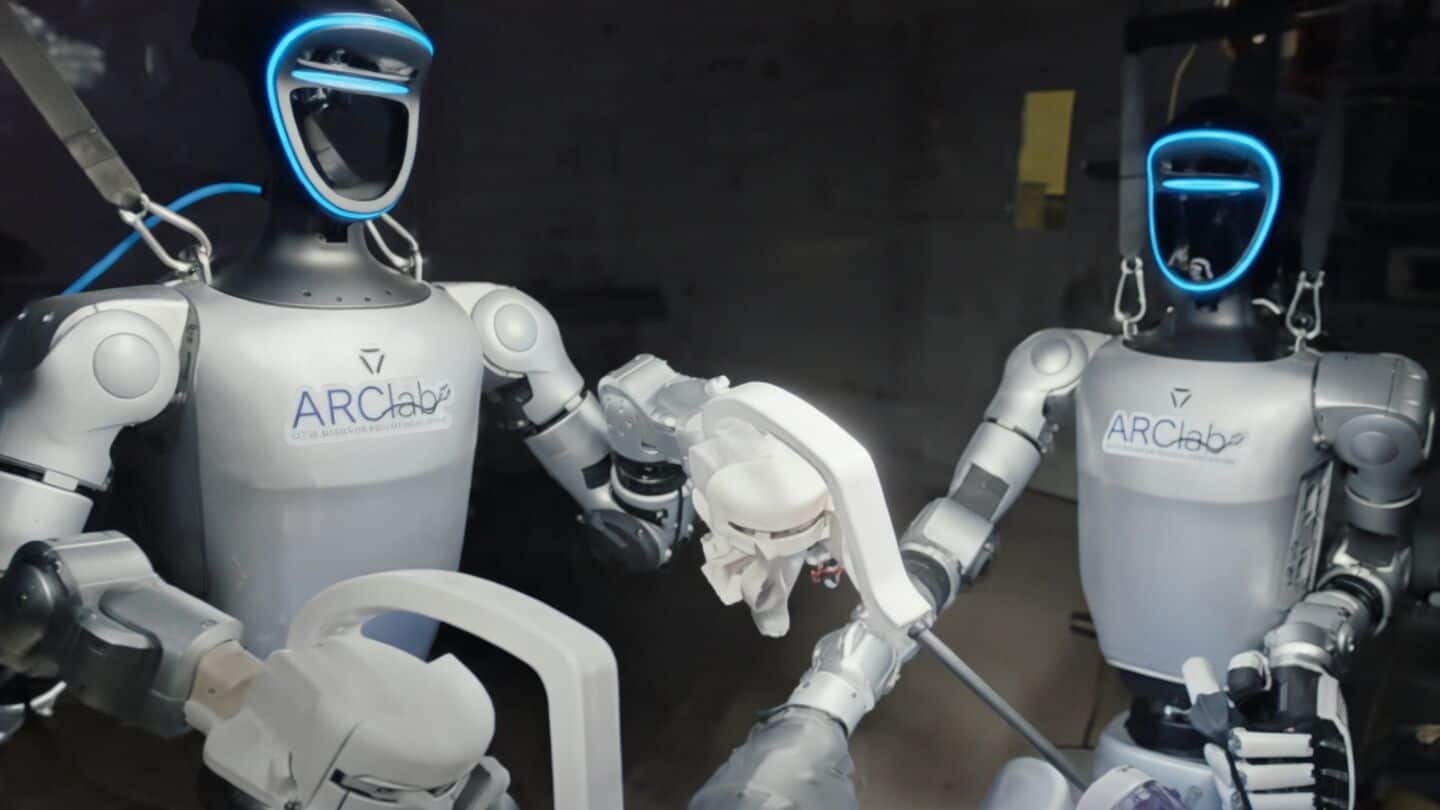
At the ongoing World Robot Conference in Beijing, Chinese tech companies are showcasing humanoid robots capable of performing a variety of tasks. These include sorting parcels, packing mobile phones, and assisting with household chores. The event has drawn more than 300 companies and features over 2,000 exhibits and more than 150 products.
Technological impact
Robotics has become an important force in China's growth
Xin Guobin, China's Vice Minister of Industry and Information Technology, said at the conference's opening ceremony that robotics has become "an important force" in the country's economic and social development.
Chinese robots are increasingly being tested in logistics, manufacturing, and service settings.
Zhang Dapeng, assistant vice president at industrial humanoid robot firm Leju, revealed their robots are being used to move boxes and load components at European factories and Chinese auto plants.
Practical applications
Robots sorting parcels and packing mobile phones
Robotera's humanoid torso on a wheeled tripod base has been sorting parcels at China Post logistics sites since last year.
The company has over 100 parcel-sorting robots in 15 warehouses across the country.
DexForce's humanoid robots have also been packing mobile phones into boxes on an assembly line at a Lens Technology factory since early this year.
Future plans
Other companies working toward robot commercialization
Lumos Robotics is already using robots to automate the assembly of key modules at its factory and plans to introduce them into final assembly.
X Square Robot, known for its focus on household chores, is testing robots in hundreds of homes this year before gradual commercialization next year.
RealSense's Mike Nielsen, the company's chief marketing officer, believes companies that can put robots into active production environments will be most successful in this field.
Market response
Rise in investor interest toward humanoid robots
The World Robot Conference comes as investor interest in humanoid robots is on the rise. These machines could be a new source of industrial growth for China and a potential area of technological competition with the US.
Unitree, China's best-known humanoid robot maker, saw its shares jump nearly sixfold on their Shanghai trading debut after an IPO that was oversubscribed by retail investors over 8,000 times.
International attention
Madison Huang's unannounced visit to the conference
Madison Huang, a senior executive from NVIDIA and daughter of the company's CEO Jensen Huang, made an unannounced visit to the conference.
She was seen watching robots perform flying kicks and dance routines.
Despite geopolitical tensions and US restrictions on exports of advanced AI chips to China, her visit underscored foreign suppliers' role in China's push for industrial robots.