China's new magnetic sensor can detect submarines from 500m away
What's the story
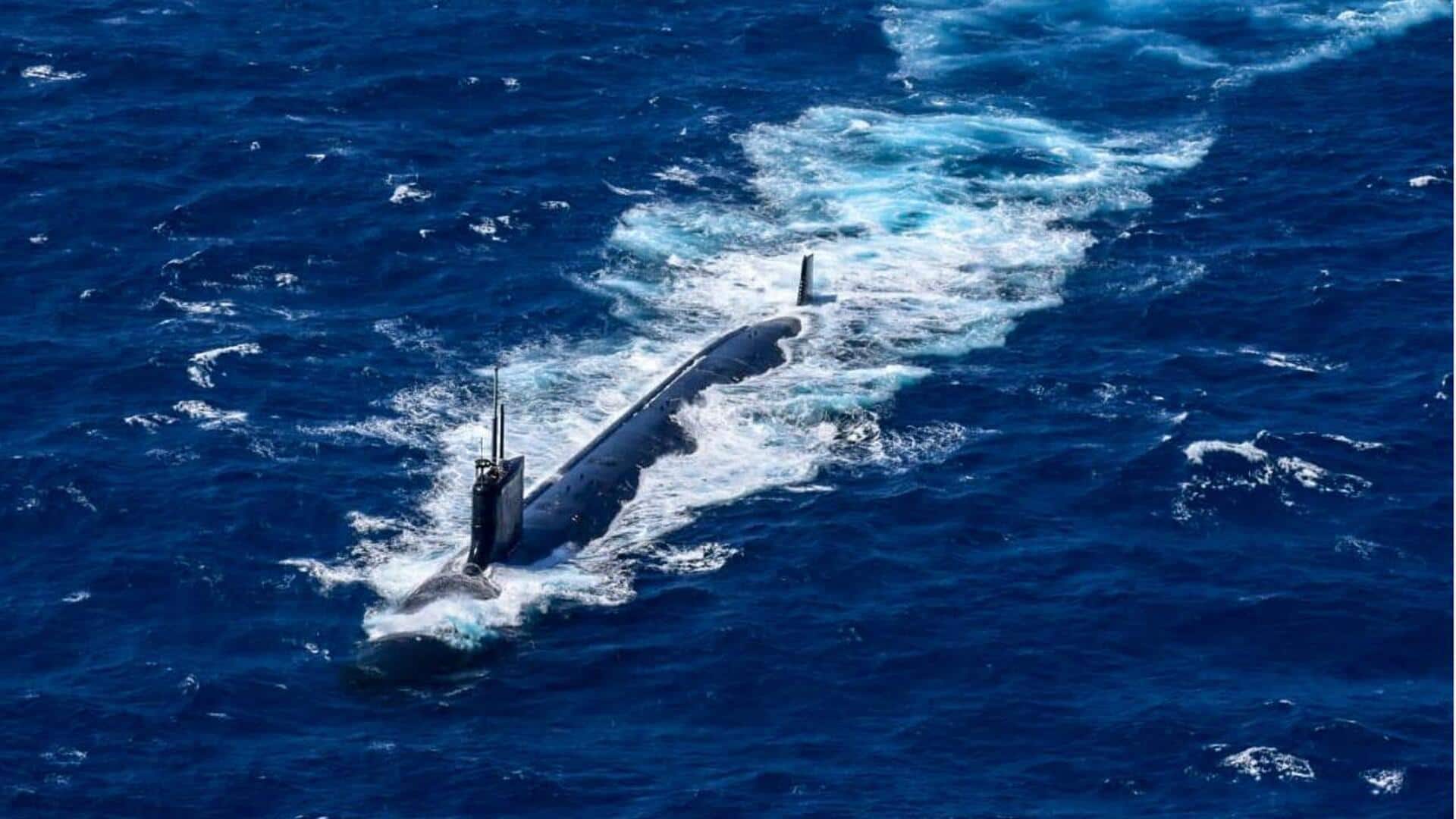
Chinese scientists have made a major breakthrough in the field of magnetic sensors. A team from the Hefei Institutes of Physical Science and the Ningbo Institute of Materials Technology and Engineering, both under the Chinese Academy of Sciences (CAS), has developed an ultra-sensitive Hall-effect magnetic sensor. The device is so sensitive that it can theoretically detect a steel-hulled submarine from as deep as 500 meters away.
Sensor significance
Hall-effect sensors and their applications
Hall-effect sensors are already used in a number of everyday devices, including smartwatches, smartphones, car wheel-speed detectors, and hospital scanners.
They work by generating a small voltage in the presence of a magnetic field.
However, making these sensors smaller and more sensitive has always resulted in increased noise levels.
This is similar to how turning up the volume on a radio also amplifies its hiss.
Design breakthrough
Breakthrough in sensor design
The new Hall-effect magnetic sensor design by the Chinese scientists overcomes the long-standing sensitivity-noise trade-off.
The device can detect weak magnetic fields without generating a lot of noise, making it ideal for use in wearables.
The research was published in the journal Physical Review Letters, marking a significant milestone in the development of everyday magnetic sensors.