We can now control quantum decoherence's speed: What is it?
What's the story
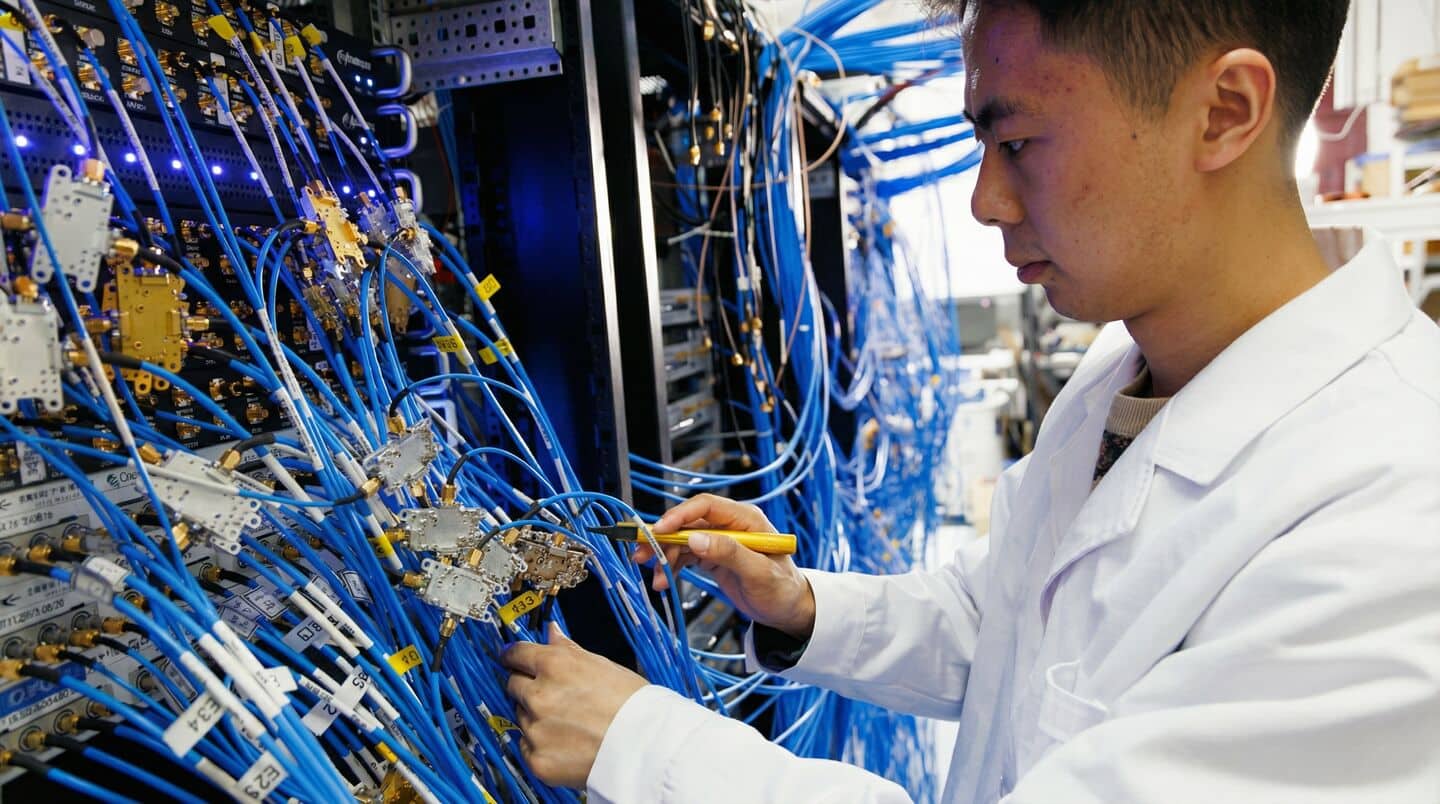
Chinese scientists have made a major breakthrough by directly observing and manipulating prethermalization, an important transitional state in quantum systems. The feat was achieved using the 78-qubit "Chuang-tzu 2.0" superconducting processor. This development gives researchers a way to control the speed of quantum decoherence, a key factor in managing complex quantum environments and improving the reliability of quantum computing systems.
Quantum challenge
Understanding quantum decoherence
When a quantum system is disturbed, it tends to return to an equilibrium state.
The energy and information in the system disperses until it's evenly distributed, much like a swinging pendulum that eventually slows down and stops.
This natural process poses a major challenge for quantum computing as it relies on maintaining information in its original form.
Rapid changes in a quantum system can make its computational results hard to save and retrieve.
Prediction difficulty
A game-changer for quantum computing
Predicting how long the return to equilibrium takes or what factors influence it is beyond the capabilities of current classical computers.
In a study published in Nature, researchers from the Institute of Physics at the Chinese Academy of Sciences reported their first observation of a counter-intuitive intermediate stage during this evolution.
This relatively stable and controllable stage could be key to preserving quantum information, overcoming one of the biggest challenges in quantum computing.