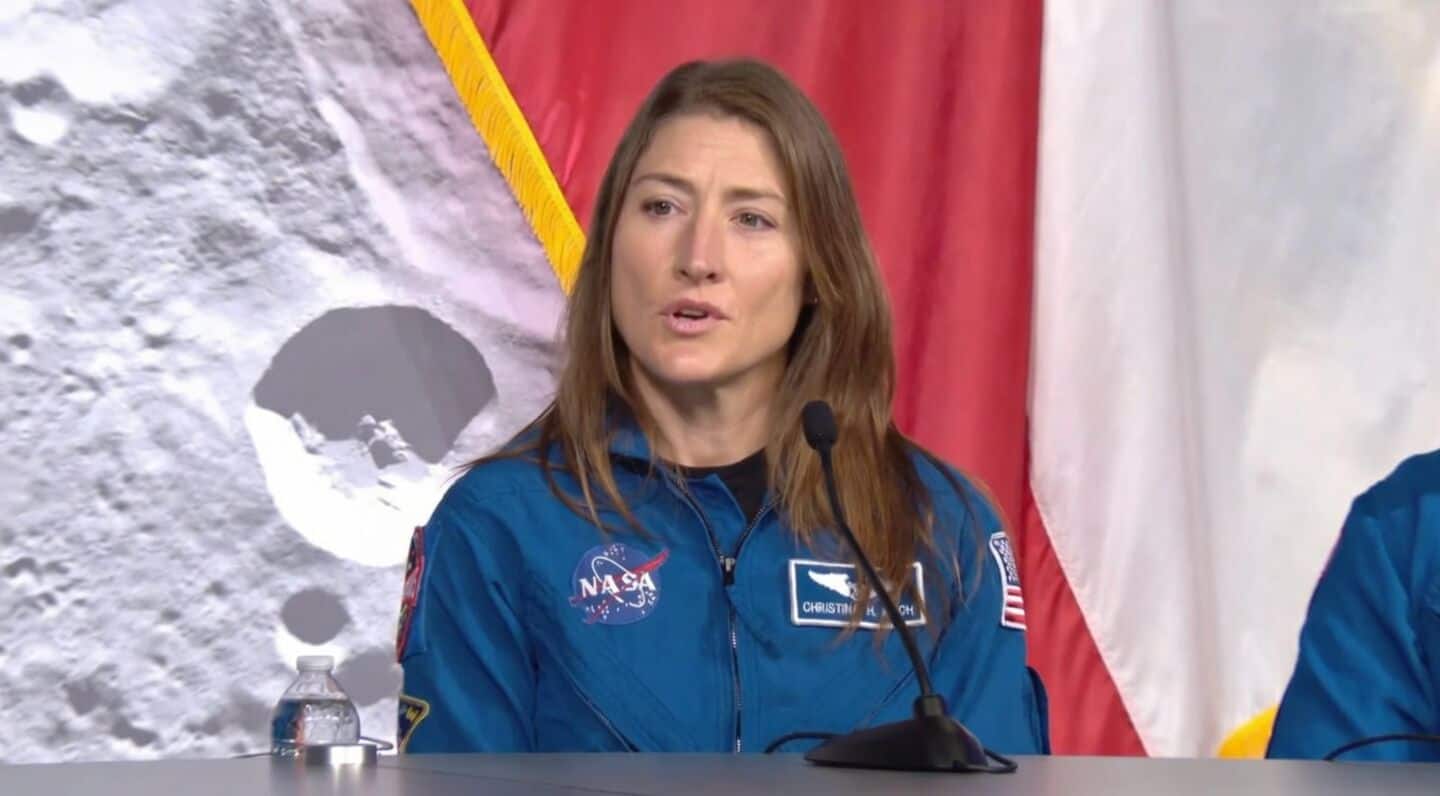
Christina Koch to become 1st woman to fly around Moon
What's the story
Christina Koch is all set to make history as the first woman to fly beyond low Earth orbit (LEO). She is one of the four astronauts on NASA's Artemis 2 mission, which will launch its round-the-moon journey no earlier than April 1. The mission will also see NASA commander Reid Wiseman and pilot Victor Glover, along with Canadian Space Agency mission specialist Jeremy Hansen.
Mission details
Orion crewed debut on Artemis 2
The Artemis 2 mission is a major milestone in NASA's efforts to establish a sustained human presence on the Moon.
It will be the first crewed flight of the Orion spacecraft, which will take the astronauts on a 10-day journey around the Moon and back to Earth.
The mission is seen as a precursor to future lunar landings planned for Artemis 4 in 2028 and beyond.
Astronaut insights
Koch emphasizes crew teamwork
In a recent interview, Koch shared her thoughts on being part of the Artemis 2 crew.
She said, "It feels like an incredible privilege and responsibility [to be on Artemis 2]. As a crew, I feel like we consolidated really quickly."
She emphasized the importance of teamwork in preparing for this historic mission and how every member is ready to contribute their best.
Arrival update
Artemis 2 crew arrives at KSC
The Artemis 2 crew has arrived at the Kennedy Space Center in Florida, their last stop on Earth before heading to space.
The astronauts traveled from Houston to Cape Canaveral in T-38 jets and landed at KSC's Shuttle Landing Facility.
They have been in quarantine since March 20, as part of pre-launch protocols for this historic mission.
Mission objectives
Artemis 2 to test Orion's life support
The Artemis 2 mission will be a test run for the Orion spacecraft's life support systems in space with astronauts on board.
The crew won't land on the Moon but will fly around its far side on a free-return trajectory.
This path takes Orion to lunar space and back to Earth without major engine firings after its translunar injection burn, simplifying navigation and fuel management.