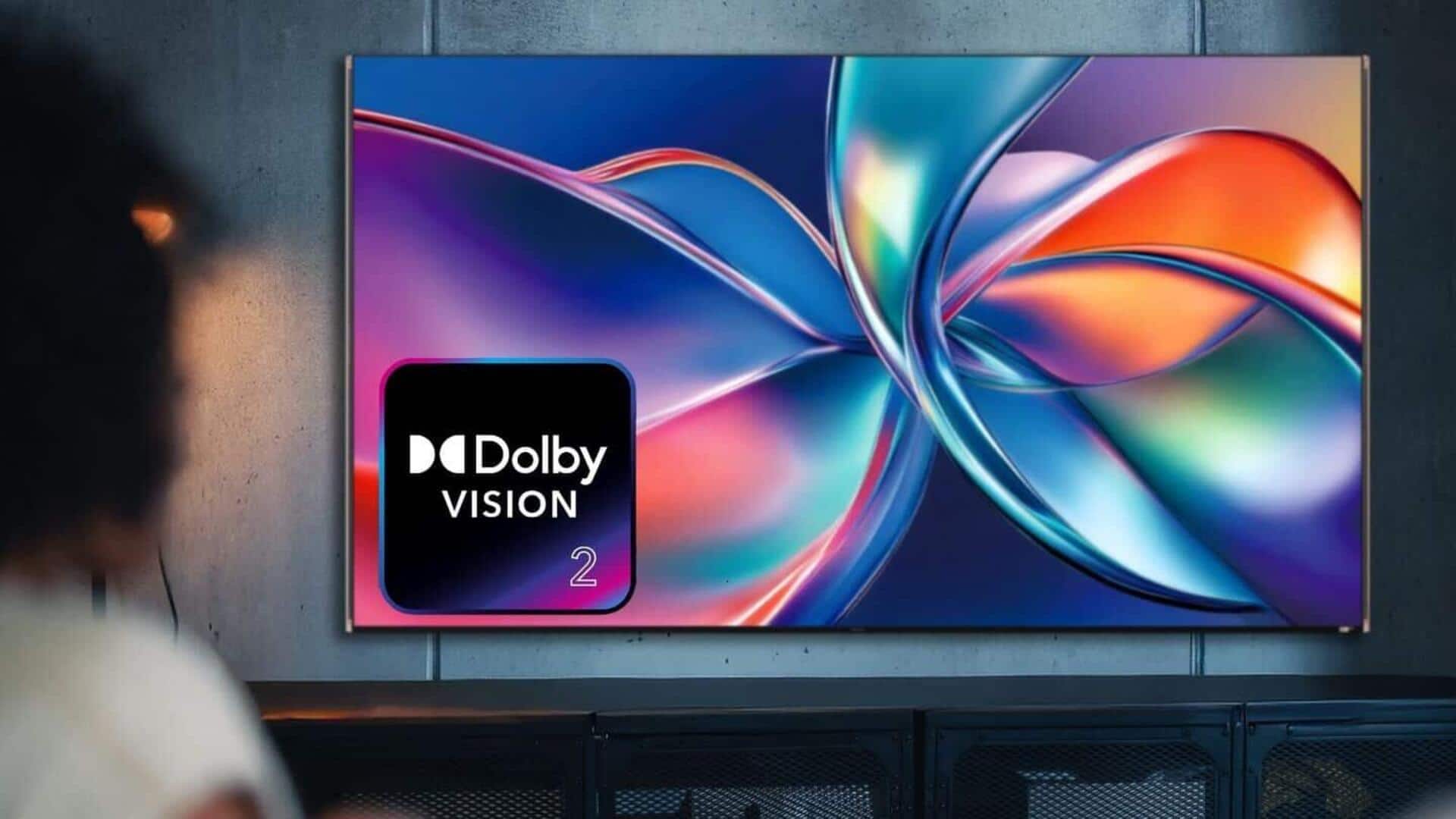
Dolby Vision 2: What it is and when to expect
What's the story
Dolby Vision 2, the latest image engine from Dolby, is all set to revolutionize your TV viewing experience. The new standard will enhance picture quality by recognizing content and optimizing TV settings accordingly. This means it will brighten dark scenes, adjust for ambient lighting, and even provide motion adjustments for live sports and gaming.
Enhanced visuals
Improved color reproduction
Along with content recognition, Dolby Vision 2 also promises new tone mapping for better color reproduction.
The feature was demonstrated at CES 2026, highlighting the stark difference between current Dolby Vision and its successor.
There's also an Authentic Motion feature that provides just the right amount of smoothing to make content look more "authentically cinematic," without creating that unwanted soap opera effect.
Manufacturer support
First TV makers to support Dolby Vision 2
At CES 2026, three major TV manufacturers have pledged their support for the new standard: Hisense, TCL, and TP Vision.
Hisense will introduce Dolby Vision 2 on its 2026 RGB MiniLED TVs - UX, UR9 and UR8. The company also plans to roll out an OTA update for more MiniLED TVs.
Meanwhile, TCL's 2026 X QD-Mini LED TV Series and C Series will get Dolby Vision 2 via a future update.
Philips adoption
Philips to adopt Dolby Vision 2
TP Vision's Philips brand will also support Dolby Vision 2 on its 2026 OLED TVs, including the Philips OLED811 and OLED911 series as well as the flagship OLED951.
Any new TVs looking to take full advantage of all the features offered by Dolby Vision 2 will have to come with an ambient light sensor.
This is because it's one of the key components of Dolby's upgrade.
Content compatibility
Streaming services supporting Dolby Vision 2
Peacock is the first streaming service to support Dolby Vision 2, and it's currently the only one.
Several other platforms like Netflix, Disney+, Apple TV+, Amazon Prime Video, HBO Max and Paramount+ already support the current version of Dolby Vision.
More streaming services are expected to join this list as more TV manufacturers announce their plans for Dolby Vision 2 throughout the year.