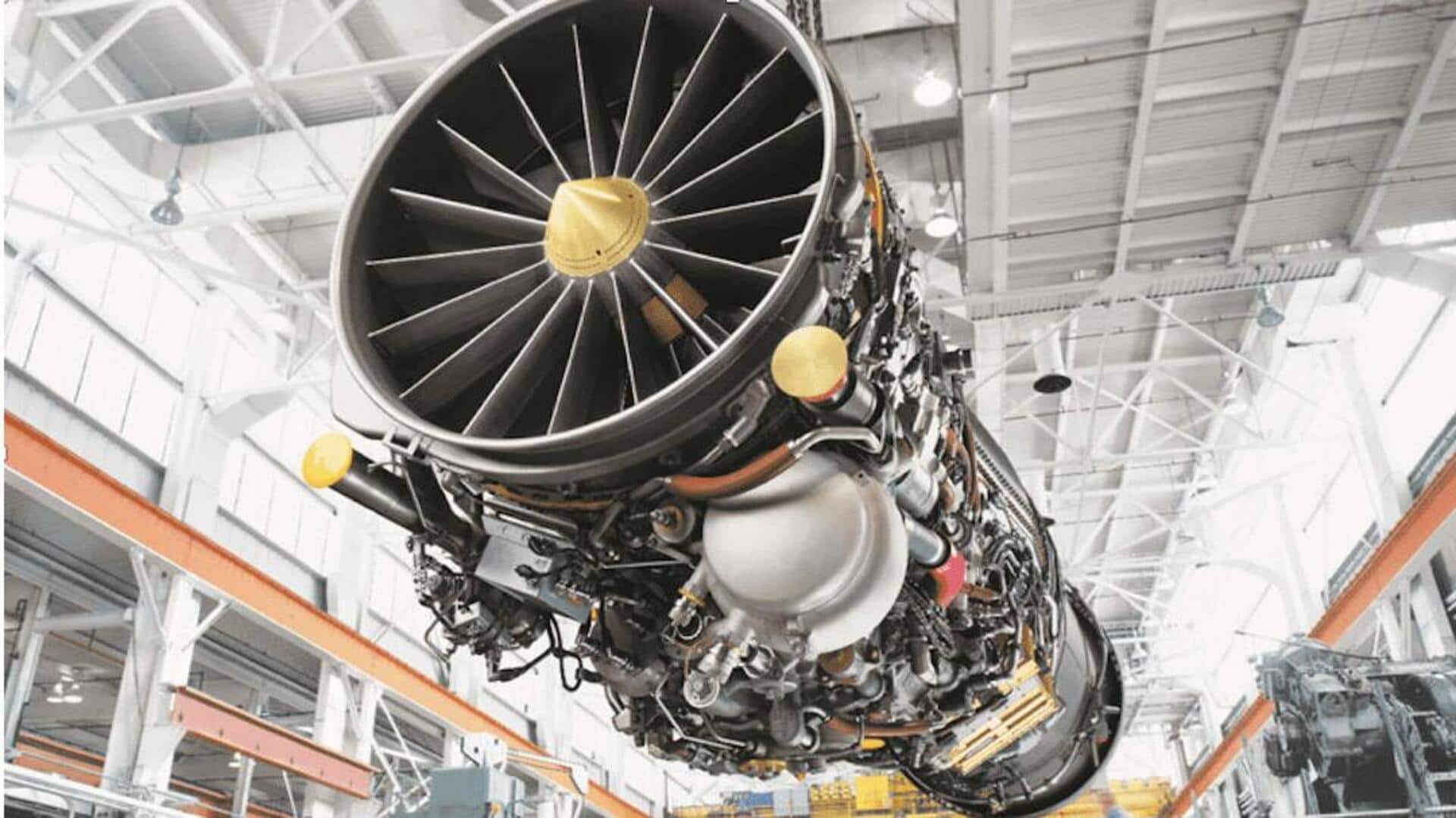
India now 1 step closer to making indigenous jet engines
What's the story
The Defence Research and Development Organisation (DRDO) is gearing up to build a National Aero Engine Test Complex in India. The Gas Turbine Research Establishment (GTRE), a key DRDO lab, has issued a Request for Information (RFI) inviting global and domestic firms to assist with this ambitious project. The facility will be used to test the Indigenous Advanced High Thrust Class Aero Engine currently being developed by the DRDO.
Testing facility
What will the National Aero Engine Test Complex do?
The proposed National Aero Engine Test Complex will be an integrated facility for testing complete engines and their individual components.
These include fans, compressors, combustors, turbines, and afterburners.
The complex will have systems replicating high-altitude conditions with advanced air heating and cooling systems. Essentially, it would let engineers test an engine on ground as if it was flying at 40,000 feet in the sky.
Development challenges
Why India has not developed indigenous jet engine
India has long struggled to develop a fully indigenous jet engine.
The Kaveri engine program, which started with high hopes, faced several challenges such as not achieving the required thrust and reliability issues.
One of the lesser-known reasons for these hurdles is the absence of advanced testing infrastructure in the country.
Jet engines are among the most complex technologies globally and only a few countries have mastered them like US, UK, France, Russia, and China.
Engine dependency
Why India needs to develop local engines
Most of India's frontline fighter aircraft, including Tejas, use engines from foreign companies like General Electric.
While these partnerships are crucial, they come with their own set of limitations such as dependence on external suppliers and restrictions on upgrades/technology access.
In a worst-case scenario, geopolitical tensions/supply disruptions could directly impact military readiness.
Strategic shift
Benefits of having the test complex
DRDO's latest step is not just about building a testing facility but also reducing dependence on foreign suppliers.
A project like this could speed up indigenous engine development, shorten testing cycles, and improve reliability.
This is critical if India wants to power its future fighter jets with homegrown engines.
By inviting global players, India is opening the door to collaboration and technology transfer which could strengthen its domestic aerospace ecosystem.