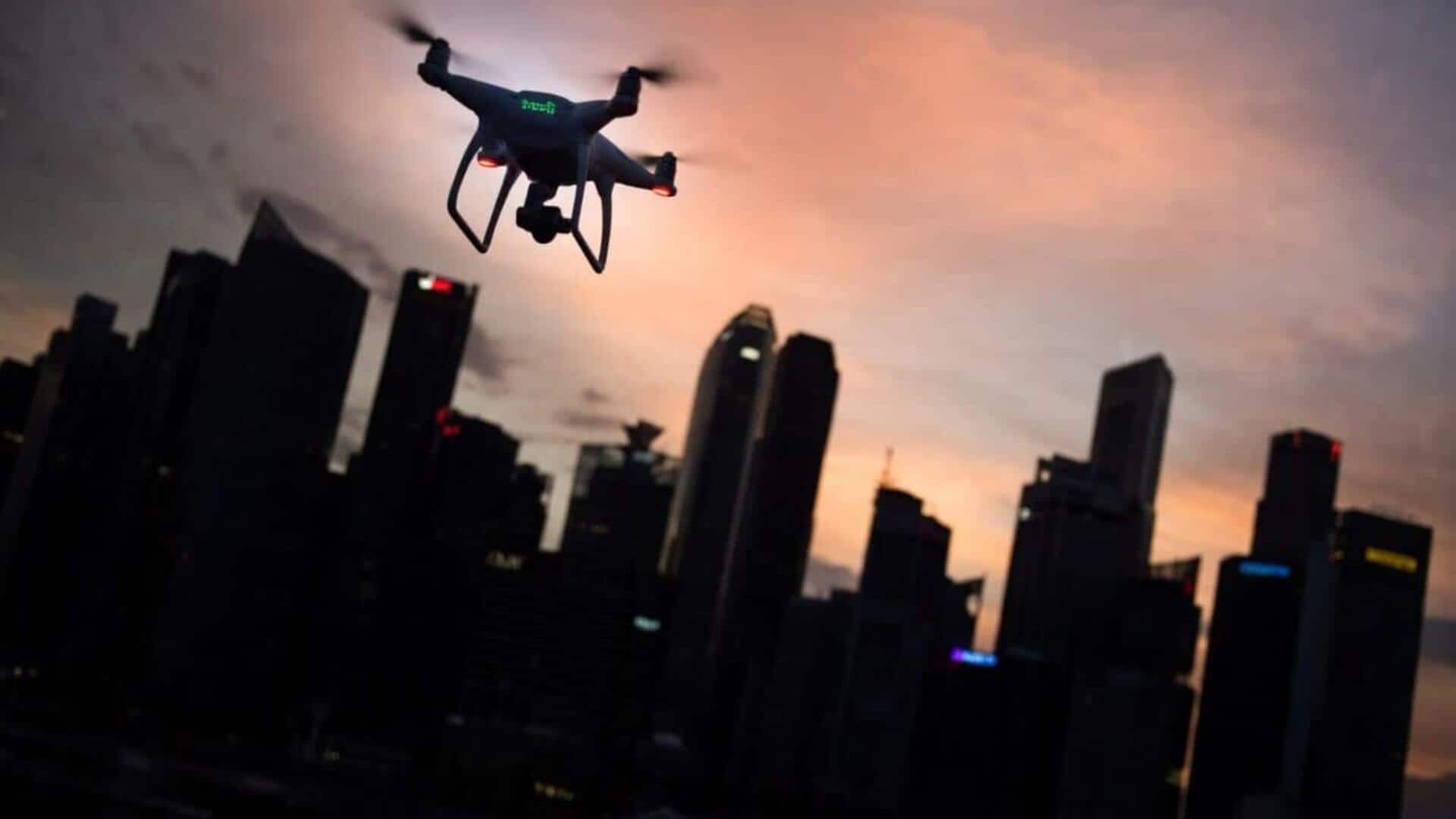
How drones can save lives of cardiac arrest victims
What's the story
Drones could be a game-changer in delivering Automated External Defibrillators (AEDs) to people suffering from out-of-hospital cardiac arrests, a new study has suggested. The research highlights the potential of drone technology to significantly reduce the time taken for emergency medical services (EMS) to reach victims with life-saving devices. This could dramatically improve survival rates in such critical situations.
Survival statistics
Over 30,000 out-of-hospital cardiac arrests every year in UK
In the UK alone, there are over 30,000 out-of-hospital cardiac arrests every year. However, less than 10% of these patients survive such an event.
One important factor that can affect survival is how quickly victims get access to treatment.
Every minute without CPR and defibrillation reduces the chance of survival by a staggering 10%.
Drone potential
Study led by French researchers
Matthieu Heidet, a professor of emergency medicine at Henri-Mondor university hospital in Creteil, France, has stressed the need to help cardiac arrest patients get defibrillated as early as possible.
His team explored the use of drones to increase access to these life-saving devices.
The researchers analyzed data from 28,349 out-of-hospital cardiac arrests between 2011 and 2024 in administrative areas within Greater Paris (excluding central Paris).
Accessibility analysis
Need for AEDs mapped out
The researchers found that the accessibility of 1,893 AEDs varied greatly across the region.
Only 30% of all out-of-hospital cardiac arrest cases occurred within a target 500-meter network distance from the nearest recorded fixed AED.
The team determined that an additional 910 fixed AEDs would be needed for 84.5% of recorded cardiac arrest cases to be within this range, and 1,712 more for complete coverage.
Coverage improvement
Drone delivery could improve access to AEDs
The study also found that using drones with a 3,900-meter radius could greatly improve AED coverage.
With 100 drone bases and 26 additional fixed AEDs, over 97% of cardiac arrest cases would have been within this range.
The use of 200 drone bases and just four extra AEDs would cover more than 99% of cases.
Speed advantage
Drones could ensure timely access to life-saving devices
The researchers also looked at how many cardiac arrest cases were close enough to an existing fixed AED that it could be retrieved in a round trip within five minutes.
The results showed only 30-40% of these cases had access to current fixed AEDs within this time period using the ground transportation network.
However, with drone delivery, virtually all cardiac arrest cases covered by the model would have been reached within five minutes.