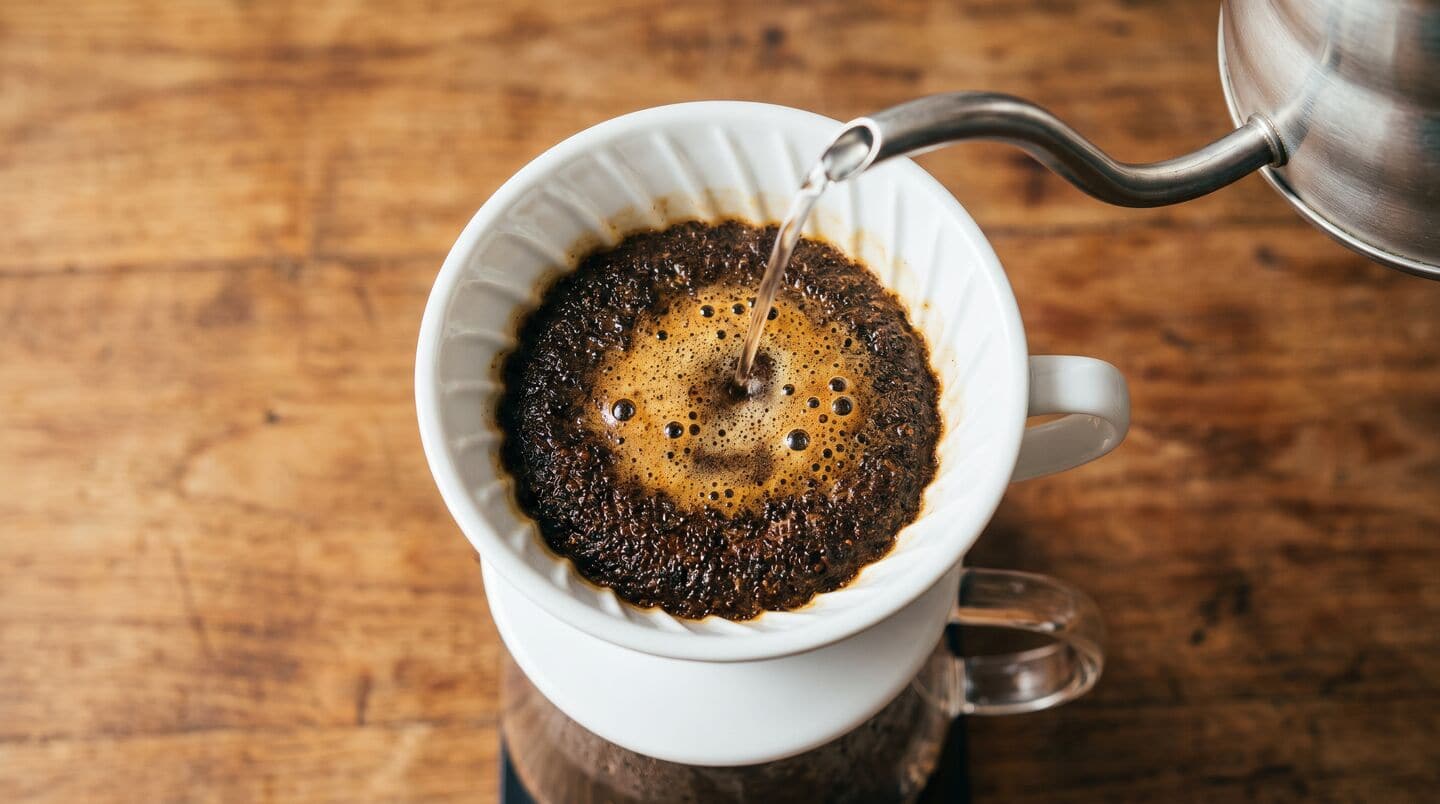
Scientists use electricity to unlock the perfect coffee brew
What's the story
Researchers at the University of Oregon have discovered a novel method to measure coffee's flavor profile by passing an electrical current through it. The study, led by chemist Christopher Hendon, was published in the journal Nature Communications. Hendon's previous work includes developing a mathematical model for brewing the perfect espresso while minimizing waste.
Replication issue
The challenge of brewing the perfect espresso
Espresso flavors come from around 2,000 different compounds extracted from coffee grounds during brewing.
This makes it difficult for baristas to replicate the same perfect cup every time.
To tackle this problem, Hendon and his team created a model based on extraction yield (EY), which is how much coffee dissolves into the final beverage.
This model mimics lithium ions moving through a battery's electrodes, just like caffeine molecules dissolve from coffee grounds.
Clumping issue
Hendon's previous research on reducing static electricity in coffee
In 2023, Hendon's team investigated why microscopic clumps form in coffee, especially at fine grind levels.
They found that static electricity from the grinding process causes these clumps.
To reduce this static, Hendon collaborated with volcanologists Josef Dufek and Joshua Mendez Harper.
Their experiments showed that adding a single squirt of water to coffee beans before grinding can significantly reduce the static electric charge on the resulting grounds.
Measurement technique
Hendon's innovative approach to measuring coffee's flavor
For his latest study, Hendon focused on roast color and beverage strength as the two variables most likely to impact the sensory profile of a cup of coffee.
He used a potentiostat, an electrochemical tool usually employed in testing batteries and fuel cells, to measure how electricity interacted with liquid coffee.
This method proved more effective at measuring flavor profiles than traditional methods like liquid or gas chromatography with mass spectrometry.
Objective
Baristas can now consistently reproduce flavor profiles
Hendon's ultimate aim wasn't to create a "perfect" cup of coffee but to provide baristas with a simple tool to consistently reproduce flavor profiles according to customer preferences.
He said, "It's an objective way to make a statement about what people like in a cup of coffee."
Hendon believes that an enjoyable cup of coffee is likely due to the selection of specific roast color and desired strength extraction.