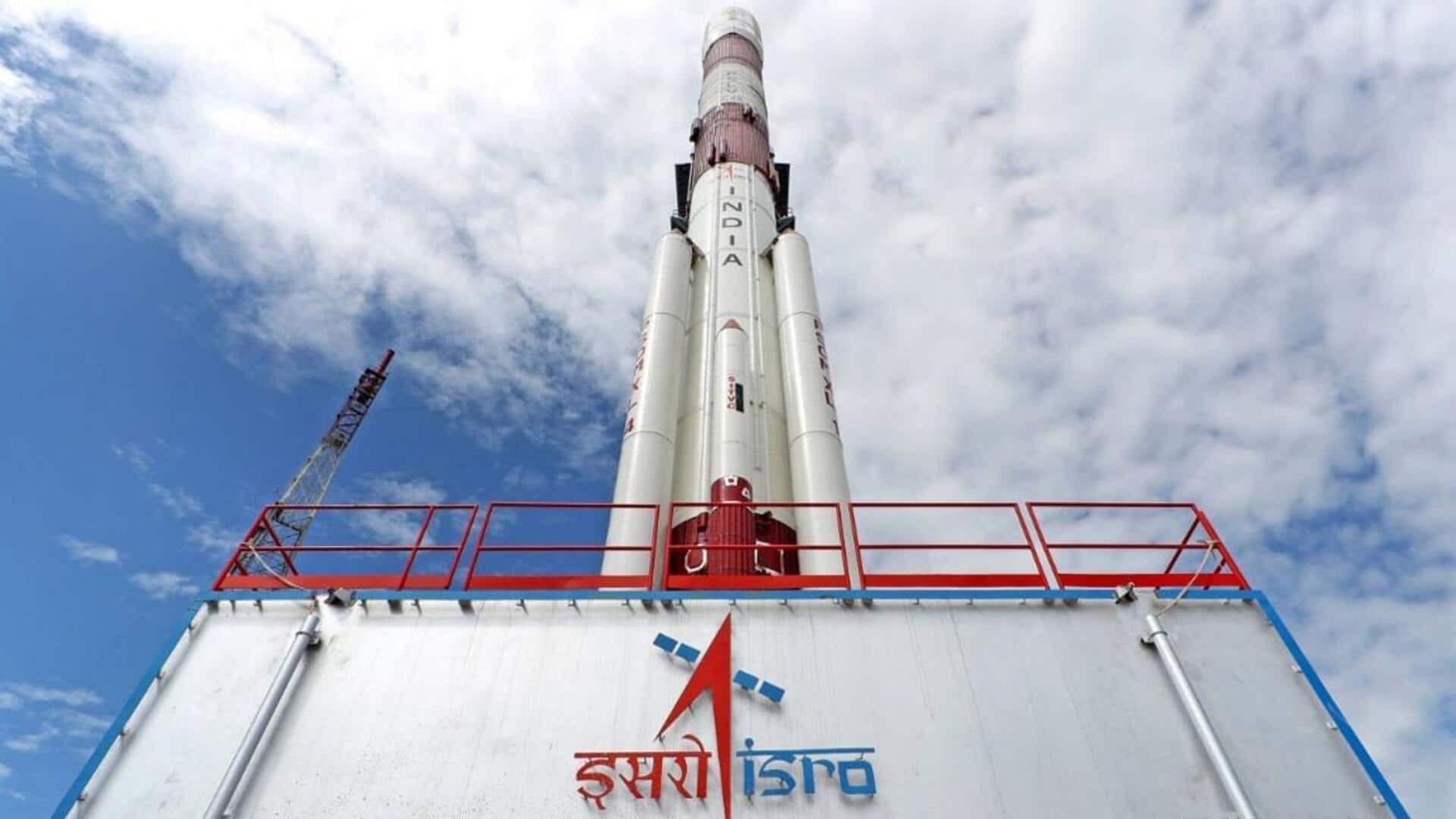
ISRO to launch an uncrewed Gaganyaan mission by December
What's the story
The Indian Space Research Organisation (ISRO) is gearing up for a major milestone in its history. The space agency's chairman, Dr. V Narayanan, has said that the first uncrewed mission of the Gaganyaan human spaceflight program is expected to be launched within four months. This will mark India's first step toward sending its own astronauts into space aboard an Indian spacecraft.
Mission details
Final leg of preparations for Gaganyaan mission
The Gaganyaan mission is India's most complex technological challenge to date.
It involves developing a human-rated launch vehicle, crew module, life support systems, and ensuring the safe return of astronauts.
Dr. Narayanan said they are in the final leg of preparations for this ambitious project.
"Eight thousand tests are successfully completed till today and we are in the final leg," he said during his address at Ahmedabad's National Space Day celebrations.
Future plans
ISRO's ambitious plan for the current fiscal year
Despite facing challenges with its Polar Satellite Launch Vehicle (PSLV), ISRO has laid out an ambitious plan for the current fiscal year.
The organization plans to launch 12 satellites and conduct eight launch vehicle missions.
These missions will cater to communication, navigation, Earth observation, and scientific research while paving the way for future human spaceflight and exploration programs.
Sector growth
Need for private sector participation in India's space journey
Dr. Narayanan emphasized that India's space needs have grown exponentially and will require much larger capacities in the coming years.
He stressed that achieving such numbers would be impossible through the government sector alone.
The demand for satellites for communication, Earth observation, weather forecasting, navigation, and security applications will require extensive participation from private industry and start-ups.
Sector transformation
Space sector reforms have spurred start-up growth
The ISRO chairman lauded the space sector reforms introduced in 2020, which have transformed India's space ecosystem.
When the reforms were announced, India had only a handful of start-ups in the sector.
Today, there are around 440 space start-ups working across launch vehicles, satellites, applications, and advanced technologies.
He also highlighted Skyroot Aerospace's Vikram 1 rocket's successful orbital mission as a landmark moment for Indian private enterprise.
Upcoming missions
Other major projects and missions on the horizon
Dr. Narayanan also spoke about ISRO's achievements, including the successful use of indigenous cryogenic technology and the launch of a 6-ton communications satellite built by an American company using India's Launch Vehicle Mark-3 or LVM3 rocket.
He also highlighted the NASA-ISRO Synthetic Aperture Radar mission (NISAR) as one of the most sophisticated Earth observation satellites ever built.
Looking ahead, India is preparing for Chandrayaan-4 and Chandrayaan-5 missions, along with plans for a Venus mission and a future Mars landing mission.