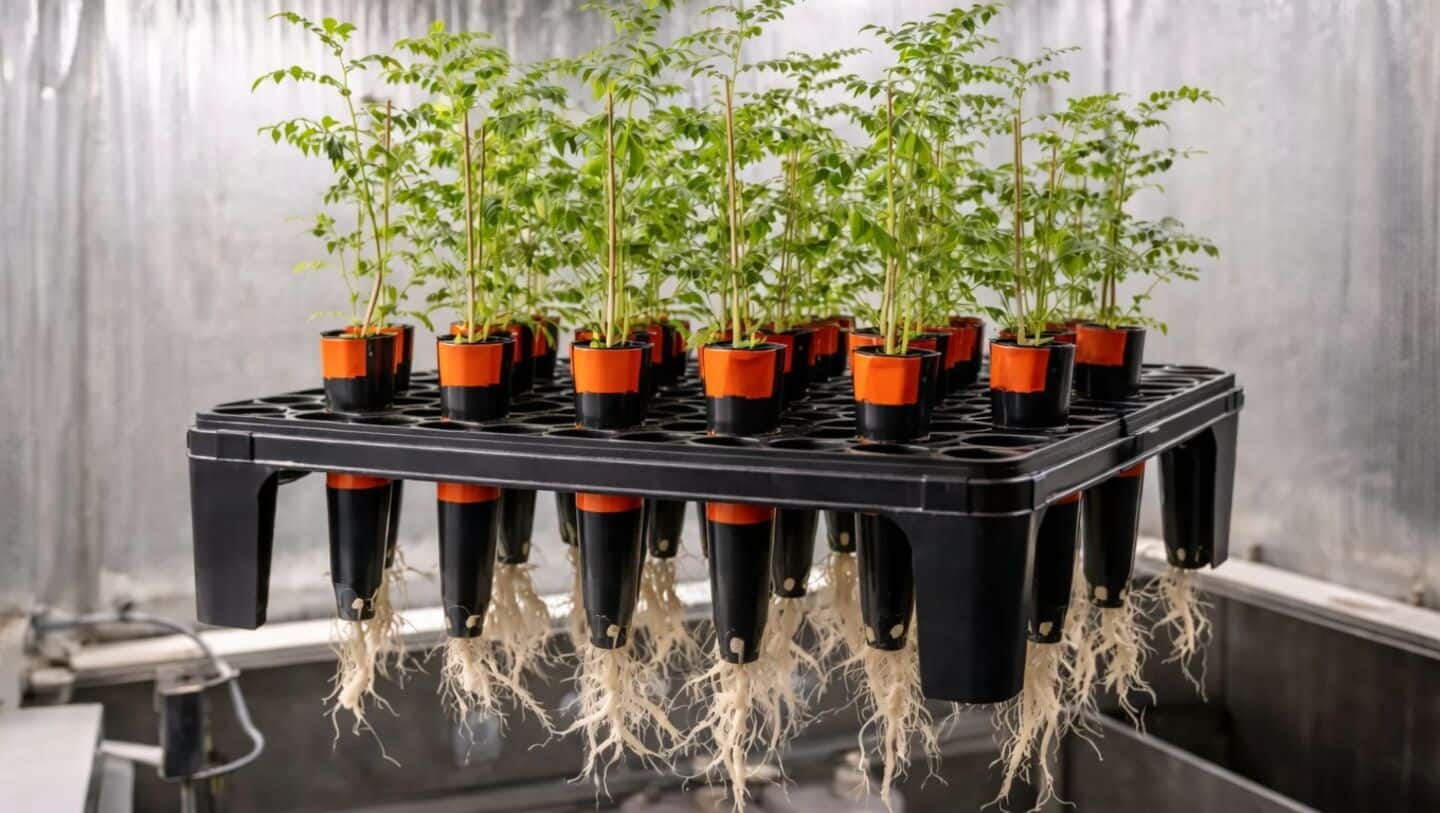
Growing chickpeas on Moon: Texas scientists ace lunar farming
Scientists from Texas have managed to grow chickpeas in soil that mimics what's found on the Moon.
By mixing in compost and helpful fungi called AMF, they got chickpea plants to produce seeds, even with toxic lunar-like conditions.
This could be a game-changer for future Moon missions aiming for self-sustaining farms.
AMF fungi and organic compost helped the plants thrive
AMF fungi team up with plant roots, helping chickpeas soak up nutrients like phosphorus and nitrogen.
With AMF and added organic compost, the plants survived tough Moon soil and still produced seeds, a big step toward growing real food away from Earth.
Why are chickpeas so important?
Chickpeas aren't just healthy (think protein, fiber, and iron); they also help improve soil by fixing nitrogen.
Growing them on the Moon could mean astronauts rely less on supply rockets and more on their own mini-ecosystems, making long-term space living a bit more doable.
AMF also release a special substance that binds soil together
AMF don't just feed plants: they release glomalin, which helps bind soil together and keep water around roots.
That's extra important when farming in harsh places like the Moon, where every drop of water counts.