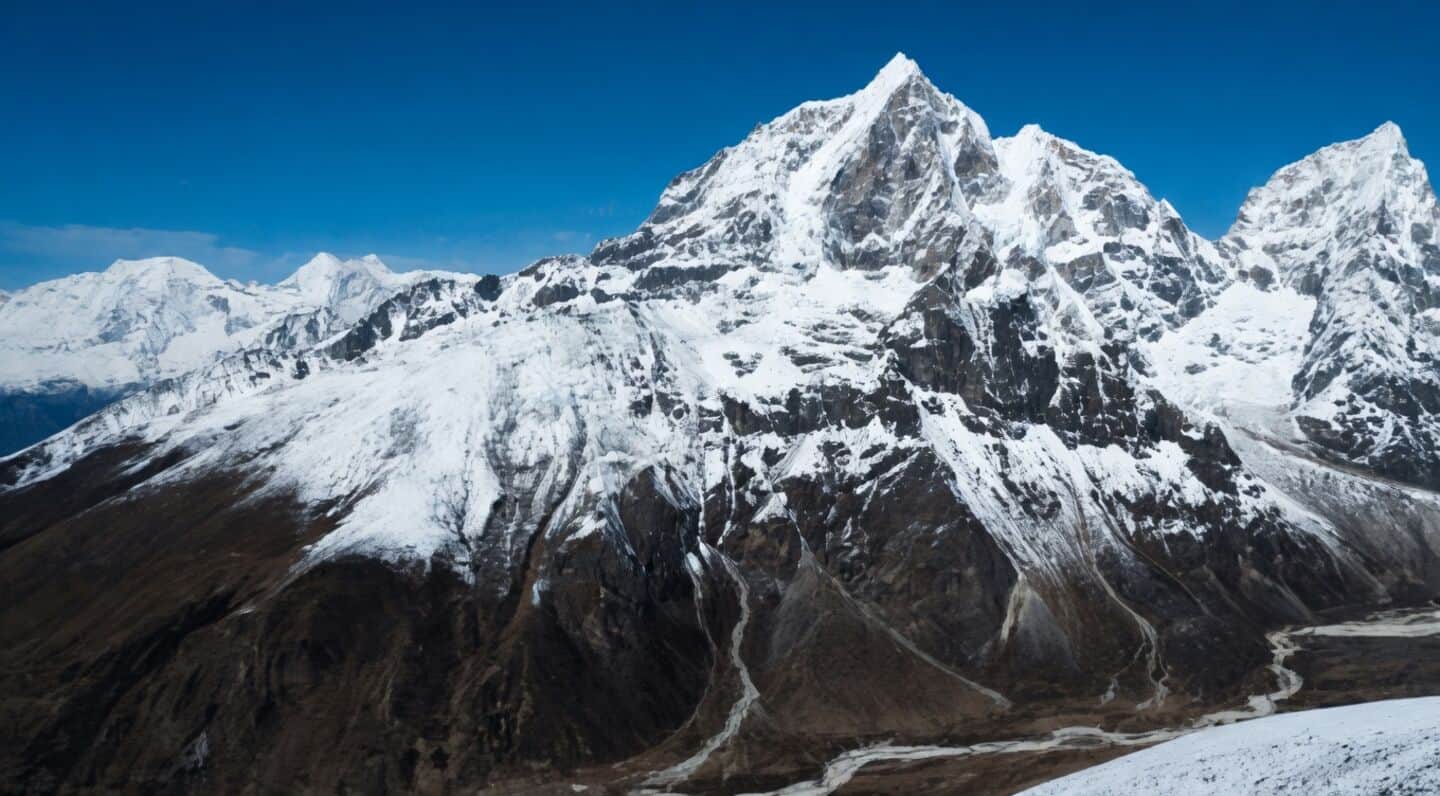
Himalayan glaciers melting twice as fast, posing serious flood risks
What's the story
The glaciers in the Hindu Kush Himalayas are melting at an alarming rate, according to a new report by the International Centre for Integrated Mountain Development (ICIMOD). The study found that the rate of glacial melt has doubled since 2000, with the last decade witnessing more frequent extreme melt years. This poses a serious threat of catastrophic floods and long-term water insecurity for billions living in this region.
Disaster connection
Glacial melt linked to recent disasters in India
The alarming rate of glacial melt has been linked to recent disasters in India.
The 2021 Chamoli disaster, which involved the dislodgement of a glacieret and likely killed over 200 people, is one such example.
In October 2023, a deadly glacial lake outburst flood hit South Lhonak lake in Sikkim, killing over 50 people.
Last year, Uttarakhand's Dharali disaster saw an entire market swept away by Kheer Ganga river fed by a glaciated zone.
Glacier importance
Importance of Hindu Kush Himalayas
The Hindu Kush Himalayas, which hold the largest ice mass outside the poles, are a major source of freshwater.
An ICIMOD report titled 'Changing Dynamics of Glaciers in the Hindu Kush Himalayan Region from 1990 to 2020' mapped 63,761 glaciers across this region covering around 55,782 square kilometres.
These glaciers feed at least 10 major Asian river systems and support billions with food, water, energy, and livelihood security.
Warming impact
Vulnerability of glaciers to climate change
Around 78% of the glacier area in Hindu Kush Himalayas, located between 4,500 and 6,000 meters above sea level, is highly vulnerable to elevation-dependent warming.
This is a phenomenon where temperatures rise faster at higher altitudes than at lower ones.
The latest report on accelerated glacial melt is based on 50 years of field data and reveals that nearly double the mass wastage has occurred since 2000.
Basin impact
Variations in glacial melt rates across the region
The rate of glacial melt isn't uniform across the region.
The Indus Basin, which has 41% of all glaciers and 44% of the total glacierized area in Hindu Kush Himalayas, lost 6% of its glacier area between 1990 and 2020.
However, Ganga and Brahmaputra basins witnessed steeper reductions at 21% and 16%, respectively.
These areas host some of the largest glaciers in this region.
Vulnerable glaciers
Smallest glaciers shrinking faster
The smallest glaciers in the region, those below 0.5 square kilometers, are shrinking faster than others.
This poses immediate risks of localized water shortages for high mountain communities and increases hazards like glacial lake outburst floods.
ICIMOD's remote sensing analyst and lead author of the glacier dynamics report, Sudan Bikash Maharjan, warned that we're not just losing ice; we're facing a rapid escalation of risks.
Call to action
Call for immediate action and investment in adaptation
Pema Gyamtsho, the director general of ICIMOD, stressed the need for immediate action in light of these findings.
He said, "The fact that ice loss rates have doubled this century should shock us all into action."
He emphasized that the rapidly escalating impacts from water uncertainty to catastrophic floods highlight we're in a critical decade for the cryosphere and we must scale up monitoring and invest in adaptation now.